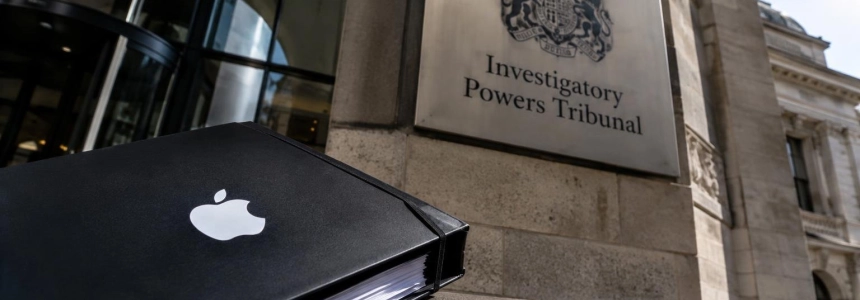
The British Government did issue a technical notice to Apple requiring it to maintain the ability to access iCloud data, the Investigatory Powers Tribunal (IPT) confirmed in a ruling on November 19. The tribunal rejected the Home Office’s argument that acknowledging the order’s existence would harm national security.
The ruling ends the official refusal to confirm or deny that the order existed. It does not, however, reveal exactly what it required or resolve whether the Government had the authority to impose it. The tribunal considers that disclosing all the material could harm national security, but leaves open the possibility of making some details public.
An order confirmed after months of denials
The notice is a Technical Capability Notice (TCN), a requirement provided for under the Investigatory Powers Act 2016. That law allows companies to be ordered to make technical changes to facilitate the exercise of the state’s lawful surveillance powers. Until now, the Home Office had relied on its “neither confirm nor deny” policy to avoid admitting that it had sent Apple a TCN.
The order’s existence had been reported by the media. The Washington Post reported in February 2025 that the Home Office had demanded a backdoor the previous month to access encrypted iCloud data. The Register says the request was reported as a demand for access to end-to-end encrypted data; the specific contents of the notice have not been made public.
The judges based their decision, among other things, on information and statements already made public. According to TNW, The Times and the Financial Times had reported that Government sources confirmed the order. The tribunal concluded that these communications had taken place and had been authorised by ministers, senior officials or special advisers.
The Home Office said its investigations into the leaks had not identified anyone responsible, but did not provide the tribunal with details of those inquiries, according to TNW. The judges also noted that the Government had allowed Apple to inform senior US officials about the order, which they described as another clear departure from its own secrecy policy.
“Anyone with even a passing interest in this topic already knows that the respondent has served a technical capability notice on Apple,”
— The three judges of the Investigatory Powers Tribunal
The IPT considered that confirming the notice’s existence would not expose information that was not already available to the public. The ruling, however, distinguishes that issue from the publication of the evidence and the exact conditions imposed on Apple: deciding what can be disclosed will require a further review.
What is at stake for iCloud
The technical heart of the case is Advanced Data Protection (ADP), Apple’s feature that extends end-to-end encryption to more categories of iCloud data. These include backups, photos and notes, according to The Register. When ADP is enabled, the corresponding encryption keys remain on the user’s trusted devices; Apple cannot decrypt that content to hand it over to the authorities.
In February 2025, Apple withdrew ADP for users in the UK, according to The Record. Without ADP, the affected data remains encrypted, but Apple retains the keys and can provide content in response to a valid legal request. Some categories of information remain end-to-end encrypted even without the feature.
The withdrawal of ADP was interpreted as a response to the Government’s demand, although the existence of the TCN had not been officially confirmed. The Record says Apple appeared to comply by withdrawing the feature for UK users; the text that would establish in detail how that decision related to each requirement in the notice has not been published.
The geographic scope has also changed according to available reports. The Register notes that the Financial Times reported in October 2025 that the UK had replaced the original notice with another focused on UK users. Separately, in August 2025, then-US Director of National Intelligence Tulsi Gabbard announced that the UK had agreed to withdraw its demand for access to Americans’ encrypted data, according to The Register.
The Government had maintained that it could neither confirm nor deny orders of this kind for reasons of national security. But the IPT also pointed to public comments by US officials and press reports citing Government sources. In a preliminary ruling in April 2025, referenced again in the current judgment, the tribunal had already cited statements by US politicians, including President Donald Trump, who compared the British initiative to “something that you hear about with China”, according to The Record.
Apple challenges the order; the tribunal has yet to rule on its legality
Apple has put forward five grounds for challenging the notice, according to TNW. The tribunal says the first two can be dealt with entirely in public: one asks whether the legal power can extend to interceptions outside the UK; the other, whether it can be used to regulate the level of security a company provides to its customers.
The parties expect a substantive hearing during the first half of 2027. The current ruling is procedural: it decides that the existence of the TCN may be acknowledged and that part of the case may be heard in public. It does not determine whether the order is legal or whether its specific requirements are compatible with Apple’s obligations.
Apple’s proceedings are not the only case related to these powers. Privacy International and Liberty separately challenged the notice regime alongside two individuals. The IPT ruling identifies Ian Hosein and Ben Wizner among the claimants in that case. TNW reports that Apple filed a second lawsuit in July 2026, after the tribunal dismissed an earlier one following a change in circumstances.
Apple welcomed the decision as a step towards greater public access to the case, according to Bloomberg. Privacy International called it a “major victory” for transparency, and Liberty also described it as a victory on that front. The November 19 ruling does not foreshadow which arguments will prevail when the tribunal examines the merits.
The Home Office’s defence
It said Apple has for years helped the police and intelligence services pursue crime in accordance with the law, and that the TCN merely requires it to maintain that capability.
The spokesperson maintained that the powers are subject to strict safeguards and that the Government does not obtain direct access to a company’s systems or communications data. They also argued that decisions about public safety belong to democratically elected governments and independent judges, not the leadership of technology companies.
The dispute has a precedent in Apple’s public stance on privacy. The Register recalls that the company opposed an FBI order to unlock an iPhone linked to a terrorism investigation. In this case, the controversy centres on iCloud and the ability to access protected data, but the IPT has not yet decided whether the UK’s demand is valid.
The next step will be the hearing scheduled for the first six months of 2027.
Sources: TNW | Privacy, theregister, WWWhat's new, Courts and Tribunals Judiciary, Bloomberg Law, The Record