Nvidia raised objections with Taiwanese political officials to the investigation into an executive at its local office, surnamed Chang, who is accused in a scheme to illegally export the company’s chip-equipped servers to China. According to Bloomberg, cited by TNW, Nvidia representatives said they disagreed with the charges and that Chang should not be investigated; officials responded that they had no involvement in the case.
The case is part of a Taiwanese investigation into eight people indicted over the illegal sale of Supermicro servers equipped with advanced Nvidia chips. Taiwan’s CNA news agency reported that those accused include executives from Nvidia, Supermicro, and several Taiwanese companies. Prosecutors attribute various transactions to the group, involving Chinese buyers and allegedly falsified documents.
The servers’ journey
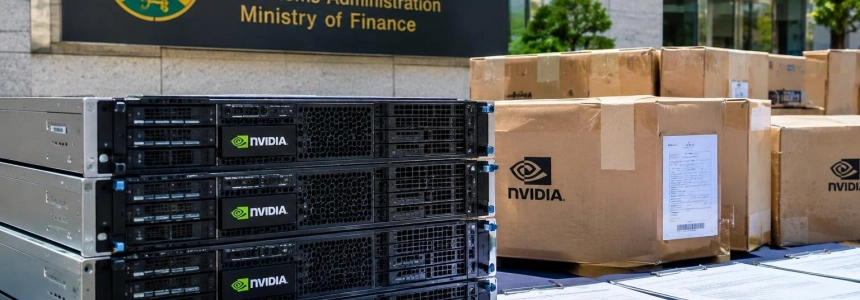
The Keelung Prosecutors Office says Chang was a central figure in a network that sent 74 servers with Nvidia chips to China; another 56 machines were seized by Taiwanese authorities. In the initial transaction, the accused allegedly secured approval to sell 130 servers to a buyer that did not have enough space in a data center. They also allegedly concealed that the payment came from a Chinese entity.
CNA reported that the machines were Supermicro AI servers with Nvidia B300 GPUs. According to prosecutors, Nvidia and Supermicro strictly control the customers, destinations, and end uses of these servers because of their computing power. Buyers had to be on Nvidia’s authorized list and provide documents about the intended user and use; resale was prohibited.
For orders of more than eight servers, sales staff and technicians from both companies were required to inspect the facilities and verify the stated use, according to prosecutors. In this case, the accused allegedly claimed that the required verification had been completed, despite knowing that Chief Telecom lacked sufficient electrical capacity and bandwidth to host 130 machines.
| Transaction described by prosecutors | Servers and destination | Reported outcome |
|---|---|---|
| First sale | 130 machines approved; the group received two before changing the buyer | Some of the servers were resold to Chinese buyers |
| Second transaction | 64 servers | Delivered along with two from the first transaction; 50 passed through Indonesia on their way to China |
| Third transaction | Another 64 servers | Eight were sent to Japan and then to Hong Kong; the remaining 56 were seized in Taiwan |
In the first transaction, two executives at Flying Tiger Technology allegedly sought to resell the servers for a profit. After the original buyer was unable to pay, Lu, an executive at Albatron, allegedly connected the company with a Chinese buyer. In the second transaction, an executive at Long Wins allegedly contacted Lu to arrange another buyer in China, according to CNA.
The agency also reported that the Flying Tiger executive who remains at large allegedly received more than $21.2 million from the resale of 74 servers. In a related case, the head of Quintai Electronics allegedly issued four false invoices to conceal the flow of funds, diverting about 39.16 million New Taiwan dollars in Albatron assets, according to prosecutors.
The charges and Nvidia’s response
Chang was detained in July and indicted in August on charges of falsification and breach of trust. CNA identified other defendants: two sales executives at Supermicro’s Taiwanese subsidiary, Albatron’s CEO, a project manager at Chief Telecom, the head of a customs brokerage company, and executives at trading and server sales companies. All the men indicted face charges of breach of trust and falsification, according to prosecutors.
Prosecutors separately charged executives at Quintai, Supermicro, and Albatron with aggravated breach of trust under securities law. CNA noted that the Flying Tiger executive who remains at large had not been indicted at the time of publication. TNW reported that Chang faces up to five years in prison. Bloomberg was unable to reach him for comment.
“We investigated this matter thoroughly, as is our standard practice, and found no indication that our employee knew about the alleged diversion attempt by employees of other companies.”
— Nvidia, in a statement to Bloomberg
The company told Bloomberg that it reviewed the case, cooperated with authorities by providing the requested information, and sought to protect its employee. Chen Po-wen, a spokesperson for the Keelung Prosecutors Office, told Bloomberg that his office was unaware of Nvidia’s contacts with the government. It was also unclear which request for information the company was referring to.
The consultation with TSMC and the precedent in Washington
Nvidia also sought advice from TSMC, its main manufacturer, according to Bloomberg. TSMC declined to get involved. The company does not have a government relations director in Taiwan and only recently posted a job opening for the position, TNW noted.
The contact with Taiwanese authorities recalls another move by Nvidia in the United States: the company’s general counsel called a Commerce Department official about the investigation into Megaspeed, which was later paused. Megaspeed denies wrongdoing. TNW also reported that Alice Huang, the company’s founder, is suspected by U.S. officials of spying for China, an accusation Beijing denies.
The context includes Washington’s restrictions, in effect since 2022, on exporting certain advanced Nvidia chips to China. Even so, these chips continue to appear in Chinese products, according to CNA. Taiwanese prosecutors continue to accuse the network of diverting servers to Chinese buyers, while Chang faces charges in Taiwan.
Sources: TNW | Government-policy, Focus Taiwan - CNA English News