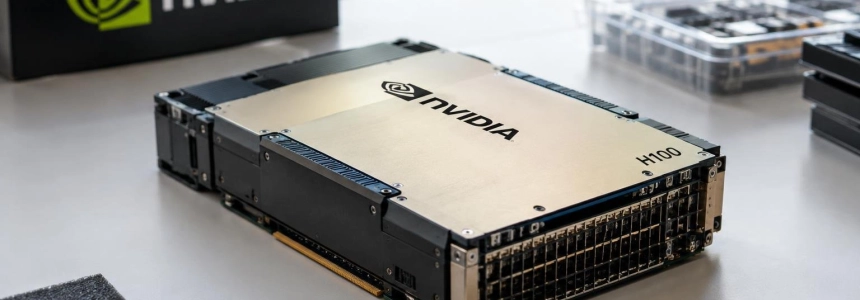
Donald Trump said he convinced Nvidia’s board to have Jensen Huang lead the company again, after the CEO left the position and returned less than two weeks later. The presidential assurance that Huang did not pose a national security risk came without a formal investigation into his activities, according to PC Gamer.
Trump’s intervention has left two accounts of how the return came about. The president told CNBC that he spoke with board members and that his call contributed to the decision; Huang, by contrast, told Nvidia staff that the board had acted on its own initiative, according to PC Gamer’s coverage.
Two accounts of the board’s decision
In a phone interview with CNBC on Monday, Trump said he had spoken with the board and convinced it. He also said the task had been easier the day before than a week earlier. According to CBS News, the president believed his intervention had been decisive in bringing Huang back.
Trump explained that the board had asked him for assurances about the national security threat and said he had provided them. In a post on Truth Social, he maintained that the U.S. government had no reason to believe Huang’s return posed a risk. He did not explain what that assessment involved.
“I spoke to them and I convinced them”
— Donald Trump, in an interview with CNBC, according to CBS News
Huang’s account was different. In his message to employees upon his return, he said the board had chosen to bring him back on its own, not because of pressure from the administration. That claim conflicts with Trump’s account of his role in the conversation with board members.
The White House defended the reinstatement as a decision that served U.S. interests. A White House official told CBS News that Huang’s return would help preserve the country’s technological edge over China, strengthen national security, and ensure that the future of artificial intelligence was built in the United States.
An assurance without a formal investigation into Huang
The president gave those assurances without, according to PC Gamer, any formal investigation into Huang’s activities having been opened. U.S. Attorney General Todd Blanche also did not confirm that there was an investigation into the CEO. At a press conference, he responded to a question about whether Huang had been investigated:
“What does that mean, had Huang been investigated? For what? I don't understand the question.”
— Todd Blanche, U.S. attorney general, according to PC Gamer
Blanche added that he knew of no investigation into Nvidia related to export controls. That clarification matters because possible violations of those rules are one of the central issues in the case. Separately, a Justice Department official told CBS News that the government had no evidence of wrongdoing by Huang or Nvidia.
Trump also claimed on Truth Social that Blanche had confirmed the government had no evidence Huang had committed illegal acts. In the same post, he urged Nvidia to continue its internal investigation into compliance with U.S. export controls. These are claims about the absence of evidence and a corporate review; they do not amount to a formal investigation into the CEO.
The controversy includes Huang’s relationship with Alice Huang, a woman whom, according to CBS News, U.S. intelligence agencies suspected of spying for China. China has denied the espionage allegation. PC Gamer also reports that, according to accounts of the case, Huang allegedly had relationships with Nvidia employees.
Suspicions over chips destined for China
The national security debate is not limited to Huang’s personal relationships. Senate Minority Leader Chuck Schumer said the issue was Nvidia’s shipment of advanced chips to China, which he described as a possible violation of U.S. export control laws. He compared those chips to rocket engines sold to the Soviet Union during the space race.
Reuters, cited by PC Gamer, reported that Trump’s assurance to the board was based on investigations into Nvidia customers: Super Micro Computer and Megaspeed International. The latter company is linked to Alice Huang. The account does not attribute any conclusion about Jensen Huang’s activities to those inquiries or present them as a direct investigation into him.
Trump’s public position was that Huang had done nothing wrong. He also said he spoke with him on Sunday night, after the deal for his return had been finalized, and told him to work hard. At the same time, his Truth Social post called on Nvidia to continue reviewing internally whether it was meeting its legal export obligations.
Information about the intelligence memo also remains indirect. CBS News attributed to The New York Times the account that Secretary of State Marco Rubio distributed a highly classified document in May about the counterintelligence risk associated with Huang’s affair. Trump said no one had told him Alice Huang was under suspicion.
Nvidia’s stock and the Senate appearance
Huang’s departure hit Nvidia’s stock price, and Trump defended his return as shares fell, according to CBS News. After the reinstatement was announced on Monday, the outlet reported a rise of more than 30% since the announcement. PC Gamer offers a later snapshot: the stock price fell back several points on Wednesday and remained approximately 21.5% below its level at the beginning of the year. The figures refer to different points in time and describe different movements.
Trump is an Nvidia investor, and the company donated $25 million to the White House ballroom project, according to PC Gamer. CBS News also reported that Huang had publicly defended his return and that other figures in the technology sector, including Elon Musk, supported his return.
Trump wrote on Truth Social that Nvidia’s board had made the right decision by returning Huang to the CEO position. He also maintained that the CEO’s leadership was necessary for the company and the U.S. economy. The White House presented his return as a way to protect the country’s technological position against China.
Lawmakers from both parties have increased pressure on Huang to explain how Nvidia chips ended up in Chinese hands, according to CBS News. Huang agreed to testify publicly before Congress. The network reported the week before its article that no date had yet been set; PC Gamer later reported that the Senate appearance is scheduled for December 3.
Questions remain about export controls and the role of the customer companies under scrutiny. For now, the specific date listed for Huang’s next public appearance is the December 3 Senate hearing.