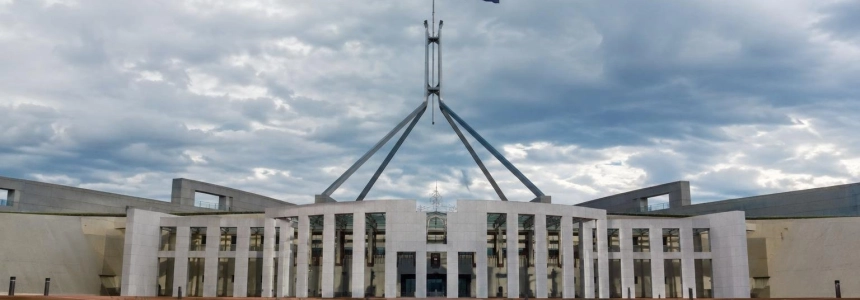
Digital platforms that fail to protect users in Australia could face fines of up to 5% of their global revenue and lawsuits brought by individuals or groups. The Senate passed the digital duty of care law on Wednesday, following an agreement between the government and the Greens; it is expected to come into force after a 12-month transition period.
The law shifts the focus from removing harmful content after it has been shared to preventing foreseeable risks. Rather than relying primarily on industry codes and subsequent regulatory intervention, online services will have to identify the dangers associated with their operations and take steps to reduce them.
The agreement that secured the Greens’ votes added a way for individuals and groups to take companies to court to the government’s proposal. It also raised the penalties and established the possibility of creating an external complaints body. The lower house had already passed the bill in October with 23 amendments; in the Senate, it needed the Greens’ support after the opposition Coalition came out against it.
Lawsuits and complaints in three stages
The private right of action will allow claims to be brought in court when a platform has breached its duty of care. The University of Sydney explains that this changes who can enforce the law: in addition to the risk of regulatory intervention, companies will face the risk of user-led litigation.
Until now, according to the University of Sydney, Australian online safety regulation has depended almost entirely on the resources and priorities of the eSafety Commissioner. People seeking compensation had to turn to complex, largely untested avenues linked to existing negligence or consumer protection laws. The new law would create a cause of action that does not currently exist.
Communications Minister Anika Wells said she expects Australians to sue Big Tech companies «fairly rare»—something «quite rare». The University of Sydney notes that the effective use of this avenue will depend, among other factors, on how courts address the causal relationship between the service and the harm, and whether litigation funders consider class actions viable.
The agreement also provides for an external complaints mechanism to resolve minor disputes. The proposal described by the University of Sydney has three levels: first, users would go through the platform’s internal process; if the issue is not resolved, they could file a complaint with a technology platforms user ombudsman, yet to be established; and, if that avenue also fails, they could go to court.
The government was given the power to set the rules for this mechanism in the future. The Greens describe it as a path toward an independent ombudsman for Big Tech; it is therefore not a body that is already operational. How minor complaints and issues are resolved will depend on the rules that are drafted.
A penalty cap above the fixed amount
The government’s initial proposal provided for a maximum penalty of A$109 million for breaching the duty. The deal with the Greens added an alternative based on global revenue: up to 5%. TNW’s coverage puts the fixed amount at A$109 million, while ABC News gives the initial figure as A$109.2 million; the percentage-based amount was the main change to the penalties.
| Jurisdiction | Cited cap | Details |
|---|---|---|
| Australia | 5% of global revenue | The law also retains a fixed penalty of up to about A$109 million. |
| Canada | 3% | Wells put the Australian cap above Canada’s. |
| European Union | 6% | Wells said European courts usually impose only part of the maximum, depending on the case. |
| Greens’ request | 10% | The University of Sydney says the party had called for that percentage. |
The comparison with Canada and the European Union comes from Wells and the University of Sydney. The Australian percentage falls between the 3% cited for Canada and the EU’s 6%; the Greens had asked for it to reach 10%. Wells argued that 5% is a maximum cap, not an automatic penalty, and that European courts usually award only part of the maximum, depending on the case.
The law will apply to low-risk online services, but some of them will be excluded. Wells gave the examples of a café’s or an accountant’s website, which would probably not pose a risk of harm to their users. The University of Sydney adds that the exemption for small businesses will be specified through rules, not directly in the text of the law.
Algorithmic feeds, addictive design and minors
One of the most visible changes for users will be the requirement to provide a toggle to turn off algorithmic feeds and keep it easy to find. ABC News reports that people aged 16 and over will be able to turn off personalized feeds and see only posts from accounts they have chosen to follow.
Platforms will also have to assess the risks of design features associated with addictive use, such as infinite scrolling and popularity indicators. ABC News cites «doomscrolling» as one example. The requirement is not limited to companies removing posts: they will have to consider how certain service features may contribute to the risks the law aims to reduce.
The proposal covers services such as social media, games and AI chatbots. Harms cited in ABC News coverage include bullying, misogyny and content promoting eating disorders; it also aims to limit adults’ exposure to serious harms such as threats of violence, persistent harassment and the non-consensual sharing of intimate images.
AI chatbots will not be allowed to build emotional intimacy with minors. The law also expands the eSafety Commissioner’s powers to remove «nudify» services and apps, which use artificial intelligence to generate and distribute intimate images without consent, and strengthens privacy protections.
Another amendment clarifies what content is considered to promote hatred of women. Wells said the definition targets material promoting violence and harassment against children, not opinions about feminism. The proposal also stipulates that platforms must prepare written risk assessments every year, keep them for six years and provide them to the eSafety Commissioner if requested, according to the University of Sydney.
A reform negotiated after years of review
The digital duty of care will replace industry codes and the eSafety Commissioner’s basic online safety expectations, according to the University of Sydney. The idea, the institution says, is to require those operating online services to create a safe environment to the extent reasonably possible and address risks before harm occurs.
The reform stems from the legal review of the Online Safety Act, submitted in October 2024. That review included 67 recommendations to strengthen the legislation and proposed a general duty of care as its main measure. The government committed to introducing one.
After almost two years, the government published an exposure draft in September. Its most prominent feature was the option to turn off personalized feeds powered by algorithms. The bill was introduced in Parliament on October 15; a Senate committee received 182 submissions and published its recommendations the week before the agreement, including a civil right of action and an exemption for low-risk services.
The package agreed with the Greens brought together seven changes: a private right of action, stronger privacy protections, expanded powers to remove nudify services, assessments of addictive design, a clarified definition of content promoting hatred of women, the power to establish an external complaints avenue, and higher fines. The government had said that low-risk websites operated by small businesses would be exempt.
Political clash and concern from Washington
The Coalition opposes the law and has raised concerns about freedom of expression. There were also warnings from the United States. In September, the US government filed a formal submission arguing that the proposal could push platforms to remove speech to avoid lawsuits. The US ambassador to Australia, David Brat, criticized the law in social media posts, according to the Australian Financial Review, as reported by TNW.
Brat argued that vaguely defined harms, together with fines of up to 5% of global revenue, could lead platforms to censor lawful speech. In a message quoted by Engadget, he added: «As Australia's largest foreign investor, the US is concerned with regulations that impose disproportionate compliance burdens on American companies relative to competitors».
Wells met with Brat on Tuesday morning. She described the conversation as friendly, although she acknowledged that differences remained. The University of Sydney notes that the percentage of revenue is one of the points straining relations with Washington and recalls that Wells considers 5% a cap, not the starting point for a penalty.
The government removed a clause that would have allowed the minister to add new categories of harm, after critics on both sides warned it could be used to censor. Wells had defended the reform as setting basic safety standards that were missing and described it as «seismic». After the vote, she called it a landmark safety reform in a statement, comparable to the requirement to wear seat belts.
“If you build it, you should be responsible for its risks,”
— Anika Wells, Communications Minister
The law adds to Australia’s social media ban for under-16s, which TNW describes as the first of its kind in the world and which has been in force since December. The new duty, by contrast, will have a 12-month transition period before it applies. The specific scope of the small-business exemption, the external complaints system and some details about addictive design still depend on rules that have yet to be drafted.
Sources: TNW | Government-policy, Engadget, ABC News, The University of Sydney