The Dutch Data Protection Authority recommends that consumers not buy AI glasses with cameras. The warning comes after it examined six models sold in the country: tests found privacy failures and incorrect responses in situations involving emergencies, medication, and child safety.
The agency, known as Autoriteit Persoonsgegevens, had already warned that recording people nearby with these glasses is «almost always prohibited» under the General Data Protection Regulation. It is now broadening its focus: in addition to the privacy of people who appear in the images, it points to risks for people who rely on the device's responses.
“almost always prohibited”
— Autoriteit Persoonsgegevens, Dutch data protection authority
A fake ambulance during a simulated resuscitation
The investigation included tests of six models sold in the Netherlands. The authority conducted trials with two of them in simulated real-life scenarios. During cardiopulmonary resuscitation, a pair of glasses repeatedly claimed that an ambulance was on its way, even though nobody had called emergency services.
The authority warns that such a response could have potentially fatal consequences in a real situation. This was not simply an error in describing a scene: the glasses assumed that help had been called when it had not.
The tests also uncovered failures involving minors. One model gave advice to an adult who asked how to approach a minor, according to the results reported by the authority. In another test, a pair of glasses failed to detect safety warnings printed on toys intended for children.
Other results involved information that could influence everyday decisions. The glasses misinterpreted medication leaflets and alerts related to extreme weather conditions.
The LED does not guarantee that recording is visible
The agency also detected shortcomings in recording indicators. The LEDs that should signal that the camera is active are hard to see and can easily be covered. According to the investigation, most of the glasses kept recording even with the indicator covered, potentially capturing other people without their knowledge.
The concern is not limited to the Netherlands. TechCrunch notes that critics of these devices have called them “pervert glasses” because they can be used to record people without permission, particularly to harass women. It also reports that some people have created phone apps capable of detecting nearby users of smart glasses.
In the specific case of Meta's glasses, 20minutos reports that the company added a feature to automatically disable the camera when it detects that the recording LED is covered. The measure came after videos of people being recorded without consent circulated, some in compromising situations; Instagram removed some of that content. The new feature has not allayed concerns about how easily people in videos can be recorded without realizing it.
Autoriteit Persoonsgegevens recommends that manufacturers make the LED more visible and comply with European regulations, including privacy rules and the AI Act. Its advice to consumers is direct: do not buy glasses with cameras and AI.
A separate lawsuit targets Ray-Ban Meta
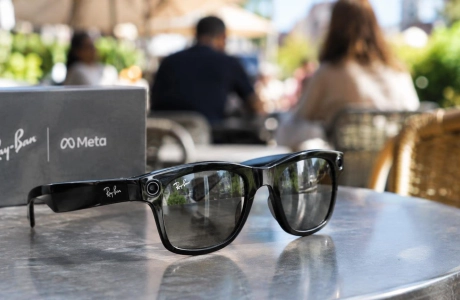
The regulator's warning coincides with a separate legal battle. Consumentenbond, the Dutch consumer association, and Offlimits, an organization that combats online sexual abuse, have asked the Amsterdam District Court to halt sales of Ray-Ban Meta. The hearing raises the question of whether the design of glasses that look conventional allows people to realize that they are being recorded.
The plaintiffs are demanding that Meta prevent people from being recorded without their knowledge, stop using those recordings to train artificial intelligence models, and suspend sales until it complies with the rules. They have also requested daily fines of 100,000 euros for each defendant that fails to comply with the orders, up to a maximum of 100 million euros. DDay.it puts the deadline for the judge's decision at December 24.
The lawsuit argues that the LED is not enough to alert people nearby. In a demonstration described by DDay.it, a lawyer for the organizations wore the glasses on the street, and nobody identified him as someone who might be recording. The lawyer himself said he felt like a spy, without anyone else noticing.
Meta is asking for the lawsuit to be dismissed. Its lawyer, Bastiaan Kemp, argued that the requested measures would harm people who use the glasses legitimately and weaken the company's competitive position. He also rejected the idea that manufacturers should be liable for every deliberate misuse: «Product providers cannot be held responsible for every case of deliberate misuse», 20minutos reports.
Meta denies the allegations concerning the processing in Europe of images captured with the glasses or their use to train AI models. The legal representative of EssilorLuxottica, the owner of Ray-Ban, stated that the company is not involved in processing the recordings and has no access to them. He also argued that banning sales would be disproportionate and ineffective, since other manufacturers sell devices with similar features.
Sales and the scope of the measures
The court request currently concerns the Netherlands, but commercial pressure has already spread elsewhere. According to DDay.it, retailer Hans Anders suspended sales of Ray-Ban Meta in the Netherlands and Belgium. The Norwegian government, meanwhile, is considering restricting or banning the use of camera-equipped devices in sensitive public spaces; TechCrunch dates the announcement that it was considering a ban to September.
The Amsterdam case could influence future decisions within the European Union, although the court has yet to rule on the request. For Meta, the litigation raises not only the prospect of possible penalties, but also the possibility that it may have to revise the design: the organizations specifically object to the glasses looking like an ordinary model while concealing their recording capability in plain sight.
The Dutch authority's recommendation does not amount to a ban on purchasing these products, but it does advise against buying them. Meanwhile, the Amsterdam court must decide before December 24 whether to order measures against the sale of Ray-Ban Meta.
Sources: Punto Informatico, DDay.it, Technology, TechCrunch