Apple is targeting WWDC in June 2027 to unveil its first smart glasses and wants to begin shipping them before the end of that year, according to Mark Gurman of Bloomberg. The product, known internally as N50, will not project augmented reality images: its proposition revolves around Siri, cameras, audio, and iPhone apps.
The details come from Gurman's report, as covered by The Verge, MacRumors, and other outlets. The timeline is not set in stone: although Apple is still aiming for an announcement and shipments in 2027, development of Siri and the software could still delay them.
An accessory for Siri, not a screen in front of your eyes
The first generation is envisioned as a device with cameras, microphones, and speakers, not as a scaled-down version of a mixed reality headset. MacRumors reports that the glasses will not display augmented reality images and that interaction will take place through Siri. The Apple Post also describes the product as an AI-focused wearable, without a floating visual interface.
That puts the assistant at the center of the experience: Apple wants wearers to be able to ask for information about what they see or request actions in compatible services. Planned uses include identifying buildings, suggesting meals based on the ingredients in a refrigerator, giving directions, and translating signs or conversations.
The plan also includes iPhone calls, messages, and notifications, calendars, standard and visual reminders, music controls, and smart home features. The list describes planned capabilities, not confirmation of what will be available in the final product from day one.
“industry-leading”
— Apple employees, according to Bloomberg as cited by MacRumors
The phrase refers to audio, one of the areas Apple is reportedly prioritizing alongside style and privacy. The glasses would support music playback, phone calls, and FaceTime audio. Rather than attributing that assessment to an independent test, MacRumors reports that Apple employees have described the sound quality this way.
Apps will run on the paired iPhone
The glasses will not run apps directly. According to Gurman, the software will run on a paired iPhone, with the two devices working together to handle requests. The phone will provide processing power and memory, which are limited in the glasses, and the current plan requires a recent iPhone model; Android compatibility is not planned.
Integration with third-party apps is a central part of the strategy. MacRumors cites tasks such as booking a table, ordering a ride, buying coffee, shopping, and purchasing movie tickets. iPhone in Canada mentions Uber, OpenTable, Starbucks, Amazon, and Fandango as examples of services Gurman links to these features; no specific apps have been announced as compatible at launch.
The idea is for Siri to act within iPhone apps without developers having to create a separate app for the glasses. The Apple Post explains that Apple wants users to take advantage of services they already know through spoken requests, without taking their phone out of their pocket. The result will depend on developers integrating the necessary actions and Siri being able to complete them usefully.
iOS 27.3 is preparing Siri controls
Apple is rolling out more precise controls for Siri as the foundation for this integration. MacRumors says these capabilities began appearing in the first iOS 27.3 beta, which allows users to control specific actions in apps. According to the outlet, Apple plans to enable support for its own apps in December and add third-party support in 2027.
Publications describe the availability date for the tools differently: 9to5Mac says integration work is underway in the iOS 27.3 beta and expects numerous third-party app connections to be available by launch; The Apple Post says apps with the expanded capabilities could arrive on the App Store in spring 2027. In both accounts, Siri's preparation precedes the expected arrival of the glasses.
The feature is not starting from scratch. MacRumors says Apple originally introduced it in 2024 and has rebuilt it using newer artificial intelligence models. The Apple Post links the development tools to App Intents and emphasizes that the company wants developers to prepare their integrations before the device debuts.
Apple aims to stand out through access to its iPhone app ecosystem. The Apple Post suggests that this catalog could give the glasses an advantage over products from Meta and Google, while 9to5Mac notes that third-party integration remains a weakness of its competitors' assistants. Neither outlet provides a definitive list of apps or actions that will be available at launch.
N50 prototypes: built-in cameras and magnetic charging
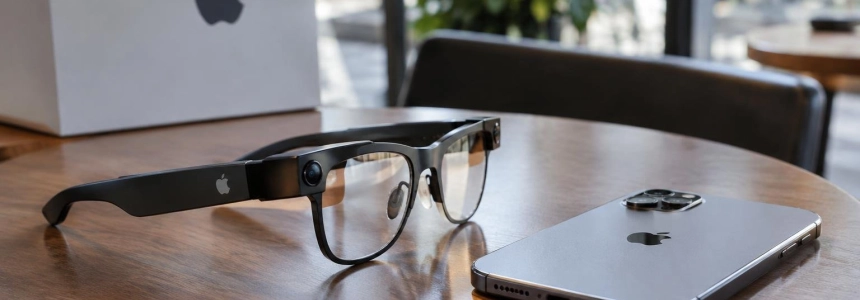
The prototypes, internally codenamed N50, are somewhat slimmer than Meta's second-generation Ray-Bans, according to design details MacRumors attributes to Gurman. Some test units have cameras in oval openings integrated flush with the frame, rather than protruding modules. A front-facing light indicates when they are being used or charged, and Apple is testing other privacy-related features.
The company is reportedly working on several styles and colors, while also focusing on materials and sensors. The Verge describes the prototypes as devices running a stripped-down version of visionOS and using a processor derived from older Apple Watch chips. MacRumors specifies that it is a stripped-down version of visionOS 28 and adds that there are custom components for wireless connectivity and image processing while the cameras are recording.
Charging is also part of the testing. The magnetic connector has three pins, is flat and rectangular, and attaches near the end of the left temple. It is roughly the size of a Tic Tac and allows the glasses to be charged while being worn. It has not been decided whether it will make it into the commercial model: Gurman, according to MacRumors, says that question remains open.
Wi-Fi would provide some autonomy when the iPhone is not nearby, though it would not turn the glasses into a standalone device. The Verge gives the example of a user continuing to listen to audio after moving away from their phone. Features that rely on third-party apps would remain tied to the paired iPhone.
The timeline depends on software and AI
Work on the glasses began in the early 2020s, and Apple has reportedly already settled much of the hardware design. According to MacRumors, the remaining challenge lies in software and artificial intelligence, areas that are behind schedule and could push back the planned 2027 launch. iPhone in Canada also reports that the hardware has progressed further than those components.
An unveiling at WWDC in June 2027 and shipments before the end of the year are therefore targets, not guaranteed dates. The Verge reports that shipments are expected to begin before the end of the year; MacRumors likewise says Apple plans to start shipping them before then. iPhone in Canada warns that the timeline could still change because of software and AI obstacles.
The project coincides with the development of AirPods with cameras, expected in late 2027. MacRumors notes that those headphones would also give Siri information about the surroundings, but that they are a separate product. Apple believes the glasses could offer greater autonomy and accommodate more sensors, with the possibility of wearing them all day.
For now, Apple's bet depends on Siri being able to connect the glasses to apps before the hardware arrives. The specific question is whether the company can resolve the software and artificial intelligence challenges in time to keep the planned 2027 announcement and shipments on track.
Sources: The Verge, 9to5Mac, MacRumors, iPhone in Canada | Canada’s source for Apple, telecom, tech news, and deals, The Apple Post