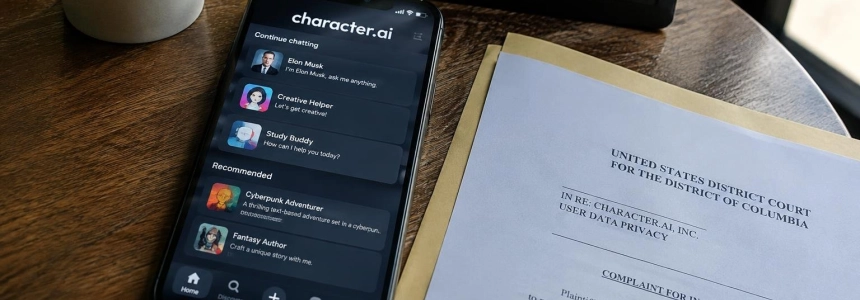
42 U.S. attorneys general want to prevent Character.AI from selling its users’ private chats and other personal data during its bankruptcy proceedings. The auction is scheduled for December 1, 2026, and would include histories linked to more than 21 million U.S. accounts, including more than 2.1 million registered to minors.
The opposition was filed with the court overseeing the company’s bankruptcy. The attorneys general argue that the proposed sale does not require the buyer to comply with Character.AI’s privacy policies, honor requests to delete data, or limit the redistribution of information. They are also asking the court to reject the identified bidder and a $350,000 payment предусмотрed in the event the company sells to another party.
What data would be included in the auction
The chat histories are not the only asset in dispute. The deal would cover account information and metadata associated with conversations, including IP addresses and possibly location data. California and other states say each chat is linked to the user’s profile and may include risk scores assigned by Character.AI to accounts flagged by the platform.
The attorneys general describe conversations containing especially sensitive material. According to state filings, the histories include exchanges in which AI characters led minors and adults into explicit sexual conversations, as well as chats in which users — including minors — spoke with characters presenting themselves as therapists or doctors. The topics mentioned include self-harm, eating disorders, and suicidal thoughts.
The coalition warns that the process could put this data in the hands of a buyer without protections equivalent to those Character.AI had offered its users. In its policies, the company had said it did not sell personal information for money. The states argue that the auction terms do not require the buyer to maintain those protections or honor opt-out or deletion requests.
“Character.AI’s plan to auction off its platform, including the IP addresses and private chats histories of its users — many of them children — with zero protection for those users is appalling. If this sale goes through, users’ sensitive data would go into the hands of a buyer even though Character.AI promised consumers that their data would not be sold.”
— Rob Bonta, California Attorney General
The risk of a second sale is also among the objections. According to the attorneys general, the contract would not prevent whoever buys the data from transferring it to a related company or a new owner without notifying users, the states, or the court. Nor would it prevent the buyer from distributing or reselling the information.
The identified bidder and the challenged terms
So far, only one bidder has been disclosed: Smirks and Pangs Acquisition LLC, also known as Smirks. The company was formed in Delaware on November 13, 2026. Character.AI selected it the following day as the stalking-horse bid for the auction, according to information submitted by the attorneys general and reported by the media.
The states say the contract does not identify a parent company or Smirks’ investors. It also allows foreign investors to participate, whose names, according to the terms described by the California attorney general and other states, would be disclosed only to Character.AI. The agreement would require the buyer to hire Character.AI’s lead attorney as its sole employee, even though the company reportedly told the court it has no ties to the bidder.
The attorneys general are asking the court to reject Smirks as the lead bidder and deny a $350,000 clause. That amount, called a “break-up fee,” would be paid to Smirks if Character.AI ultimately sold to another buyer. The coalition is also asking the court to reject the current terms of the sale and, at a minimum, exclude minors’ chats and other sensitive data from any deal.
| Date | Milestone |
|---|---|
| October 2026 | Character.AI files for Chapter 11 bankruptcy. |
| November 13, 2026 | Smirks and Pangs Acquisition LLC is formed in Delaware. |
| November 14, 2026 | Character.AI selects Smirks as the stalking-horse bid, according to the attorneys general. |
| December 1, 2026 | Scheduled date for the auction of the platform and data. |
| January 1, 2027 | State laws on chatbot safety cited by the attorneys general take effect. |
The bankruptcy and the separate Disney deal
Character.AI filed for bankruptcy protection in October, after years of controversies and related litigation, including over the safety of its services. At the time, the company said it would begin a court-supervised sale of all or substantially all of its assets. It also said user data would remain protected by its privacy policy.
The sale of the chats is part of a dispute separate from the deal involving Disney. The entertainment company agreed to acquire some Character.AI assets through a licensing deal valued at $20 million, according to TechCrunch, and to hire much of the remaining staff. Disney would not obtain users’ chats in that deal. The agreement had not yet received final court approval, according to the outlet.
The Disney deal also faced opposition from a broad coalition of attorneys general, although not exactly the same one now challenging the data auction. The Verge reported that Disney bought some assets and hired CEO Karandeep Anand, as well as bringing on part of the technical team. The attorneys general oppose that license separately; in this new case, their concern is the sale of conversations and personal data.
The company also lost its co-founders: Noam Shazeer and Daniel De Freitas returned to Google after the company signed a non-exclusive license to use Character.AI’s technology, TechCrunch reported. The platform also faced lawsuits related to child safety. One concerns the suicide of a 14-year-old boy from Florida; his mother said he had become obsessed with a chatbot on the service.
Children’s privacy and state laws
The coalition says bankruptcy does not exempt Character.AI from complying with rules that protect personal information. Among the examples cited is federal legislation that prohibits sharing the personal data of children under 13 without verifiable parental consent. The attorneys general also cite state privacy laws that, they argue, restrict the sale of data if users do not understand which categories may be shared or are not given a meaningful opportunity to object.
California, Colorado, New York, and Connecticut have chatbot safety laws that will take effect on January 1, 2027. The attorneys general argue that the service’s practices could violate state laws against unfair or deceptive business practices and that the new laws could give rise to additional violations. These are allegations by the states; the court has yet to resolve the dispute over the sale.
The authorities also question whether potential buyers were informed about Character.AI’s safety failures and legal problems, which, they say, were not disclosed to the court, the states, or users. The attorneys general are asking for terms that protect the people whose data would be transferred.
The request before the court
The coalition includes 42 attorneys general, including those from California, Colorado, Connecticut, New York, and Illinois, as well as the District of Columbia. The request seeks to halt the current auction terms, exclude certain data, and prevent the bankruptcy process from being used to transfer information without the protections the states believe the law requires.
Connecticut Attorney General William Tong criticized the company’s conduct and said his state had already opposed the Disney deal. Illinois Attorney General Kwame Raoul described the auction as a sale of highly sensitive information linked to millions of Americans and said he would continue working with his colleagues to protect user privacy and child safety.
The next date on the calendar is December 1, when the auction is scheduled. The states are asking the court to reject Smirks’ bid and its terms before the deal proceeds; they also argue that any sale should exclude minors’ conversations and other sensitive data. The ruling will determine whether the auction can move forward on those terms.
Sources: The Verge, Engadget, TechCrunch, State of California - Department of Justice - Office of the Attorney General, Illinois Attorney General, CT.gov - Connecticut's Official State Website