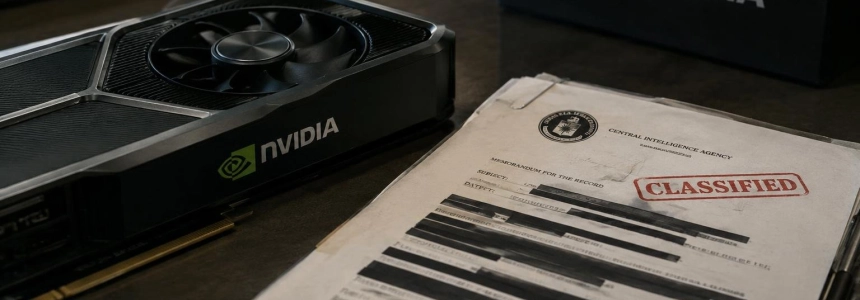
Marco Rubio reportedly recast a CIA assessment of Jensen Huang and his relationship with Alice Huang, an executive suspected of having ties to China, in more forceful language. According to The Washington Post, whose report was covered by The Times of India, Rubio’s memo contributed to a controversy that ended with Huang leaving his position as head of Nvidia.
The episode brings together two issues that have become intertwined in Washington: what the intercepted communications actually indicated and how that information was used in dealings with President Donald Trump. CNN reported that Rubio shared a classified memo with a small group of senior officials; The Washington Post, according to The Times of India’s coverage, says the secretary of state changed the wording of the CIA’s conclusions.
From intercepted communications to the memo
In the spring, U.S. intelligence agencies intercepted communications suggesting that an executive at Megaspeed, a company under investigation for the possible diversion of sensitive technology to China, was having an extramarital relationship with a U.S. person. CNN reported that the person’s identity was initially concealed in intelligence reports, a practice intended to protect the privacy of Americans whose communications are collected while monitoring foreign targets.
Officials later requested that the name be disclosed. Sources consulted by CNN said the person was Jensen Huang, then CEO of Nvidia. The request to unmask the person is unusual: it is normally made by a senior official, must go through an approval process, and limits subsequent access to a select group of policymakers.
Rubio, who serves as both secretary of state and national security adviser, drafted a memo summarizing the information and distributed it to a very small group of senior officials, including White House staff, according to CNN. The document was not prepared specifically for Trump, although the president was briefed on the matter several times.
The account of Rubio’s direct involvement in the wording comes from The Washington Post report cited by The Times of India. A person familiar with the matter told the newspaper that Rubio recast the agency’s conclusions in more assertive terms. The article does not specify which exact phrases he changed or reproduce the CIA’s original assessment.
A suspicion that remains unresolved
The intelligence focus was not limited to the personal relationship. Alice Huang, an executive at Megaspeed, had been a significant target of the National Security Agency for at least several months, according to CNN’s sources. The company was under investigation for the possible diversion of restricted technology to China, as part of a broader inquiry into foreign shell companies.
The Justice and Commerce departments opened an investigation into Alice Huang’s company in 2024, CNN reported. The outlet links that work to suspicions that companies of this kind divert Nvidia chips subject to restrictions. The intelligence indicated a relationship between Jensen Huang and Alice Huang, but U.S. agencies were still trying to determine what ties she had to the Chinese government.
Officials disagree about the strength of the evidence that Alice Huang had been recruited by China’s Ministry of State Security to spy on Jensen Huang and, by extension, U.S. officials. Attorney General Todd Blanche said Thursday that no conclusions had been reached about who she was or was not, either by the Justice Department, by him, or by FBI Director Kash Patel.
“The Chinese system will always act in the best interests of the Chinese system, and the United States will always act in the best interests of the United States. I work for the American people.”
— Marco Rubio, secretary of state and national security adviser
Rubio made those remarks at a G7 meeting in Paris this week, after repeatedly declining to answer questions about his role in the case. When asked whether the espionage allegations had changed his stance on negotiating with Beijing over artificial intelligence, he responded with that reference to the interests of both countries.
Trump was briefed, and Huang lost influence
Rubio verbally briefed Trump on the intelligence in May aboard Air Force One, during a trip to Alaska. Jensen Huang was part of the group traveling with the president to China, according to CNN. The memo was also intended to ensure that officials dealing with the CEO knew about the relationship attributed to the two, several sources told the outlet.
Trump appeared to focus at least in part on the personal dimension of the matter, which he considered embarrassing for Huang, according to a person familiar with his reaction. He also expressed concern about the possible economic consequences: spending on artificial intelligence had boosted the U.S. economy, according to CNN.
This week, after Huang left his position amid allegations about other extramarital relationships, Trump described the situation as a personal problem. He said Huang was “going through hell” and expressed concern for his wife and children. He also said the question of whether Alice Huang was a Chinese spy remained unresolved.
Huang’s departure came after an unusual relationship with Trump. According to The Times of India, the executive had persuaded the president to allow Nvidia to sell some of its AI chips to China. That position clashed with national security officials and China hawks, who feared that access to advanced U.S. technology would strengthen China’s military and technological capabilities.
The Washington Post report also described resentment within the administration over Huang’s influence on Trump. Two former officials told the newspaper that some wanted to weaken his position; one said they wanted to destroy the influence he wielded over the president. The memo eventually leaked to the media and fueled the controversy.
Concerns about technology controls remain unresolved
For some officials, sharing the information was a prudent step for those negotiating or interacting with Huang on behalf of the government. One source cited by CNN said the risk was not only that the information might reach China, but that a personal relationship could lead to approving deals without due diligence and against U.S. national security objectives.
Others believe the focus on Alice Huang’s relationship with the Chinese government has distracted from a broader issue: the lack of effective measures to stop the diversion to China of sophisticated technology that is important to competition in artificial intelligence. The possible connection to espionage remains under investigation, but the sources cited by CNN do not describe a definitive conclusion about her.
Jensen Huang’s departure from Nvidia marks the immediate outcome of the crisis, but it does not clarify whether Alice Huang collaborated with Beijing or what exactly the CIA’s original wording said. Trump has continued speaking with Huang, and the White House referred CNN to his public statements when asked about the case.
Sources: The Times of India, News Channel 3-12