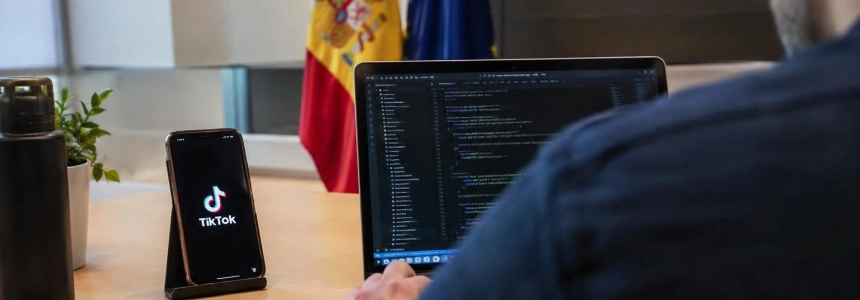
The Spanish government is considering pausing TikTok in Spain following an investigation by Maldita.es that found more than 1,000 explicit videos and images of child sexual abuse on the platform. The Ministry of Youth and Children has sent information to the State Prosecutor General’s Office for it to take action, and Minister Sira Rego has requested an urgent meeting with TikTok representatives in the country.
Suspending the service is under consideration, but Rego has not publicly announced or confirmed such a decision. The ministry proposes that services be interrupted if deemed appropriate, while demanding explanations from the company and immediate measures to protect children and teenagers. The State Prosecutor’s Office has not yet announced what action it will take.
Over 35 days, Maldita.es compiled more than 1,000 videos and images containing explicit material of child sexual abuse, published by more than 200 profiles and receiving a total of 48 million views. In a sample of 50 videos reported to TikTok, the platform removed five and blocked another 13 in Spain only.
A 35-day investigation and more than 1,000 posts
Maldita.es says it collected the videos between September 11 and October 15, 2026. Its investigation identified more than 200 profiles publishing explicit content that was accessible to any user. In its detailed count, the organization tallied 1,183 videos, which had a combined 48 million views.
The analysis also measured account activity. As of October 15, 136 of the 231 accounts analyzed were still active, or 59%. Maldita.es found posts that had been on the platform for up to four months: the oldest video it found that was still available dated back to June and had accumulated 9,859 views.
The investigation describes profiles that, according to Maldita.es, functioned as catalogs for promoting and selling material. Some posts overlaid explicit clips on photographs; others used text, emoticons, or seemingly unrelated videos to conceal parts of the content or direct users to other platforms. Profiles could include contact details or references to channels on Telegram and Zangi, where collections of videos or paid access to private groups were offered. Maldita.es also mentions contacts via WhatsApp or TikTok direct messages.
Comments and accounts that consumed or sought out the material form another part of the findings. Maldita.es counted 12,068 comments in Spanish, posted by 7,725 different accounts, and linked those comments to the possession, distribution, or exchange of content. In its summary of the investigation, À Punt also reported more than 20,000 profiles of potential pedophiles, of which more than 7,000 operated in Spanish; it cited 780 accounts that allegedly recruited buyers, 91 livestreams featuring minors in 17 countries where users requested actions in exchange for money, and a community of more than 2,000 members interested in baby content.
The figures describe different groups and parts of the analysis, not a single interchangeable category: Maldita.es refers to more than 200 profiles that published the material, while counts of accounts commenting on or seeking content are broader. The investigation argues that TikTok’s search engine and recommendation system also led its researchers to some of the posts.
TikTok removed five of the 50 reported videos
To measure the platform’s response, Maldita.es reported a sample of 50 videos through TikTok’s designated channels. Those posts had accumulated 8.8 million views and more than 148,000 “likes.” The company removed five, or 10%, and blocked 13, or 26%, in Spain only. It did not respond in 6% of cases; for the remaining 58%, it said the videos did not violate the law or its rules.
The status of the accounts did not always match the removal of posts. According to Maldita.es, 47% of the profiles whose videos TikTok removed or blocked following the reports remained active. Overall, 72 hours after the reports were submitted, 38% of the reported accounts were still accessible. The organization adds that more than half of the videos the platform had deemed acceptable were removed during those 72 hours.
Maldita.es documented cases in which, it says, the platform rejected both the initial report and an appeal. One reported video was still public on October 28, with 5,000 “likes”; another had more than 87,000 views and, according to the investigation, remained available along with the account that had posted it. In the sample, the most popular video had more than four million views. TikTok blocked it in Spain after it was reported, but the account that posted it remained active and had more than 3,400 followers.
The organization links the videos’ reach to content recommendations: the accounts in the sample had 70,000 followers, and their posts had been shared fewer than 14,000 times, compared with the 8.8 million views recorded for the 50 videos. Maldita.es argues that the reach would be difficult to explain without recommendations from the platform itself. It also notes that none of these videos was labeled as advertising.
In another part of the analysis, Maldita.es says the accounts under investigation had published 866 videos with more than 820,000 “likes,” and that the sample of 50 reported posts had received more than 18,000 saves as favorites. The organization could not determine whether TikTok subjected the reported videos to human or automated review.
Rego demands explanations and the State Prosecutor’s Office receives the information
The Ministry of Youth and Children has sent the State Prosecutor General’s Office a document containing the available information and asked it to take, within its remit, the necessary measures to protect potentially affected minors. Rego also requested an urgent meeting with TikTok officials in Spain to hear the company’s explanations and learn about measures already taken or planned.
“The documented facts are extremely serious and require an immediate, coordinated response from all competent administrations, both nationally and at the European level.”
— Ministry of Youth and Children
The ministry believes the findings point to shortcomings in content detection and moderation and in the role of recommendation systems. It also suggests that the situation could constitute a violation of children’s rights. The request to the State Prosecutor’s Office does not amount to a decision to suspend TikTok: the department is asking for an investigation and is considering interrupting the service as one possibility.
TikTok, owned by ByteDance, asked Maldita.es for more information, according to the organization, but did not answer its questions about child protection, the shortcomings identified, and the presence of illegal material. Xataka said it contacted the company and had not received a response when it published its report. Maldita.es says it also contacted Telegram, Zangi, and WhatsApp to ask about those platforms’ measures; only Meta, WhatsApp’s owner, replied, referring it to its help center.
A pause, an option subject to legal limits
The possibility of stopping TikTok in Spain has not been confirmed by the minister and, according to Xataka, a restriction of that scope would face legal obstacles. The outlet notes that TikTok is designated as a very large online platform and is supervised by the European Commission under the Digital Services Act. According to that report, the law provides for restricting a service as a last resort and with judicial authorization; such a measure has never been applied to a social network of that size.
Maldita.es argues that TikTok’s response raises questions about compliance with the obligations of the Digital Services Act: acting promptly to remove illegal content or disable access to it once the platform becomes aware of its existence, and implementing risk-mitigation measures. The organization also cites obligations to notify authorities of suspicions of crimes involving a threat to a person’s life or safety.
The case adds to other actions that Xataka places in 2026: in January, the government referred X to the State Prosecutor’s Office over nude images created with Grok, and in February it did the same with X, Meta, and TikTok over sexual material involving minors generated with artificial intelligence. Maldita.es, meanwhile, describes this investigation as its third on the subject in a year, following others published in May and December.
The organization says it documented the evidence so it can be used in legal proceedings even if TikTok later deletes the accounts. It also plans to continue publishing the investigation series through November 13. For now, the meeting requested by Rego and the State Prosecutor’s Office’s response are still pending.
Sources: 3DJuegos, Marketing4eCommerce, Xataka, Maldita.es - Journalism to keep you from being fooled, Maldita.es - Journalism to keep you from being fooled, À Punt, Capitol