Microsoft wants more devices to stop relying on drivers developed by their manufacturers: at Ignite 2026, it announced an expansion of its drivers built into Windows, with the goal of reducing crashes, improving security, and preventing a faulty driver from affecting the entire system.
The strategy is not to abruptly remove all external drivers. Microsoft wants Windows to provide common drivers for more devices and manufacturers to use them when they cover the required functions. At the same time, it is reviewing legacy drivers that are still distributed through Windows Update.
Fewer variants and less code close to the core
At Ignite 2026, Mehmet Kucukgoz, Windows product manager, confirmed that Microsoft is working on new families of built-in drivers. Computer Hoy lists audio drivers, I3C buses, USB Ethernet adapters, and MIPI-based cameras; The Living Draft also includes printers among the priority areas.
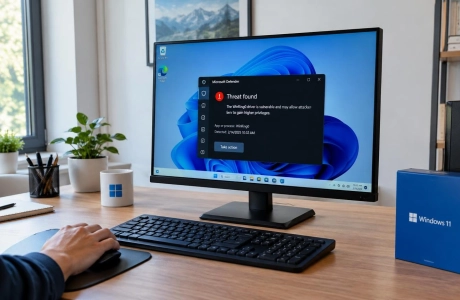
The reason is not just to simplify installation. Microsoft believes that third-party drivers operating close to the kernel can contribute to security, stability, and reliability problems. The more code Microsoft manages directly, the easier it will be, the company argues, to maintain consistent behavior across devices.
The Living Draft puts the scale of the ecosystem at thousands of partners and tens of thousands of active driver families across the Windows installed base. This diversity makes it possible to support specific devices and features, but it also multiplies the implementations that must be maintained and whose compatibility can complicate troubleshooting.
A kernel-mode driver has deep access to the operating system; if it fails, it can cause a crash, a blue screen, or a vulnerability. Microsoft’s initiative aims to limit that exposure with its own class drivers and, where the architecture allows, move functions out of the kernel.
Printers: a transition with a timeline
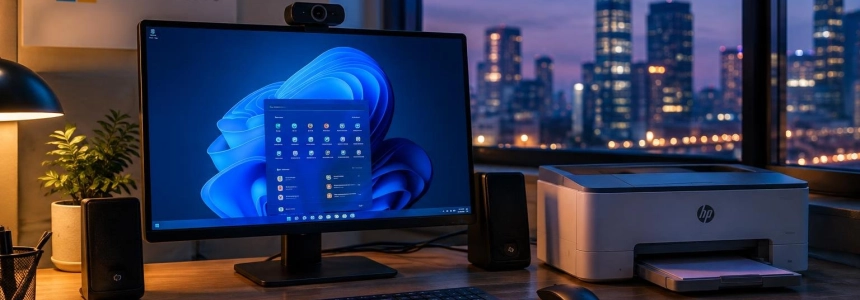
Printing is one of the first areas where the policy is already being applied. Microsoft is promoting Windows Ready Print and the IPP class driver built into Windows, which the system prioritizes for compatible printers. The idea is to reduce the need to install additional manufacturer packages for common functions.
The Living Draft details three milestones for legacy printer drivers. Starting January 15, 2026, new print drivers targeting Windows 11 and later versions will generally no longer be published on Windows Update, although Microsoft allows for case-by-case exceptions. Starting July 1, 2026, Windows will prefer the built-in IPP driver when compatible options are available.
| Date | Change described by The Living Draft |
|---|---|
| January 15, 2026 | New legacy printer drivers for Windows 11 and later will generally no longer be published on Windows Update; case-by-case exceptions may apply. |
| July 1, 2026 | Windows prioritizes the built-in IPP class driver if compatible options are available. |
| July 1, 2027 | Windows Update will no longer accept third-party printer driver updates, except for security fixes. |
This timeline does not mean that existing printers will stop working or that manufacturers can no longer offer their drivers. The Living Draft notes that users will be able to install existing external drivers, including packages distributed by manufacturers. The difference lies in the role of Windows Update and which option the system puts first when both are compatible.
Audio, cameras, Ethernet, and buses
For audio, both articles describe Microsoft’s work with SoundWire and SDCA, the SoundWire Device Class for Audio standard. The Living Draft says that the SDCA class driver is available and will be included with Windows; Computer Hoy presents the new audio drivers as part of the driver families Microsoft is developing. In both cases, support depends on compatible hardware.
A common driver does not necessarily replace the manufacturer’s tools for everything. The Living Draft warns that special controls, sound processing, and custom audio enhancements may still depend on OEM software. The same may be true of other categories if a specific feature is not covered by the built-in driver.
For cameras, Microsoft is developing an MIPI class driver that does not yet have a confirmed public release date, according to The Living Draft. MIPI is the standard cited for cameras found in some laptops and other devices. A common driver could support compatible hardware without maintaining so many individual implementations, but no release date for general availability has been announced.
For USB Ethernet adapters, Microsoft has updated its class driver based on USB Network Control Model (NCM), a common model for compatible USB network devices. It is also working on class drivers for I3C. The Living Draft describes the I3C driver as developed and links it to the modernization of the driver architecture for that bus.
Computer Hoy also includes SoundWire, SDCA, I3C, USB Ethernet, and MIPI cameras among the categories discussed at Ignite. Availability is not uniform: some drivers have been implemented or updated, while others are still in development. Microsoft intends to expand native support gradually, not roll out a universal replacement all at once.
The plan also targets kernel mode
Replacing external drivers is part of a broader change: Microsoft wants more hardware functions to run in user mode where feasible, rather than inside the kernel. According to The Living Draft, moving Wi-Fi drivers out of the kernel was also discussed at Ignite. The publication says Kucukgoz confirmed that work is underway and points to a 2027 release target.
Not all drivers can be moved in this way. The Living Draft reports that some operations still require kernel access for technical or performance reasons. Microsoft’s proposal is to reduce unnecessary dependencies and strengthen the drivers that need to retain that access, not eliminate it entirely.
The DQI initiative sets the quality framework
Microsoft frames these changes as part of the Driver Quality Initiative (DQI), introduced at WinHEC in May 2026, according to The Living Draft. The program aims to improve the reliability, security, and performance of Windows drivers, with hardware partners such as AMD, Intel, and Nvidia taking part.
The Living Draft describes four pillars. “Architecture” covers the use of class drivers and moving suitable functions to user mode; “Trust” includes partner verification, certification, and automated security checks. “Lifecycle” concerns how drivers are published, updated, maintained, and retired, including the removal of outdated or low-quality options from Windows Update.
The fourth pillar, “Quality Measures,” expands the criteria beyond system crashes: it also covers stability, functionality, performance, power consumption, thermal impact, and security. The initiative proposes that Microsoft and manufacturers share responsibility for quality, rather than leaving the operating system to bear compatibility problems on its own.
Computer Hoy links DQI to the push for native drivers and the recommendation to limit customizations to cases that genuinely require them. The Living Draft, for its part, notes that some peripherals’ advanced features may still need OEM software. The transition therefore does not eliminate the need for manufacturer drivers: it aims to limit their role to what the common driver cannot provide.
A gradual migration, with no single end date
The situation varies by component: the IPP driver is already prioritized for compatible printers; the SDCA audio driver is available, according to The Living Draft; USB Ethernet based on NCM has been updated, and the MIPI camera driver is still in development. Moving Wi-Fi out of the kernel has 2027 as its target, but no single date has been announced for completing all the changes.
For most users, the change should arrive through Windows and its update mechanisms, not by manually uninstalling drivers. Manufacturer drivers will still make sense when they provide compatibility or specific features that built-in drivers do not cover. The open question is how much hardware will be able to work with these common alternatives without losing its own features.
Sources: Computer Hoy, The Living Draft