Sanitas confirmed the exfiltration of MiSanitas users’ data after detecting mass attempts at unauthorized access on Tuesday, November 24. The company is warning its customers of a high risk of identity theft, phishing and social engineering: names, surnames, national ID numbers and lists of medical reports associated with some profiles were exposed.
Xataka reported the incident after reviewing the email Sanitas sent to its customers. According to the message, some attempts succeeded in accessing profiles and reading personally identifying and health-related information. A subsequent investigation confirmed that data had been exfiltrated.
What data was exposed
The compromised information includes names, surnames, national ID numbers and lists of reports from the “Medical reports” section of MiSanitas. Sanitas said that diagnoses and test results were not exposed: the data related to the reports consisted of their lists, not the clinical content.
This distinction matters when understanding the scope disclosed by the company, but it does not eliminate the risk. A name and national ID number linked to a specialty or care relationship can make a fraudulent message appear legitimate—for example, a call claiming to come from the unit where the customer received care.
Sanitas described the danger in its email with an explicit warning:
“there is a high risk of attempts at identity theft, unwanted communications (spam or phishing), social engineering attacks, or misuse of your identifying data”
— Sanitas, in the email sent to its customers
Identifying and health-related data cannot be changed as easily as a password. Therefore, technically closing the incident does not automatically eliminate the possibility that the exposed information could be used later.
Sanitas’ response and the unanswered questions
The company says it activated its protocols and extraordinary measures after detecting the access attempts. Following an investigation, it confirmed the exfiltration and said the situation was brought under control hours later; it also stated that its systems are operating normally.
Sanitas reported the incident to the police and the Spanish Data Protection Agency (AEPD), the Spanish body that oversees compliance with data protection regulations. In its email to customers, it added that, to date, it had no evidence that the information had been misused.
The number of people affected and the entry point remain unknown. It has also not been explained how the attackers managed to access the profiles. Xataka said it had asked Sanitas for more information on these points.
Skylance Security lists as still-open questions whether the access could have been related to reused passwords, an API flaw or the account recovery process, and whether users had multi-factor authentication. These possibilities have not been confirmed and do not identify the method used in this incident.
What customers should watch out for
Anyone receiving communications about their health, policy or reports should be wary of unexpected calls and messages, even if they seem legitimate. Xataka reports Sanitas’ recommendation not to provide data in response to unsolicited communications and to be especially suspicious of notices about enrollment in services the customer has not signed up for.
Caution is also warranted because of how a scam could be constructed: the available data could be used to personalize a message with information the recipient recognizes. Sanitas’ warning covers attempts at impersonation, spam, phishing, social engineering and misuse of identifying data.
Notification and data protection obligations
Health data is considered a special category under the General Data Protection Regulation. Xataka notes that when a breach poses a risk to individuals, the data controller must notify the AEPD within a maximum of 72 hours after becoming aware of it, and inform those affected when the risk is high.
Sanitas’ communication to its customers comes in this context of risk. Xataka notes that the speed and clarity of the response may be relevant in any potential review of the company’s actions, although they do not make it possible to predict how the AEPD will assess the situation.
The outlet cites the separate 2022 Generali data leak as a precedent, which resulted in a five-million-euro fine that the company appealed. That case does not determine the outcome of the Sanitas incident, but it illustrates that regulatory consequences may depend on how a breach is handled.
An incident under control, but with persistent data
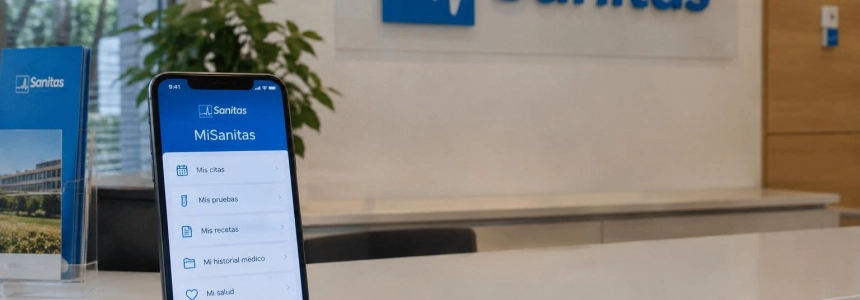
MiSanitas is the app that allows customers to manage appointments, reports and policy services, according to the company’s own FAQs cited by Skylance Security. This explains why access to profiles could expose lists of medical reports, as well as the associated identifying data.
For now, Sanitas says its systems are operational and that it has no evidence of data misuse. The specific advice for its customers is to remain cautious about contact referring to their medical care and to use the contact channels provided by the company if they need to verify a communication.
Sources: Xataka, Skylance Security, X (formerly Twitter), Prensa Mercosur