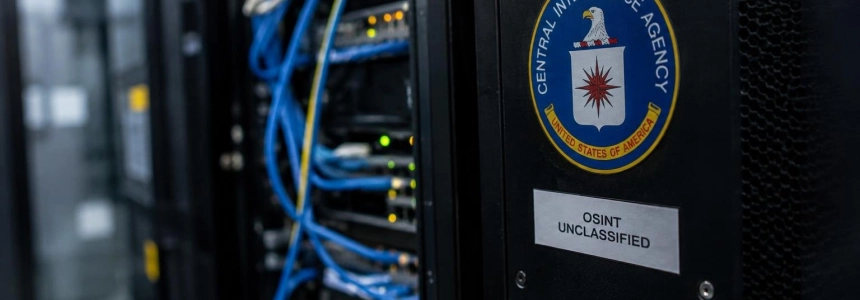
An intrusion affected an unclassified open-source intelligence analysis system used by the CIA and the United States Office of the Director of National Intelligence (ODNI). The incident had been resolved, but the identity of the attackers and the information compromised remained unknown.
The news emerged on November 24 and was first reported by The New York Times. People familiar with the incident confirmed to the Associated Press and Nextgov/FCW that the breach had occurred; one of them told AP that the issue had been resolved. The following day, BleepingComputer reported that the attack had also affected the National Geospatial-Intelligence Agency (NGA).
A system for analyzing publicly accessible data
The affected system was used for open-source intelligence, or OSINT: collecting and analyzing materials available to the public or through commercial sources. Examples cited by SecurityWeek include the internet, commercial satellites, and private data brokers. Nextgov/FCW mentions news and social media, used to track foreign governments, military activity, and other events.
The fact that these materials are unclassified does not eliminate their potential value to intelligence services. Analyzed individually or alongside information obtained through secret programs, they can help analysts interpret events. An intrusion could also reveal what topics they research or follow, even if no classified file was accessed.
“If you can see what analysts are searching for and what topics they follow, you get a pretty clear picture of U.S. intelligence priorities and blind spots without ever touching a classified file.”
— Ben Bernstein, executive at cybersecurity company Huntress
Bernstein raised that risk when commenting on the incident to Nextgov/FCW. Aleksandr Yampolskiy, co-founder and CEO of SecurityScorecard, noted that, depending on what was exposed, an adversary could gain clues about research priorities and intelligence gaps. What data was actually accessible remains unclear.
ARTEX emerges as one possible tool
ARTEX’s possible involvement was described with varying degrees of caution. A source familiar with the matter told The New York Times, according to BleepingComputer, that the attack was carried out using this AI-powered penetration testing framework. Nextgov/FCW said it was believed to have been used, while SecurityWeek did not identify a tool or perpetrator.
Nextgov/FCW described ARTEX as a tool that automatically locates and exploits systems, developed by a Chinese cybersecurity engineer known as “Autumn-27.” According to the outlet, it had recently become a common tool among criminal hackers. The sources do not specify what role it may have played in this intrusion.
The same outlet reported that hackers had used ARTEX to help with an intrusion into the Department of Defense’s Cyber Defense Command (DCDC). Two people familiar with the matter described that incident; one of them characterized it as low impact. It is unclear whether that intrusion directly coincided with the attacks related to the CIA and ODNI.
The National Geospatial-Intelligence Agency was also reportedly affected at the same time, according to New York Times reporting cited by BleepingComputer and Nextgov/FCW. The CIA and ODNI had not responded to requests for comment cited by BleepingComputer; the CIA declined to comment to Nextgov/FCW, and the ODNI did not respond to that outlet. NGA and DCDC spokespeople also did not immediately respond to Nextgov/FCW’s requests.
No access to classified networks
People cited by AP and Nextgov/FCW said the breach did not affect classified systems and that the incident had been resolved. BleepingComputer published a statement from a source familiar with the matter saying that the attack had not involved classified networks or information and that no other system was then at risk.
That does not answer the question of what an intruder may have obtained from the unclassified environment. SecurityWeek said it was unknown what specific information had been compromised or who was responsible. Nextgov/FCW also noted that it was unclear whether any information had been stolen.
The distinction matters when interpreting the reported scope: sources rule out the exposure of classified material, but leave open the possibility that activity in the OSINT system could have revealed analytical interests. None of the outlets identified specific data that had been extracted.
A week of incidents at federal agencies
The intrusion was disclosed amid other problems affecting U.S. systems. The previous week, the National Security Agency’s (NSA) classified communications network experienced a three-day outage. According to Nextgov/FCW, the NSA resumed normal operations on Friday, and Director of National Intelligence Jay Clayton attributed the outage to software update work. BleepingComputer also reported the outage, which the agency described as scheduled routine maintenance that, it said, did not affect its essential capabilities.
During those same days, the FBI was investigating an apparent intrusion into its National Crime Information Center (NCIC), a national law enforcement database. BleepingComputer said it was unknown how the attackers had gained access, when the breach occurred, or whether they had stolen information. AP reported that the Donald Trump administration had acknowledged the incident.
Nextgov/FCW added that the Department of Agriculture had taken several applications offline following a security incident, disrupting financial tools used to support payments to farmers. AP also placed the CIA breach among a series of recent failures that included communication problems between air traffic controllers and pilots, as well as outages affecting systems at Apple, JPMorgan Chase, and Microsoft.
The Trump administration maintained that the outages were not part of a coordinated cyberattack. AP reported that Clayton appeared on television programs on Sunday to reassure the public and attributed many of the failures to the race to patch and update systems in response to attackers with more sophisticated artificial intelligence tools.
The specific scope remains unknown
The available information does not clarify who accessed the analysis system or whether they copied data. Nor does it identify which agencies, apart from the CIA and ODNI, were directly affected; the possible impact on the NGA was attributed to The New York Times’ reporting, while ARTEX’s use was presented either as a source’s account or as a possibility.
For now, the fact confirmed by people cited by several outlets is that the unclassified system was breached and that the incident was resolved. The nature of the exposed data and attribution for the attack remain unanswered.
Sources: BleepingComputer, SecurityWeek, Nextgov/FCW