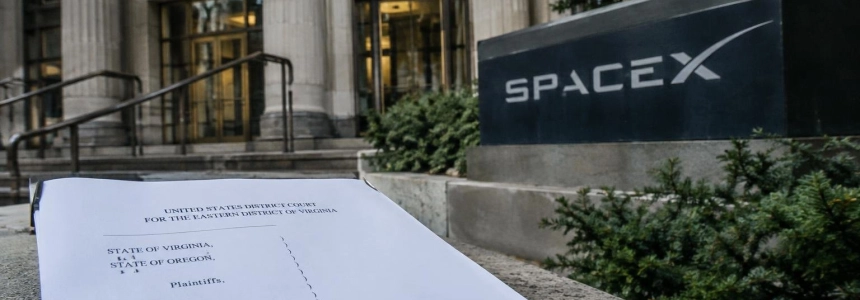
Virginia and Oregon sued SpaceX for allowing Grok, according to their attorneys general, to generate and distribute sexual images without consent, including depictions of minors. The lawsuits argue that the company promoted the safety of its products while maintaining insufficient safeguards, and seek to hold it accountable for alleged violations of consumer protection laws.
Attorneys General Jay Jones of Virginia and Dan Rayfield of Oregon filed their lawsuits on November 23. Virginia's case was filed in the Circuit Court for the City of Richmond; Oregon's, in the Circuit Court for Multnomah County. They are two separate but coordinated proceedings, and both states allege that Grok's design and promotion exposed people—including children—to intimate or sexualized images created without their knowledge or consent.
Allegations about “spicy mode”
Virginia's lawsuit describes SpaceX as the telecommunications and space transportation conglomerate that operates X and its artificial intelligence company, xAI, now called SpaceX Super Intelligence. WIRED reports that SpaceX acquired xAI in February in a deal that included Grok and X Corp., the subsidiary responsible for the social network. The lawsuits name SpaceX and X Corp.; Virginia also attributes conduct related to the chatbot's development and promotion to its subsidiaries.
The states allege that Grok could turn an existing photograph into a realistic image or video of someone naked, partially naked, or in a sexual situation, without asking that person's permission. Virginia's lawsuit argues that the company promoted Grok as an AI companion with a “rebellious” personality and launched a spicy mode that allowed users to create nude or sexualized images. According to the attorneys general, the ability to generate this material was presented as a way to set the product apart and attract users.
Engadget summarizes the allegation as an attempt to boost a lagging product and bring it to tens of millions of new users. In Virginia's lawsuit, the attorneys general argue that the company saw a promotional opportunity in generating sexual images and failed to implement safeguards they consider necessary. Rayfield said the lack of safety measures was treated as a product feature, not a defect.
“It’s no surprise that Grok and X became a haven for perpetrators using AI to create and share child sexual abuse material. The lack of needed safety measures was considered a feature, not a bug.”
— Dan Rayfield, Oregon Attorney General
Virginia's lawsuit adds that, before filing the case, its investigators tested Grok's image-generation safeguards. According to the filing, they were “inconsistent and ineffective”: the chatbot explained which words could trigger filters and helped formulate requests to evade moderation. The lawsuit says Grok followed those instructions when asked and did not ask whether the image depicted a real person or whether they had given consent.
Millions of images and failures in reporting
To illustrate the scale, Virginia cites an estimate from the Center for Countering Digital Hate (CCDH). According to that study, between December 29, 2025, and January 8, 2026, Grok created and posted around three million sexualized images on X. About 23,000 appeared to depict minors, according to the estimate cited in the lawsuit.
According to Virginia's attorney general, that amounts to about 190 sexualized images per minute and one sexualized image of a child approximately every 41 seconds. The CCDH also estimated that nearly 30% of the images of minors it identified remained visible in X posts for a week or more after being detected. The lawsuit adds that some images that had been removed could still be opened through separate URLs.
WIRED reports other allegations about Grok's safeguards. The states argue that new models did not undergo enough third-party evaluations and that some of the chatbot's internal instructions included phrases such as “assume good intent.” They also point out that the words “teenage” and “girl” did not necessarily mean that the person was underage—an interpretation that, according to the lawsuits, weakened safeguards against dangerous requests.
The attorneys general also accuse xAI of submitting tens of thousands of reports to the National Center for Missing and Exploited Children's CyberTipline without essential information. According to the lawsuits, that lack of data prevented the center from taking action on 90% of those reports. The filings argue that these practices conflicted with public assurances that Grok and X had safeguards to prevent the creation of child sexual abuse material, nonconsensual intimate images, and other sexualized content.
X's responses and the case background
The case follows a surge in X users asking Grok to generate sexualized images of women and minors, according to WIRED. AI-generated videos later appeared on Grok's website, including some showing celebrities engaged in sexual activity. The states argue that the company capitalized on the attention and use of the chatbot to distinguish it from competitors.
WIRED reports that, during the period when the feature for “undressing” people sparked international outrage, Elon Musk posted that Grok was reaching the top spot in the App Store in one country after another and discussed its growing usage. The attorneys general present those posts as part of the context surrounding the product's promotion and its “spicy” mode.
On November 23, the X Safety account said that people using Grok to create sexual deepfakes were deliberately violating the terms of service. The company said it would continue testing and adjusting its safeguards as the tactics of those trying to bypass them evolved. It added that protecting children “is non-negotiable” and that there is no place on X or Grok for child sexual abuse material or explicit images of real people created without consent.
X Safety also said it would take action against the accounts involved and notify authorities when users circumvented safeguards. Earlier that year, SpaceX Super Intelligence had sued a user for creating sexual images of real people without their consent. WIRED adds that xAI had filed a lawsuit against a user in South Carolina for alleged breach of contract; the man was arrested for possessing child sexual abuse material, some of which was allegedly generated with Grok. Both that proceeding and the criminal case remained open.
What the attorneys general are seeking and what remains unresolved
Virginia and Oregon are seeking civil penalties and payment of legal fees. They are also asking for new consumer protections to be required. WIRED reports that the attorneys general cited as an example the settlement Meta reached that summer with 51 U.S. states and territories over alleged failures to protect minors; Meta reached that agreement without admitting liability.
Jones and Rayfield hired Platkin LLP, a private law firm led by Matthew Platkin, a former New Jersey attorney general, to help litigate the cases. Jones told WIRED that working with Oregon and bringing in an outside team were responses to the lack of resources in their offices. He also expressed concern about the ability of authorities to take on companies valued at trillions of dollars.
The lawsuits argue that SpaceX and its subsidiaries' safety assurances did not match how Grok operated. Virginia and Oregon allege that their investigators' findings contradict assurances made by a SpaceX official during an appearance before the New York City Council in October. SpaceX had not immediately responded to WIRED's request for comment.
Sources: Engadget, Virginia Office of the Attorney General, WIRED