Spain has approved a special regime for up to 20 public research centers working on strategic technologies such as artificial intelligence, advanced semiconductors and quantum computing. Royal Decree-Law 40/2026, approved by the Council of Ministers on November 20, will allow them to hire more flexibly, purchase equipment with fewer administrative procedures and transfer results more quickly; its continuation now depends on parliamentary ratification.
The measure applies to specific research areas, not all the activities of the selected centers. The decree defines scientific and technological sovereignty as the ability to generate, retain, protect and use knowledge and critical technologies for national security, essential services and economic competitiveness.
Ten areas and a regime limited to specific research lines
The list comprises ten strategic technology areas: advanced semiconductors, artificial intelligence, quantum technologies, biotechnologies, connectivity and navigation, advanced digital technologies, sensing, space and propulsion, energy, robotics and autonomous systems, as well as advanced materials, manufacturing and recycling. The selection must be limited to R&D&I lines directly related to these areas and to technological sovereignty.
Public-sector consortia and foundations may apply, as may public entities accredited as Severo Ochoa centers or María de Maeztu units, provided they conduct high-impact research linked to these objectives. The regime will be granted for five years, renewable for up to ten; initially, no more than 20 centers may hold this designation at the same time. An evaluation after three years could lead the Government to gradually raise the limit if the results are favorable.
The decision will go through the Interministerial Commission for Science, Technology and Innovation for Strategic Autonomy and Strategic Projects, established by the decree. The Ministry of Science, Innovation and Universities said it will comprise 14 ministries; the commission will assess applications and submit a proposal to the Council of Ministers, which will approve the designation and specify the affected research lines, applicable measures and duration.
The new status removes public employment offer and payroll limits for employees working on those research lines. It also raises the thresholds for certain simplified procurement procedures and exempts them from centralized procurement. The scope is limited to the designated research: the rest of the center’s activities are not automatically covered by the special regime.
Hiring, technology transfer and oversight
The selected centers will be able to hire staff and offer more competitive pay, speed up the purchase of goods and equipment, and simplify the reporting of grants. According to El País, they will be able to use the simplified abbreviated procedure for works contracts up to 200,000 euros and supply and service contracts up to 150,000 euros; the previous limits were 80,000 and 60,000 euros, respectively.
Technology transfer is also changing. The transfer to third parties of rights to research may be governed by private law and awarded directly, without applying the Public Sector Contracts Law. The centers may participate as minority partners in knowledge-based companies and enter into agreements with public or private entities under the conditions set out in the legislation.
This flexibility comes with external audits and public safeguards. Contracts and agreements must include provisions on security, confidentiality, protection of results and public returns, as well as safeguards against changes of control. The interministerial commission will review the audits and may suspend measures or propose that the Council of Ministers revoke the designation if it detects non-compliance, security risks, substantial changes or loss of accreditation.
The decree extends some of these simplifications to the public R&D&I system as a whole. It allows public research organizations to act as in-house providers for the Administration, facilitates scientific and training contracts with companies and simplifies agreements. It also expands teaching compatibility for researchers at public organizations and raises to 150 hours per year the limit for training activities exempt from incompatibility rules.
The Ministry of Science lists other staffing measures: internal promotion pathways for technical staff, improvements to mobility and dual appointments, and the removal of prior authorization requirements for certain predoctoral and postdoctoral contracts co-funded with external funds. Research groups will be able to contract with public and private entities to commercialize results; public centers will also be able to carry out scientific and training work for companies.
The Barcelona Supercomputing Center changes its legal status
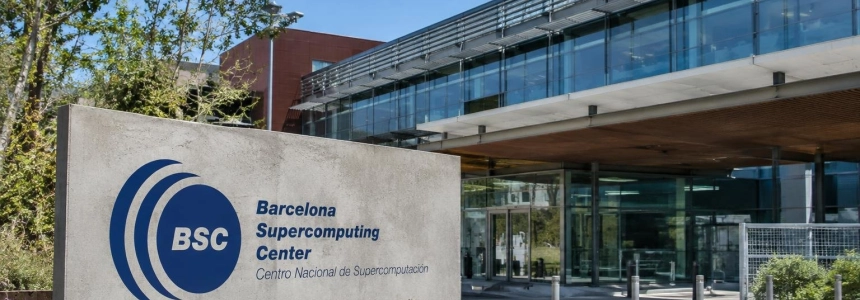
The Barcelona Supercomputing Center-Centro Nacional de Supercomputación (BSC-CNS) will cease to be a public consortium and become a state public-sector foundation, under the Ministry of Science, Innovation and Universities. The legislation authorizes the new entity to establish or participate in commercial companies to commercialize research results.
The reform reflects the center’s changing role: the decree notes that over the past ten years it has evolved from a research infrastructure into a center for research and business innovation as well. The founding administrations’ stakes are set at 60% for the General State Administration, 35% for the Generalitat de Catalunya and 5% for the Universitat Politècnica de Catalunya.
The Ministry of Science says the current funding split among the three institutions will remain unchanged. The transformation aims to give the BSC greater management autonomy and facilitate the commercialization of its results, without changing that financial distribution.
More tax deductions and rebates for companies
The package raises the tax deduction for technological innovation from 12% to 15% in the specified cases. For companies with certified activities that are not yet profitable, the annual limit for directly monetizing these deductions rises from one million to three million euros. The decree also amends sections of the Corporate Income Tax Law to strengthen legal certainty in its application.
In addition, reductions in Social Security contributions for employees on permanent contracts working exclusively in R&D or technological innovation will be extended from three to five years. For predoctoral contracts in companies, the monthly rebate rises from 115 to 200 euros for the duration of the doctoral program.
El País, citing Víctor Cruz, Strategy Director at FI Group by EPSA, reports that the reform lowers the reinvestment requirement for the monetized amount from 100% to 80%. It also notes that companies had been calling for greater legal certainty, predictable criteria and easier access to deductions when they are not yet profitable.
More investment in R&D, but no new funding in the decree
The decree’s preamble puts Spain’s R&D investment at 24 billion euros in 2024, 60% higher than in 2018 and equivalent to 1.5% of GDP. It also estimates that nearly 300,000 people worked in R&D in the public and private sectors that year, 31% more than in 2018. The EU-27 average was 2.2% of GDP.
Spain has set a target of reaching 2.12% of GDP in R&D by 2027. The royal decree-law, however, includes no new funding. Xataka places the package alongside initiatives already announced: the Spain Deep Tech Strategy, which will mobilize more than 8 billion euros by 2030, and a 300-million-euro contribution to European AI gigafactories approved in June.
The gap between management reforms and available resources is at the heart of the debate. Xataka notes that the decree relies on existing funding and cites an estimate by the Cotec Foundation: reaching the investment target would require annual R&D growth of close to 24%, above the current pace.
Ratification pending before the change of Government
The timetable adds uncertainty: general elections are scheduled for November 29 and Parliament has been dissolved. The royal decree-law must be submitted to the Permanent Deputation for ratification within 30 days; the next Government could amend it, according to Xataka.
At the plan’s presentation, Pedro Sánchez argued that “Sovereignty means not depending on multinationals or foreign interests.” The Minister of Science, Diana Morant, said that “with this Royal Decree-Law, the Government wants our public research centers to be able to accelerate the development of critical technologies for our country and transfer them sooner to the economy and society.”
“We hope it will secure broad consensus for ratification by Congress.”
— Jorge Barrero, Director General of the Cotec Foundation
Barrero described the legislation as “a good starting point,” according to El País, and called for consensus to ratify it. The Permanent Deputation must decide within the 30-day deadline whether the decree will be approved or repealed; afterward, the special regime for the centers will also depend on the designations and their research lines being finalized.
Sources: WWWhat's new, Boletín Oficial del Estado, Ministry of Science, Innovation and Universities, Xataka, El País