Some members of Nvidia's board of directors continue to push for Jensen Huang to return as CEO, despite board chair Harvey Jones saying the company is not considering reinstating him. The leadership dispute began after Huang's resignation and pits directors exploring his return against a board that publicly says it unanimously accepted his departure.
Internal pressure clashes with the official position
Semafor reported on November 17, citing people familiar with the deliberations, that a faction of directors is working to bring Huang back. The conversation goes beyond public statements: the former CEO met with several technology executives and spoke with at least one board member about the possibility of returning, according to those sources.
That contact with a director took place before Nvidia's earnings presentation and before Huang posted a message on Tuesday saying he was willing to return if the board believed doing so would benefit the company and its shareholders. Hours later, Jones reiterated on the earnings call that the board was not considering his return and had unanimously accepted his resignation.
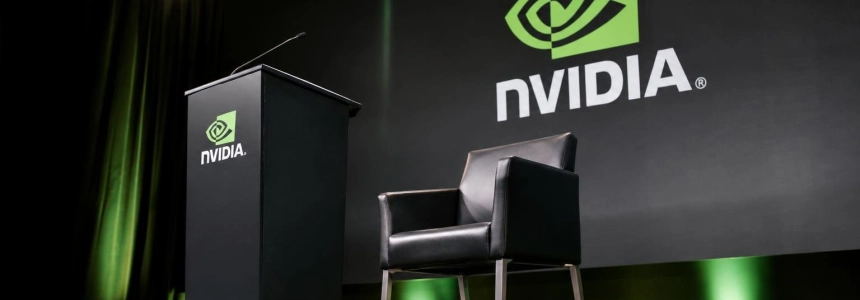
The company's position had already been expressed in unequivocal terms during that call. “Nvidia's board unanimously accepted his resignation and has no intention of reinstating Jensen as CEO,” Jones said, according to Rock Paper Shotgun. Semafor reported that three directors oppose the effort to bring him back, while other board members are narrowing the search for a replacement.
Spokespeople for Huang and Nvidia declined to comment to Semafor. The contrast between the official rejection and the internal discussions is, for now, at the heart of the dispute: the fact that some directors are advocating for his return does not mean the board has changed its public decision.
The resignation and the reason behind the crisis
Nvidia announced that Huang was stepping down, effective immediately, from his roles as chair, CEO, and board member. The company attributed the decision to the disclosure of personal conduct that was incompatible with its code of conduct, standards, and cultural norms. In a public message, Huang acknowledged that he had made personal mistakes and said he would cooperate with an independent board investigation.
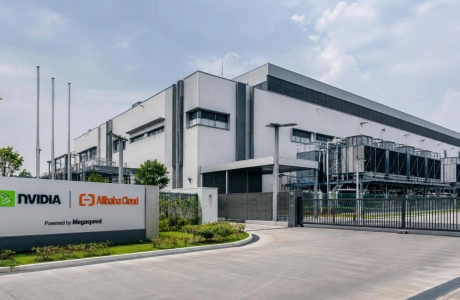
The departure followed reports of several alleged extramarital relationships. One of them was linked, according to reports cited by CBS News and Tom’s Hardware, to a woman who worked for Megaspeed, an Nvidia customer connected to the alleged smuggling to China of AI hardware subject to export controls. U.S. intelligence agencies suspect the woman is a Chinese spy; the Chinese government has rejected the espionage allegations, according to Rock Paper Shotgun.
Tom’s Hardware reported that Huang admitted to having a relationship with a Megaspeed employee, while CBS News described his departure as following an investigation into that relationship. The episode adds a national security and compliance dimension to a crisis that is also affecting Nvidia's internal management. The espionage allegations remain allegations, not a conclusion that the sources present as proven.
The company also announced a new standing committee tasked with overseeing national security policies, compliance with export controls, and global trade risk management at the board level. The measure was announced amid the controversy and questions about chip sales to companies in Singapore and other Asian countries that may have ended up in China, according to CBS News.
Huang offers to return and acknowledges his mistakes
In a message posted on X, Huang thanked people for their support and acknowledged that he had fallen short of Nvidia's standards. “I fully recognize my mistakes and am committed to cooperating with the Board's independent investigation,” he wrote in the text reproduced by Profesional Review. He also said employees, investors, business partners, and customers had asked him to return.
If the Board of Directors decides that my return is best for our shareholders, our employees, the company, and the United States, it would be an honor for me to answer these calls and return as CEO.
— Jensen Huang, in the message posted on X
Huang framed a potential return as a decision for the directors, not as a demand. In the same message, he spoke about his connection to Nvidia, which he called the work of his life, and his pride in becoming a U.S. citizen. Profesional Review reported that he said he arrived in the United States 53 years ago.
The message also referred to the technological, market, competitive, and geopolitical dynamics facing the company. In his statement, Huang said that some employees, investors, partners, and customers continued to contact him directly during the transition. Rock Paper Shotgun reproduced the same offer and emphasized that his return would depend on whether the board considered it beneficial to the company.
Colette Kress takes the role on an interim basis
While the board decides, CFO Colette Kress is serving as interim CEO and is also retaining her financial responsibilities. Nvidia confirmed that the search for a permanent successor includes both internal and external candidates.
Kress has served as Nvidia's executive vice president and CFO since joining the company in September 2013. Before that, she spent nearly 25 years in financial roles at technology companies, including Cisco and Microsoft, according to Nvidia's announcement. Jones said she has the support of an experienced leadership team and that the board has full confidence in her.
The company announcement said that operations, customer commitments, and the product roadmap would continue without interruption. Kress, for her part, said her priority was to serve customers, partners, developers, and shareholders, and to continue advancing Nvidia's work in accelerated computing and AI.
Jones was also named Nvidia's first board chair. The company noted that he had spent more than 30 years as an entrepreneur, technology executive, and venture capitalist, and had served as CEO and executive chair of Synopsys. The formal leadership change, therefore, is not limited to Huang's departure: it also reshapes the board chairmanship and leaves Kress in charge of day-to-day operations.
Two external candidates emerge in discussions
The search for a replacement has already included, according to people cited by Semafor, ARM CEO Rene Haas and Marvell CEO Matt Murphy. Haas reportedly spoke with some directors about the position, but is said to be concerned about how it would look to accept the role while calls for Huang to return persist.
Murphy's situation is less clear. Marvell is managing a megamerger with rival Lumentum, and Semafor said that it is unclear whether he could take the helm at Nvidia under those circumstances. Spokespeople for ARM and Marvell did not immediately respond to the outlet's requests for comment.
The process is also unfolding amid outside voices that disagree about Huang's future. CBS News reported that Treasury Secretary Scott Bessent called on Nvidia to choose its next CEO from outside the company, amid questions about export controls. Bessent said it would be necessary to determine whether Nvidia had deliberately ignored red flags related to shell companies, many of them in Singapore.
U.S. President Donald Trump had expressed support for the possibility of Huang returning. On Monday, according to CBS News, he told reporters: “I wouldn't mind seeing that.” Later, Trump said he had recommended former Apple CEO Tim Cook as Nvidia's next leader. The comments show political support pulling in different directions, but the formal decision remains in the board's hands.
Support, figures, and unanswered questions
The campaign to reinstate Huang has also reached employees and other technology executives. CBS News reported that thousands of workers and industry leaders, including Elon Musk, signed a petition calling for his return. According to the petition itself, it had more than 180,000 signatures and included over 9,000 Nvidia employees, around one in five of the company's workers.
Signatories cited by CBS News include Epic Games CEO Tim Sweeney and Shopify CEO Tobias Lütke. Musk wrote on X that he would also sign the petition. Its organizers described it as an independent, voluntary initiative with no affiliation with, authorization from, or endorsement by Nvidia or Huang.
Public support coexists with skeptical forecasts. CBS News reported that Adam Crisafulli, an analyst at Vital Knowledge, considered the odds of Huang's reinstatement low. Dan Ives, an analyst at Yorkville Ives, called the possibility of Huang returning “ridiculous” and said the more suitable alternatives would be an external CEO or Kress. CBS News added that Kalshi traders were then assigning a 10% probability to his return.
Nvidia shares have also suffered during the crisis. CBS News reported that the controversy had wiped more than $500 billion from the company's market valuation. In the premarket trading described by the outlet, the stock was down $2.39, or 1.5%, to $160.46. Profesional Review also noted a drop in the shares after the case broke, although it did not provide a comparable figure.
In the near term, Huang and Nvidia's top lawyer are scheduled to appear before the House Foreign Affairs, Intelligence, and China committees in early December, according to Tom’s Hardware. The CEO search continues, and the board has not announced a permanent successor. For now, Kress remains interim CEO, while directors debate whether to maintain their rejection of Huang or reconsider his return.
Sources: Tom's Hardware, Rock Paper Shotgun, Profesional Review, Semafor, CBS News, NVIDIA Newsroom