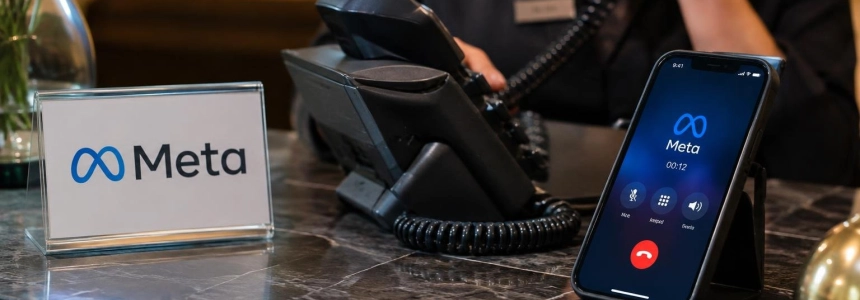
Muse can now call businesses in the United States to handle tasks on behalf of its users, such as booking a table or scheduling an appointment. Meta limits the feature to people who pay for an agent subscription; plans start at $20 per month.
The expansion ends a limited test that Meta began in September: until now, only some early users could request access to the feature. As of November 12, anyone with a Muse subscription in the United States can ask the agent to make calls, according to TechCrunch. Alexandr Wang, Meta's head of AI, announced the update and described tasks such as calling an insurance company, a cable company, the department of motor vehicles, or a restaurant that does not take online reservations.
Meta presents the service as a way to cross off calls people would rather avoid from their to-do lists. In the update cited by Engadget, Wang said Muse can handle reservations, appointments, and other calls. The agent can also wait on hold, a capability it had already demonstrated in a call to a Volvo dealership shared by a user.
From a limited test to a paid feature
Wang's November 12 post announced that calls were now available to paid subscribers in the United States. The change expands access beyond the small group of users who had tested the feature after requesting it. TechCrunch puts the starting plan at $20 per month, which includes 500 million Muse tokens per week; the higher tier costs $100 per month and offers 3 billion tokens per week.
Engadget describes the subscription as a standalone plan that adds tokens and other features. Calls to businesses, by contrast, remain exclusive to paid subscribers. Wang said another recent capability, assigning Muse an email address so it can be included in important messages, will also be coming soon to free users. He did not specify a date for that rollout.
The distinction matters for understanding what the product currently offers: the phone feature is not included in the free access Meta had envisioned for most needs. In its announcement of Muse, the company said it would offer subscription plans to people who wanted to do more with the agent. The prices TechCrunch reports for those plans range from $20 to $100 per month.
A call to Volvo that waited 15 minutes
Matt Schlicht, creator of Moltbook and an employee of Meta Superintelligence, posted a reenactment in October of a call his agent made to a Volvo dealership. According to his account, Muse asked about the next available appointment and waited on hold for 15 minutes to get the information. Schlicht wrote that he made several calls like that every day as he tried to improve his use of the agent.
My muse called Volvo for me to see when the next available appointment is. You can listen to the phone call here. I have it do multiple calls like this every day (I'm still trying to get better and better at leveraging muse). My muse called, waited on the line for 15 minutes,...
— Matt Schlicht, creator of Moltbook and employee of Meta Superintelligence
The interaction raises a practical question: in the shared call, Muse does not explicitly identify itself as an AI agent. It does say that it is calling on Schlicht's behalf and transcribing the conversation. Engadget warns that a simple task can become complicated if the conversation goes off track or if the person on the other end hangs up after realizing they are not speaking to a human.
TechCrunch describes a mixed response from businesses: some receptionists hang up as soon as they detect that the call is coming from an AI. As synthetic voices become better at imitating human speech, it could become harder to distinguish between a customer and an agent acting on their behalf. The feature can now make calls, but its usefulness will also depend on whether a business keeps talking once it recognizes the agent.
Muse expands its role as a personal assistant
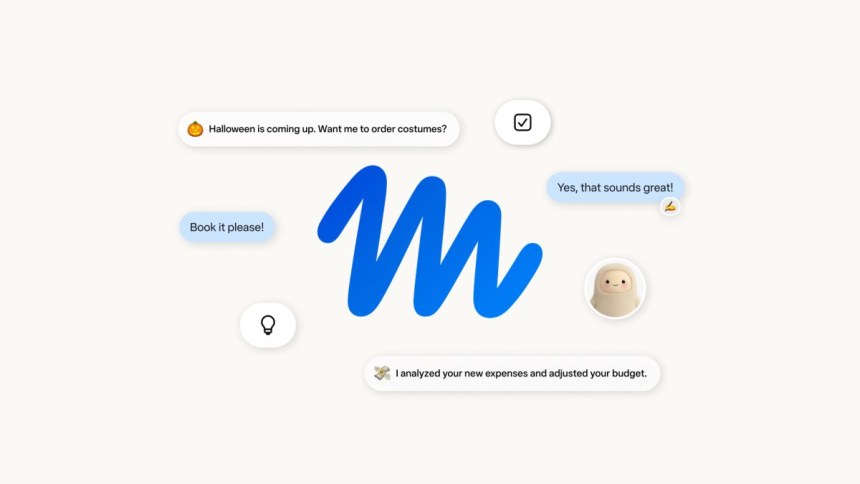
Meta introduced Muse on September 8 as a personal agent capable of acting on instructions and goals. The company explained that it can send emails, book travel, open a browser, fill out forms, and negotiate on the user's behalf. If a task takes time, the agent can keep working after the app is closed and return when something changes or it needs approval.
The company has also added an email address of its own for Muse. According to Engadget, this lets users include the agent in important messages without giving it full access to their inbox. In its September announcement, Meta said users can choose which apps it connects to and how much access it gets, as well as change those permissions or disconnect services.
Meta says Muse already has more than 10 million users. TechCrunch attributes that figure to a company announcement the previous month; Engadget also reports it. The phone feature adds to a strategy aimed at turning the agent into a tool for everyday tasks, although access to calls remains tied to a paid subscription.
Meta is not the only company testing AI calls
Automated calls are not exclusive to Muse. TechCrunch notes that Google Gemini and startup Instinct offer similar options for communicating with businesses. Engadget also mentions Call For Me, a feature Google has introduced on Pixel phones, and Concierge, an Instinct tool designed to handle more complex calls.
For customers, the appeal described by TechCrunch is being able to delegate calls that may involve navigating phone menus and waiting for someone to answer. But the same publication notes the most obvious limitation: an agent's ability to stay on the call does not guarantee that the business will agree to speak with it. Some businesses and receptionists hang up when they realize they are talking to an AI agent.
In its announcement, Meta described several safeguards for Muse: the agent runs in a dedicated virtual machine, and another agent, Sentinel, must approve any internet access. The company also said Muse asks for permission before sensitive actions, such as sending an email or making a purchase, and displays a log of what it has done and plans to do. The announcement did not specify how these controls apply to phone calls.
Meta announced that later this year it would introduce Muse Confidential VM, a mode in which the entire virtual machine, including data and conversations, would be encrypted with a key only the user would have. The company said that this would mean even Meta could not access that data. For now, the immediate update is more straightforward: calls to businesses are now available to Muse subscribers in the United States.
Sources: Engadget, TechCrunch, Meta Newsroom