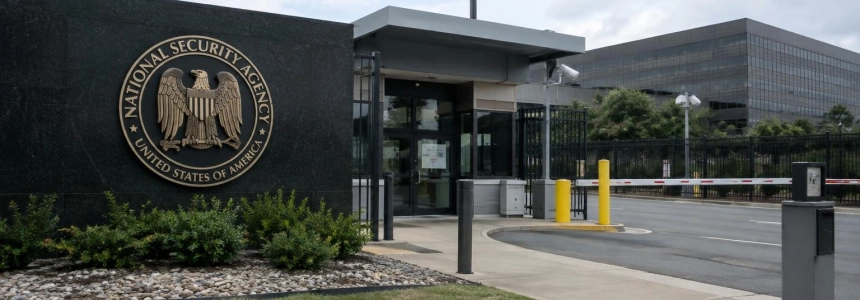
The classified network used by the United States National Security Agency (NSA) for internal communications experienced disruptions on Tuesday, leading some staff to arrive at its headquarters in Fort Meade, Maryland, at staggered times. The agency described them as a temporary degradation during scheduled maintenance and said that its critical capabilities remained operational.
The system, called NSA Net or NSANet, is used to store, transmit, and share classified information within the agency. Early reports described the network as down; later, a source cited by The Record clarified that service was intermittent, not completely interrupted. It was not clear when it would return to normal operation.
“The National Security Agency experienced temporary degradation during scheduled routine maintenance. While some internal systems were affected, mission-critical capabilities remain fully operational and our ability to defend national security continues.”
— NSA spokesperson
Staggered schedules to ease the load
The disruption affected analysts’ work and led the agency to adjust the arrival times of some employees at Fort Meade. CBS News reported that the measure applied to staff not assigned to emergencies; The Record explained that the aim was to prevent tens of thousands of workers from trying to log in to the network at the same time in the morning.
According to CBS News, sources described the modified schedule as “Code Gray”. The headquarters remained under normal operating conditions: the gates and services across the facility were unaffected. The installation has its own secured campus, and the NSA can set attendance requirements that differ from those for the rest of Fort Meade.
Accounts of the technical scope are not identical. XDA initially presented the incident as a network outage, while a source consulted by The Record said the system was not completely out of service and offered intermittent connectivity. CBS News reported that two sources attributed the disruption to routine update work, although the exact circumstances remained unclear.
The agency says essential functions remain available
The NSA said its infrastructure has several layers of redundancy to maintain operations during planned maintenance and unexpected events. The Record reported that the agency’s backup centers, located in different parts of the country, could take on some of the load and continue signals intelligence work.
The issue also drew attention because President Donald Trump was traveling in Asia. XDA, summarizing information published by CNN, said the disruption would not prevent urgent intelligence from being communicated to him: backup networks and redundant mechanisms were available for that purpose. The same outlet noted that the Five Eyes intelligence alliance—comprising the United States, the United Kingdom, New Zealand, Australia, and Canada—had not been affected.
The agency’s statement was more limited: it said mission-critical capabilities remained fully operational, without detailing which internal systems had experienced problems or how long the degradation would last. The NSA Net disruption was therefore not described as a shutdown of the agency’s work, although it did affect workflows and schedules.
No signs of an attack, but explanations remain incomplete
Two U.S. officials told CBS News there was no evidence that a cyberattack had caused the incident. The Record cited two people familiar with the situation who also considered that unlikely; Nextgov/FCW reported that four of its six sources thought it might be linked to a series of software updates. None of those outlets presented a confirmed technical cause beyond the NSA’s explanation that maintenance was underway.
The absence of signs of an intrusion does not amount to a complete account of the failure. CBS News said it was unclear how long the network had been out of service and when it would be restored. Nextgov/FCW linked the possible cause to software improvements but left that hypothesis open; the official version was that the problem occurred during scheduled routine maintenance.
Meanwhile, according to CBS News, some activities were being redirected to other agency facilities around the country.
Other recent outages, with no proven connection
The problem occurred after several technology service disruptions in the United States. The previous week, Microsoft experienced a global outage affecting products such as Outlook; The Record reported that the incident lasted 24 hours and continued over the weekend. A senior Microsoft official attributed the failure to an error in an update from several months earlier. XDA reported that the company ruled out a cyberattack and linked the problem to a patch deployed in July, which could cause servers to become overloaded and unresponsive under certain load conditions.
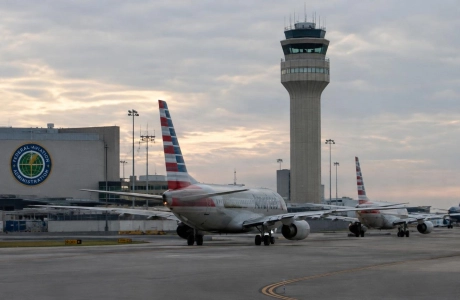
On Friday, the U.S. Federal Aviation Administration (FAA) ordered flight departures to be halted nationwide for more than four hours, according to The Record. The agency attributed the failure to a router in Arkansas. The outlet added that the FBI said on Tuesday its cybersecurity teams were working with the FAA, the Department of Transportation, and contractor L3Harris to provide technical assistance after the air traffic communications disruption.
The incidents occurred close together in time, but there is no evidence that they are related. XDA noted that neither the NSA, Microsoft, nor the FAA officially attributed their respective disruptions to cyberattacks. The Record also described the outages as incidents with no proven connection.
History of failures in NSA systems
The agency has experienced technical problems before. The Record recalled that its public website stopped working in 2013. Some hackers claimed to have brought it down with a denial-of-service attack, but officials said it was due to a scheduled update.
The same outlet noted that NSA computers stopped working for three days in 2000. The problem was ultimately attributed to a software anomaly and infrastructure difficulties. Recovery required thousands of hours of work and, according to The Record, the agency reportedly spent $1.5 million to restore its computer infrastructure.
In the current incident, the immediate response has been to reduce pressure from simultaneous logins, maintain essential functions, and turn to other facilities when necessary. The NSA said its infrastructure is designed to sustain operations during such episodes, but did not say when NSA Net would be fully restored.
Sources: XDA, The Record, CBS News, Nextgov/FCW