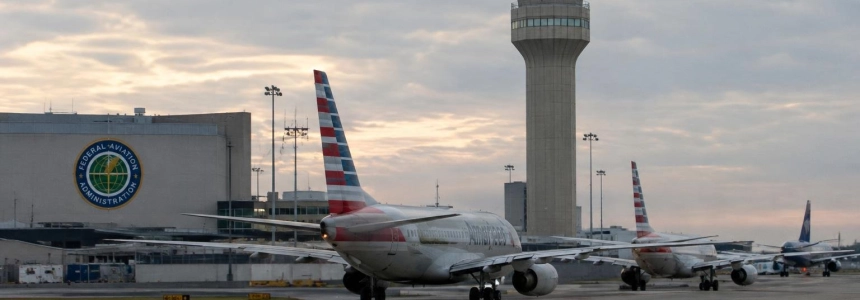
A surge of data destabilized legacy equipment on the U.S. Federal Aviation Administration (FAA) communications network and forced the suspension of flight departures nationwide on Friday, November 13. The FBI is examining whether a software update contributed to the failure; for now, authorities say they have found no indication of a cyberattack.
The disruption affected the network connecting FAA control centers and other facilities, known as FTI. The agency issued the order as a precaution while some radio channels and radar signals remained operational, but the instability reached 17 of the 22 air route traffic control centers and spread to several radar approach control facilities.
The order was lifted at 8:15 p.m. Eastern Time, when the FAA deemed the system stable. The agency described the recovery as gradual and asked travelers to be patient while airlines reorganized flights and crews. On Saturday morning, the FAA said operations were returning to normal.
Data overload and legacy routers
In its official responses, the FAA explained that the legacy equipment lost stability when the FTI network began receiving 1,000 connection attempts every four or five seconds. The data surge disrupted communications with aircraft and radar signals. The exact cause of this excessive traffic remains under investigation.
The agency’s initial investigation points to two possible locations from which the flow may have originated: a radar site in Amarillo, Texas, and a radio communications facility in El Dorado, Arkansas. L3Harris, the network’s current provider, was working in El Dorado and installing a new router there. The company blocked both sites when the inconsistencies appeared, and the network stabilized.
As a precaution, the FAA also disabled the broadcast function on the new routers and the same function on about 60 similar routers. The agency says this addressed the initial cause of the disruption, but its investigation with L3Harris continues to determine the definitive source and prevent a recurrence.
FBI examines a possible update
Bloomberg reported, citing a person familiar with the matter, that the FBI is investigating whether a software update may have caused the failure. According to the same report, the FBI does not believe a cyberattack or criminal activity was behind the disruption. No definitive official cause has been announced.
CBS News reported that several sources linked the outage to an update to the private communications network: the system reportedly rebooted and then stopped working. The FAA has not confirmed that this sequence caused the failure. Markwayne Mullin, Secretary of Homeland Security, said authorities were checking whether new and old equipment had stopped working properly together.
“There’s no chatter, we haven’t seen any footprints.”
— Markwayne Mullin, Secretary of Homeland Security
Mullin said there were no signs of malicious activity, although he qualified that the possibility had not been ruled out while the review continued. According to SecurityWeek, the investigation involves the National Security Agency (NSA), the Department of Defense, the Cybersecurity and Infrastructure Security Agency (CISA), and other agencies.
Transportation Secretary Sean Duffy attributed the failure to legacy equipment. In his explanation, the network’s switches and routers received too much data and began generating inconsistent information; the FAA shut down the system in response. Mullin added that the installation of patches and new technology seemed to be “overwhelming” the legacy system.
What is known about the equipment and the FTI network
Government sources cited by CBS News said the preliminary investigation had focused on Cisco 600-series routers manufactured between 2001 and 2006. According to those sources, the affected equipment was identified and isolated. They also described out-of-sync data packets that could cause static on voice lines and make screens flicker or go black.
The FAA identifies the legacy TDM system as the source of the instability and distinguishes the incident from its broader modernization efforts. The agency says none of the towers upgraded with modifications funded through the advance from the Working Families Tax Cuts law stopped working. It also clarifies that SMART, a data aggregator, does not feed the air traffic control system and was unrelated to the failure.
The FTI network supports voice communications and the exchange of operational data between control centers and other facilities. It is operated by L3Harris; CBS News reported that its predecessor, Harris Corp., received the contract to modernize, operate, and manage it in July 2002. The company did not immediately respond to a request for comment from CBS.
A security review commissioned by the FAA in November 2023 described the network as obsolete and dependent on TDM, an outdated communications technology. It also warned that this technology was no longer supported by the telecommunications infrastructure on which it depended, and that an unforeseen failure could disconnect facilities or even a regional air route traffic control center from the rest of the network.
Flights affected and differing counts
The FAA said approximately 3,500 aircraft landed safely during the disruption. It noted that this was not a total outage: some radio frequencies and radar signals remained available, and essential, law enforcement, and military flights continued. The agency says all passengers arrived safely.
Cancellation figures vary depending on the time and the count cited. The FAA estimated that about 12,462 flights were canceled on Friday, including 9,082 operated by major airlines, and warned that not all cancellations were directly caused by the nationwide suspension. FlightAware, cited by CBS News, recorded 9,159 cancellations and 7,190 delays that Friday.
The impact continued on Saturday: FlightAware counted more than 3,800 cancellations and more than 2,000 delays in the United States. Delta Air Lines led cancellations with 640, followed by United with 530 and American with 488. Among the airports most affected that morning were Hartsfield-Jackson in Atlanta; O’Hare in Chicago; and John F. Kennedy in New York.
Duffy warned that travelers would continue to face delays and cancellations as airlines rescheduled flights and repositioned crews. The secretary said the recovery was continuing in coordination with airlines. The FAA, for its part, said air traffic had resumed operations and that the return to normal would be gradual.
Modernization returns to the center of the debate
The last comparable nationwide suspension occurred in January 2023, when the FAA system that distributes safety notices to pilots failed. SecurityWeek reported that a contractor had accidentally deleted files while working on that system; no evidence of a cyberattack was found then either.
Duffy asked Congress for emergency funding to modernize air traffic control and warned that more incidents could occur without investment. Mullin advocated replacing the entire system rather than proceeding through partial changes; CBS News put the proposal at $50 billion. The debate is unfolding as the FAA and L3Harris investigate the failure and the agency reassesses when to carry out replacement and maintenance work: the FAA said a routine router replacement at a remote facility was done during the day and that it would review the schedule in light of what happened.
Sources: TNW | Planes, SecurityWeek, Federal Aviation Administration, Federal Aviation Administration, CBS News