
The term Artificial Intelligence (AI), "the intelligence of the machines", unifies two words that, a priori, could not be associated, since the term intelligence is attributed to the faculty of the mind to learn, to understand, to reason, to take decisions and to form a determined idea of the reality.
How is it possible to develop all these capacities outside the mind? The answer is simple: artificially.
This little play on words puts us in the starting box to try to understand some basic notions of AI and get a glimpse of how it can, today, help drive a business, be it big or small.
What is behind the term AI?
For someone outside of the AI world, hearing that machine learning (or deep learning), fuzzy logic, particle swarm optimization, or optimization for decision making with multiple variables and multiple objectives, can help a company run smoothly is like saying nothing.
It is easier to bring to real life the different types of algorithms, with examples in which you see, in a simple way, how you can get positive impacts at the business level.
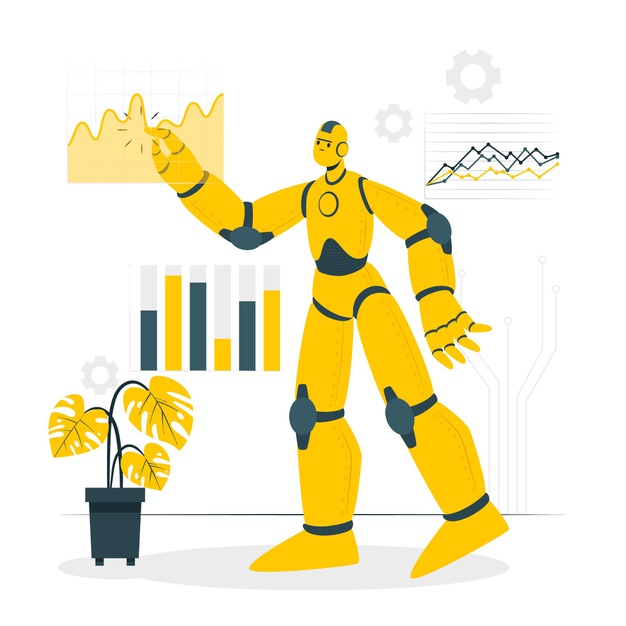
These are the five most relevant AI techniques for an organization:
- Fuzzy logic: this technique collects two random values related to each other in a context. It is used to relativize a scenario after its observation of the differential positions.
- Machine Learning: seeks to make computers capable of learning by themselves. To do this, unstructured information is used to generalize responses.
- Natural language processing: it is used to improve communication between man and machine through the use of natural language. It is supported by computational linguistics.
- Artificial neuron networks: simulate animal nerve functioning in order to generate a response through a collaborative working system by means of automatic processing.
- Data mining: seeks the extraction of information that is implicit in the data itself. The information returned, previously unknown, will be used in any other process.
How to bring AI into business life?
According to the November 2019 McKinsey & Company Global AI Survey report, more than 2,000 people responded to a survey:
- 63% of respondents say that business units where AI has been applied have increased revenue.
- 44% believe that AI has helped reduce costs for their company.
The question is: How is this achieved?
It is not easy to explain how each company does it, it would be necessary to analyze each one of them, but it can be said that AI tools already implemented such as virtual assistants, the intelligent analysis of data history and customer, sales and production forecasts, and the optimization and automation of processes, generate positive results. Detailing some of these methods we have to:
- Virtual assistants: a chatbot is a type of virtual assistant, but they can be deeper and more complex than that. In any case, there are commercial solutions that can help filter and reduce operational costs. Their learning is evolutionary: the more training, the more secure their response.
- Intelligent data history analysis: data mining. If you analyze properly the historical data of the companies, you can get to predict what a regular customer wants to buy or what product to offer to a new customer. If you incorporate sentiment analysis, extracting subjective information from customer data, you can launch an offer at the best time for the customer to choose.
- Process automation: there is no doubt that introducing software or hardware robots reduces the possibility of an error occurring in a production chain of something logical or physical. In the case of software that executes automated actions, this type of algorithm allows to increase the operation of the business. Hardware robots, historically more implemented in the industrial sector, are evidence of the operational benefits of automation.
Which departments could benefit from AI?
It can be said that all departments of a company can benefit from AI but perhaps especially marketing and sales, logistics, operations, finance and human resources.
In times of uncertainty and business difficulties it may be worth stopping for a moment, think about what is needed and, before moving forward, determine if the problems or shortcomings can be solved by AI. If so, it is necessary to make a cost/benefit analysis and decide. The solution may be achievable and scalable in an effective and efficient way.
To know more about this topic you can consult specialized publications at International Journal of Interactive Multimedia and Artificial Intelligence.
Images from freepik