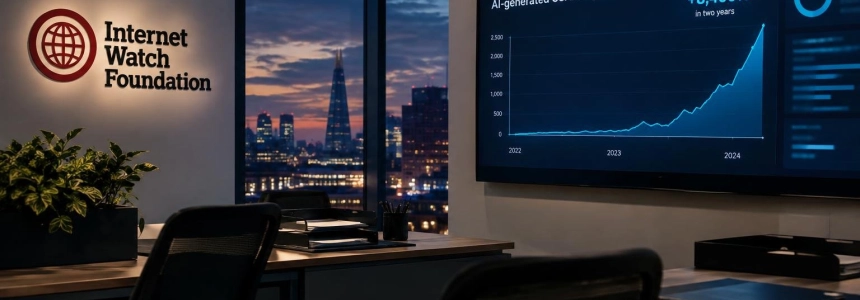
Reports of AI-generated child sexual abuse images rose from around 4,700 in 2023 to more than 400,000 in 2025: an increase of over 8,400% in two years, according to data from the Childlight Institute in Edinburgh. The figures come from reports that technology companies submitted to the United States’ National Center for Missing & Exploited Children (NCMEC).
Childlight’s director of data, Debi Fry, acknowledges that more effective detection systems partly explain the jump. Therefore, the percentage should not be read as a direct measure of the increase in actual cases.
What the reports count—and what they leave out
The images include AI-manipulated content, such as deepfakes. The report also mentions so-called “nudify” apps, which alter images to make it appear that someone is unclothed. This content can be used to extort minors and pressure them into handing over money or more photographs.
NCMEC data consists of reports submitted by companies, not a total count of existing images or victims. That distinction matters: if detection improves, the number of reports may rise even if the underlying trend in abuse does not follow the same pace. Childlight acknowledges that improved detection accounts for part of the increase.
Another indicator suggests that the problem is not limited to reports recorded in 2025. The Internet Watch Foundation (IWF), a British organization that reviews this kind of material, examined 6,310 images in six months of 2026. These were criminal, photorealistic AI-generated abuse images; the figure is 40% higher than the total reviewed throughout 2025.
| Period | Reported figure | Scope |
|---|---|---|
| 2023 | About 4,700 images | Reports of AI-generated images |
| 2025 | More than 400,000 images | Reports of AI-generated images |
| First half of 2026 | 6,310 images | Criminal, photorealistic material reviewed by the IWF |
| All of 2025 | Fewer than 6,310 | The IWF reviewed 40% more in the first half of 2026 |
Detection increases reports, but does not explain everything
The two data series do not measure exactly the same thing: the 2023 and 2025 figures are company reports to NCMEC, while the IWF counts images it reviewed. They should not be added together or compared as if they were a single series. Taken together, however, they show a growing volume of detected content and that, in the IWF’s case, the review of photorealistic material had already exceeded the previous year’s total in six months.
Improved detection systems create a tension in how the figures are interpreted: more reports may reflect a greater ability to find content, as well as a greater prevalence of the material.
The material described also links image generation to harms that go beyond publishing an image: deepfakes can be used to threaten minors and demand money or other photographs from them. This means the issue encompasses both the production and circulation of the content and its use for coercion, although the figures presented do not quantify how many extortion cases occur.
Childlight calls for coordinated prevention
Fry calls for a swift response from lawmakers and technology companies. Paul Stanfield, Childlight’s executive director, urges governments to treat the problem as a preventable public health emergency and fund prevention, with coordination among healthcare, schools, child protection services, and the justice system.
“a preventable public health emergency”
— Paul Stanfield, Childlight’s executive director
This approach shifts part of the response from detection toward prevention and coordination between services. The goal is not just to increase reporting: Stanfield’s proposal includes dedicated funding and the involvement of institutions that work with minors and the justice system.
How the next figures are interpreted will therefore depend on what is being counted and how detection systems change. For now, the IWF’s latest figure is clear within its scope: it reviewed 40% more images in the first half of 2026 than in all of 2025.
Source: The Decoder