
Results for: "cve"
Contents (67)

WPIDE vulnerable through 3.6.4: update or deactivate it
WPIDE through version 3.6.4 is vulnerable to cross-site request forgery (CSRF) that, under certain conditions, may allow PHP code to…
read more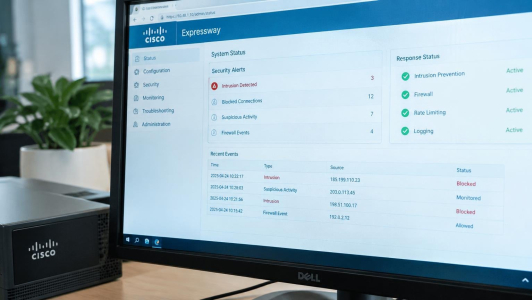
Cisco Expressway: how to check for and contain an intrusion
CVE-2026-76466 is being exploited against clustered Cisco Expressway devices: attackers gained root access and tried to move from Internet-exposed systems…
read more
Idunno.AntiCsrf: How to Locate and Remove the Vulnerable Library
Google Mandiant reports active exploitation of CVE-2026-131914, a critical Idunno.AntiCsrf vulnerability that enables unauthenticated remote code execution in ASP.NET WebForms…
read more
OpenWrt is also falling behind: how to check and update your router
An Archer C6 V3 user discovered that their router was running OpenWrt 24.10.5, released in December 2025, and that the…
read more
Ghostscript: steps to check whether your server is exposed
Ghostscript versions earlier than 10.08.0 contain a vulnerability that allows a crafted document to bypass the -dSAFER sandbox and execute…
read more
Microsoft confirms Entra Connect Health metadata was stolen
Attackers exploited a flaw in the Microsoft Entra Connect Health API to query administrators’ email addresses and other tenant metadata,…
read more
AI Agents Find a Zero-Day in MONAI Label and Gain Root Access
Autonomous Cairn agents took root control of a university server after discovering and exploiting a zero-day in MONAI Label, the…
read more
Critical GPGME flaw: how to check whether you should update
A malicious OpenPGP key with an unusually long user ID can trigger a critical flaw in GPGME and expose data…
read more
PHP: How to check whether phpAfterShell affects you and patch it
On November 19, 2026, PHP released updates fixing CVE-2026-126714, a critical flaw in file-based sessions. The vulnerability can allow remote…
read more
Cisco Expressway: Steps to Patch and Hunt for Intrusions
Attackers exploited CVE-2026-76466, with a score of 9.8, to compromise Cisco Expressway devices belonging to a Russian organization and reach…
read more
Synology NAS: How to Check and Mitigate NGINX2Root Vulnerabilities
On November 20, Synology released patches for two critical DSM vulnerabilities: CVE-2026-123007, linked to NGINX2Root and HTTP/2, and CVE-2026-120382, in…
read more
OpenSSL CVE-2026-121481: how to check whether your code is exposed
CVE-2026-121481 has a CVSS 3.1 score of 9.8: an input length close to INT_MAX can overflow the output-size calculation in…
read more
vCenter: how to patch and review access after the zero-day
On November 19, Broadcom released patches for CVE-2026-123890, a critical vCenter flaw that Armory Castle, a China-linked cyberespionage group, had…
read more
782 POS terminals infected through an unpatched Windows vulnerability
A campaign exploiting a Windows vulnerability that had already been fixed infected 782 payment terminals in more than 20 countries…
read more
Chrome 158: Steps to Install the Patch for Six Critical Flaws
Chrome 158 fixes six critical vulnerabilities as part of a package of 204 security fixes. The update reached the stable…
read more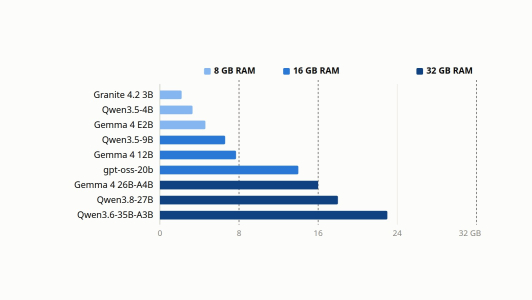
The best local LLMs for PCs with 8, 16 and 32 GB of RAM
You no longer need a graphics card to run a decent language model on your own computer. The short answer,…
read more
NGINX2Shell: Steps to Update and Limit Risk in NGINX
NGINX released versions 1.30.7 and 1.31.9 to fix ten vulnerabilities, five of them critical and dubbed NGINX2Shell. Two HTTP/2 flaws…
read more
Windows Hello PIN and BitLocker: How to Reduce the Risk
Researchers at Technische Universität Berlin found a way to reset the TPM lockout on some AMD PCs and some Intel…
read more
Outlook under attack: how to install the November Windows patch
Microsoft’s November security update fixes CVE-2026-124194, an Outlook spoofing vulnerability being exploited to steal NTLM authentication hashes. The published figures…
read more
PHP prepares a critical patch: how to reduce the risk of CVE-2026-115560
PHP announced a security update for all supported versions, scheduled for November 19, 2026, between 14:00 and 14:30 UTC. The…
read more
NGINX: AI uncovers critical flaws hidden for years
An NGINX vulnerability had been in the code since 2015 and can allow unauthenticated remote code execution if HTTP/2 is…
read more
NGINX: How to Check HTTP/2 and Close Attack Vectors
On November 18, five critical vulnerabilities in NGINX were disclosed; two allow remote code execution without authentication if HTTP/2 is…
read more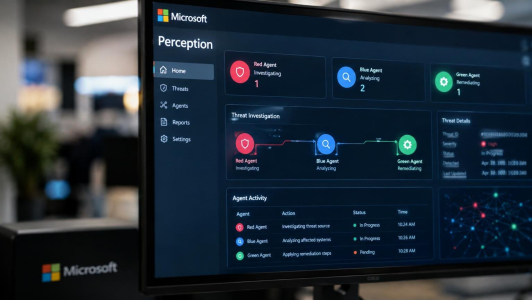
Microsoft Perception coordinates AI agents against threats
Microsoft Perception is now generally available and brings together AI agents that simulate attacks, investigate alerts, and help remediate vulnerabilities…
read more
CVE-2026-115731: How to Protect Puppet and OpenVox Servers
CVE-2026-115731 is already being exploited to execute code on vulnerable Perforce Puppet servers, and it also affects OpenVox. The flaw…
read more
Java4Shell: How to Detect and Mitigate CVE-2026-114938
Java4Shell, identified as CVE-2026-114938, is a memory corruption flaw in the OpenJDK Base64 decoder that can lead to remote code…
read more
Google Detects Agents That Find and Exploit Vulnerabilities Without Human Intervention
Google Threat Intelligence Group (GTIG) found a framework called exploit_agent capable of automatically discovering and exploiting vulnerabilities, without human intervention.…
read more
CVE-2026-65339 on iPhone: How to Check and Fix the Flaw
Researchers from Meta Red Team X and security engineer Mustafa Calap detailed CVE-2026-65339, a flaw that allowed an installed app…
read more
Intel D270: up to 5.9 times more performance in four tests
Intel says its D270 GPU, known during development as Crescent Island, delivers up to 5.9 times more performance than the…
read more
NoisyTCP: Steps to protect exposed Linux servers
NoisyTCP (CVE-2026-99288) can remotely take down a Linux server that processes TCP traffic, without credentials or any special service configuration.…
read more
Google Detects an Agent That Turned Patches into Exploits Without Human Help
A system called exploit_agent generated and executed exploits after comparing web application code before and after patches, without human intervention.…
read more