
Queen’s Domain hides paths and secrets even in places that seem already explored, but it doesn’t always offer enough clues to find them. This approach of letting players connect the dots fuels the enthusiasm of several reviews and, at the same time, explains their main reservations: progress can grind to a halt, and revisiting the same areas eventually gets tiresome.
- Developer: Freshly Baked Games
- Publisher: Future Friends Games
- Platforms: PC, PlayStation 5, Xbox Series X|S, and Nintendo Switch 2
A first-person RPG that trusts in curiosity
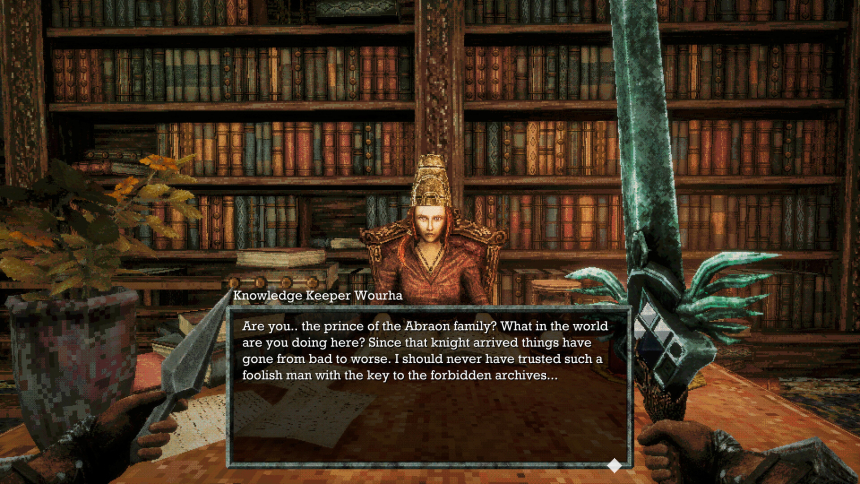
The protagonist is Prince Beruim, who travels to the island of Neasied after his father, the king, leads an expedition there. The game draws on the tradition of King’s Field, with first-person combat, interconnected environments, and few hints about what to do next. Press Play Media describes a narrative that relies more on the environment, scattered notes, and a handful of encounters than on lengthy dialogue or cinematic sequences.
The game doesn’t simply reproduce an old formula. Vida Extra says it uses that foundation to build a world that’s more expansive than a succession of corridors and dark rooms. Its review links exploration to the satisfaction of finding rewards in areas that seemed inaccessible. The Wand Report also emphasizes discovery: its critic, Geoffrey Bunting, argues that the game demands genuine exploration, rather than letting players drift along with the current.
The map has no objective markers or conventional guide. Press Play Media notes that players need to pay attention to objects, descriptions, and environmental details; some skeletons serve as unusual clues. This lack of direction can turn a door or hidden path into a memorable discovery, but it can also leave players wandering around without knowing how to proceed.
The air dash transforms the environments
The Holy Sword Endu, which appears early in the adventure, lets players perform an air dash. Finding more wind gems increases the number of consecutive dashes and opens up routes that previously seemed out of reach. RPG Site considers this ability one of the driving forces behind the level design: once players understand its potential, the world offers new possibilities for exploration.
Movement also encourages players to return to areas they’ve already visited. Vida Extra notes that the starting island continues to offer shortcuts, weapons, and upgrades as players discover new ways to get around. Press Play Media observes, however, that it can sometimes be hard to tell which gaps can actually be crossed. The design invites experimentation, though it doesn’t always make clear which attempts are worth making.
Weapons add another layer of exploration and progression. RPG Site notes that they improve with use and that some evolve; Freshly Baked Games offers dozens of options, from melee weapons to throwable tools. Vida Extra also mentions the Cestus, whose blows let players gain height, and the value of revisiting areas with new resources.
Deliberate combat with a demanding learning curve
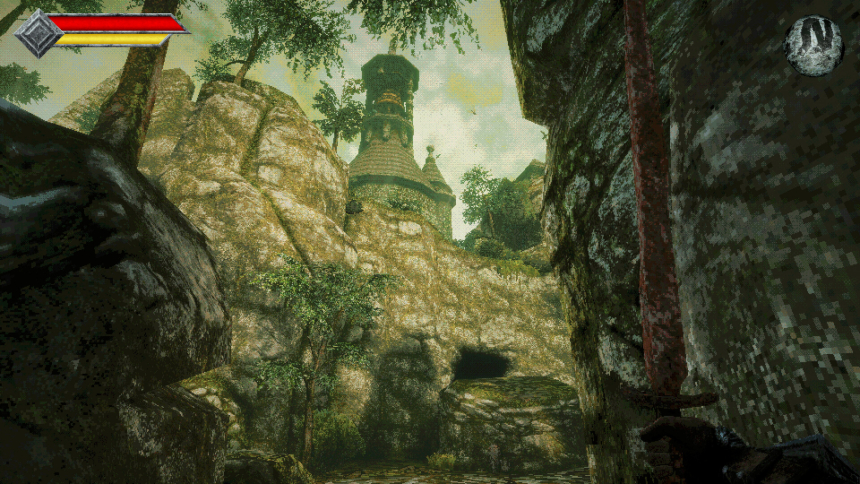
Reviews describe encounters that reward players for gauging distance and choosing the right moment to attack. According to RPG Site, primary attacks depend on available stamina, and different enemies are vulnerable to damage types such as slashing, impact, or piercing. Press Play Media adds that players should watch enemy movements and take advantage of charged attacks instead of mashing the attack button.
The variety of weapons and enemies is one of the strengths highlighted by The Wand Report, although the critic questions whether some of the sword’s functions are explained clearly. They also feel that combat is less brutal than the marketing suggests: some of the difficulty comes from learning how to position yourself and use the environment, not just from the enemies’ strength.
The patience the system demands won’t appeal to everyone. Press Play Media points out that heavy attacks leave players exposed if they miss, and that some bosses are tough because of their aggression and reach. The review also mentions responsiveness that can feel sluggish and controls that take some getting used to. The combination of sparse guidance and demanding combat can make the first few hours intimidating.
Plenty of secrets, few clues
The clearest disagreement is about how worthwhile it is to keep trying when the game stays silent. For The Wand Report, overcoming an obstacle after hours of searching makes getting stuck part of the reward. Bunting says he found a secret entrance by experimenting with a gravestone and a throwable item; the episode sums up an adventure that requires players to test ideas, even when there’s no visible sign confirming they’re on the right track.
RPG Site also praises the secrets and freedom to explore, but warns that finding certain items needed for the true ending becomes especially difficult. Press Play Media agrees that some puzzles slow progress too much and that backtracking can become a slog. The review adds that small items blend into the textures, a challenge compounded by the deliberately pixelated, low-poly aesthetic.
Vida Extra, on the other hand, feels that exploration makes up for this roughness with a steady stream of discoveries, upgrades, and new routes. Its review describes a difficulty curve that eases as players gather resources and expand their combat options. RPG Site estimates that reaching the first ending takes around 20 hours; pursuing additional endings reveals more areas, but also involves more searching.
The reviews agree that the interconnected world, evolving weapons, and movement abilities make exploration the heart of Queen’s Domain. They differ on the cost of this approach: for some, the lack of instructions makes every discovery matter; for others, certain roadblocks, camouflaged items, and lengthy backtracking test their patience too much.
Sources: Vida Extra, The Wand Report, RPG Site, Press Play Media