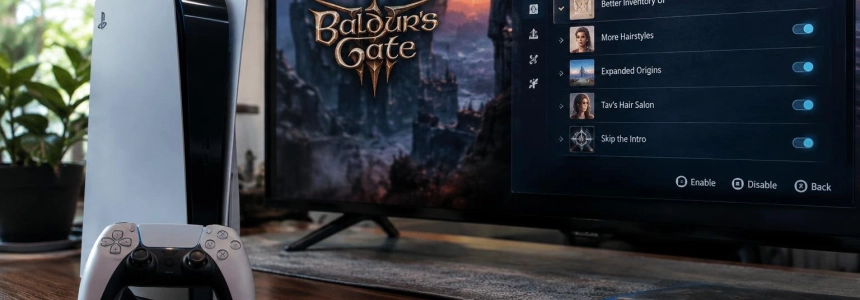
Larian Studios planned to bring official Baldur’s Gate 3 mods to PlayStation and Xbox after their initial PC launch. The plan would let players browse, install, and manage community creations from within the game, although the console selection would be more limited than the catalog available on computers.
The announcement appeared in community update number 27, which focused on official mod support and Patch 7. Larian outlined a phased rollout: first, a small group of authors would test the tools; then, a closed beta would let more PC players try the mods created during that phase. The company scheduled Patch 7 for September, without specifying the year in that text.
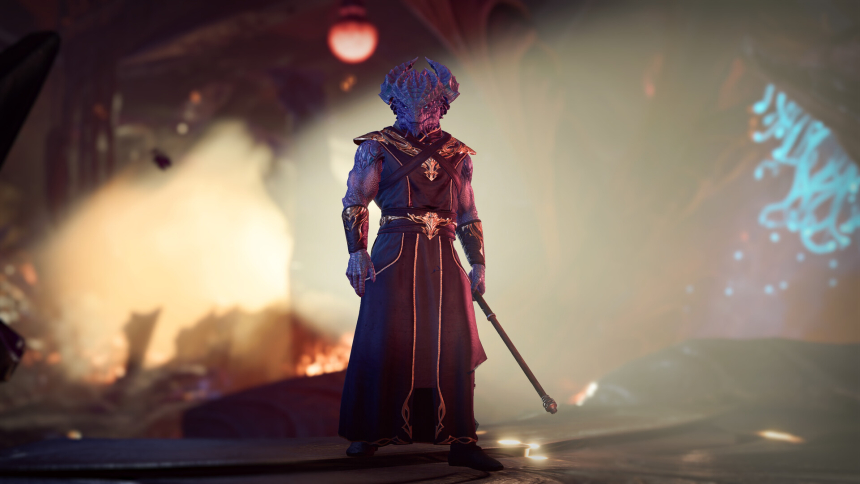
A selection of PC mods for consoles
The company explained that support would arrive on PC first and that it hoped to expand it shortly afterward to other platforms, including Mac, PlayStation, and Xbox. On consoles, players would be able to browse available creations, install them, and use them, but not create mods with the official tools: the development kit would be reserved for PC players.
The difference between platforms would also affect publishing. PC mods would undergo general stability and terms-of-service checks before appearing in the in-game browser. For consoles, there would be an additional review to determine which of those creations could be offered with cross-platform support. Larian warned that not all PC mods would pass this screening and said it would publish guidelines on acceptable content.
Distribution and management would be powered by mod.io. According to Larian, the service would provide hosting, moderation tools, and the infrastructure needed to download mods on both PC and consoles. The integrated browser would let players subscribe to or unfollow mods, as well as manage them within the game.
What the official tools would allow
The Baldur’s Gate 3 Toolkit would include an editor for creating mods, the ability to upload them directly to mod.io servers, and internal tools for certain types of assets, such as textures and visual models. It would also allow levels to be loaded in read-only mode to inspect their entities and configuration, and let creators test modifications during development.
Creators could publish from the editor so that a mod would go through moderation and could appear in the in-game browser. Alternatively, they could package it locally and upload it to a third-party distribution platform. Larian also planned to provide documentation on the game’s internal structure to help resolve loading and compatibility issues, as well as support interface modifications through file editing.
The system would also include a verification interface for managing save files and multiplayer games. A mod.io account would be required to manage and create mods; users could upload and tag creations from the account, and add screenshots and descriptions.
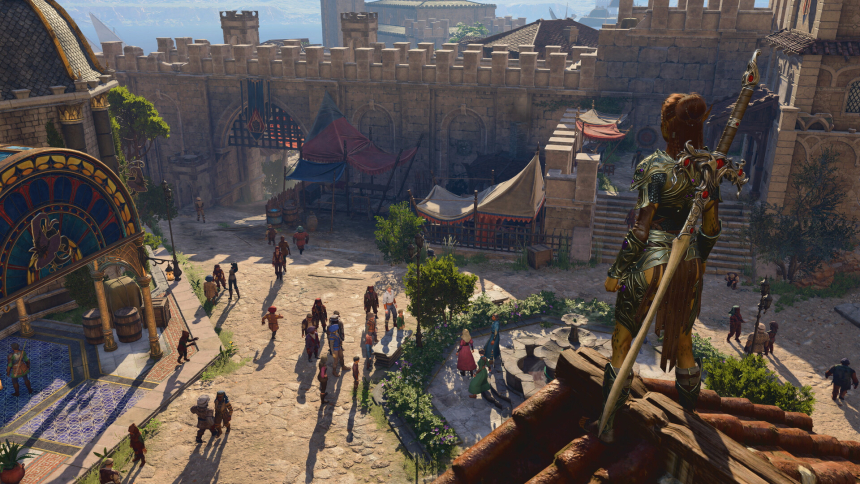
The limits of cross-platform support
Console compatibility would impose restrictions on what could be distributed through the official channel. Larian noted that direct changes to levels and core elements—such as story, cinematics, dialogue, quests, and local gameplay settings—could not be enabled on all platforms because of technical limitations and platform-specific requirements.
Some adult mods and modifications with extensive scripting content might also be excluded. The company tied these restrictions both to platform rules and to guidelines applicable to a Dungeons & Dragons game licensed by its partners. Its stated goal was to allow as much creative freedom as possible within those constraints.
That would not amount to banning external mods. Larian said it would not limit game modding to its official channel. Creations not supported by the system could be packaged locally using mod.io tools and distributed on other sites; the in-game browser could recognize them and let players manage their load order.
Local use would come with trade-offs: it would not include built-in update checks or automatic synchronization with other people in a multiplayer session. Larian would also not provide full technical support in the event of unexpected crashes. The company said it was considering whether it could publish official scripting API documentation and internally test Script Extender and other tools to improve compatibility between patches, but had not yet decided how much support to offer.
Patch 7 testing and announced schedule
Larian divided Patch 7 testing into two stages. The first, a closed alpha, was set to begin on June 3 with a small group of community mod authors. Participants would work in an active development environment, provide feedback, and test new features as they were developed.
In July, the company planned to open registration for a closed beta of around 1,000 PC players. That phase would test creations produced during the alpha and gather feedback before the update was polished. Larian scheduled Patch 7 for September and said it would include the first version of the official tools, evil endings, and fixes and quality-of-life improvements, with details promised in another community update.
The update also mentioned photo mode and cross-play as works in progress, along with future fixes, but gave no dates for those features. Regarding mod support, Larian warned that beyond fixing critical issues after launch, it did not have the technical capacity at that time to maintain it long-term while focusing resources on future projects.
Source: Larian Studios