Jensen Huang returned to lead Nvidia 11 days after leaving the post: the board unanimously reinstated him as CEO, chair and board member. Donald Trump said he intervened to push for the decision, which came after a week of contradictory messages about whether the company would accept his return.
Nvidia announced the decision on Monday, November 23, 2026, and said it made it after consulting with senior U.S. government officials. The Verge reported that Trump spoke with Huang the previous night and also had direct and indirect contact with board members. The president summed up his role to CNBC in one sentence: “I made the deal”.
“There’s nothing wrong with a comeback”
— Donald Trump, on a call with CNBC
From the board’s rejection to reinstatement
The reversal was especially abrupt because, during the quarterly earnings call the previous Tuesday, the board had said it had no intention of reinstating Huang as CEO. Barely a week later, it voted unanimously to return him to all three roles. Game Developer described the change as a reinstatement less than two weeks after his departure.
He resigned after several extramarital relationships attributed to Huang came to light. Among the reports surrounding the case was a relationship with Alice Huang, a former Megaspeed executive, Nvidia customer and no relation to the CEO. U.S. intelligence officials considered her potentially linked to China, according to reports cited by The Verge; that suspicion is not equivalent to a public finding of guilt.
The New York Times reported on Sunday, citing people familiar with U.S. intelligence reports, that Alice Huang had been in contact for more than a year with an official from China’s main spy agency. Kang Wei, her business partner and, according to some reports, her husband, had reportedly worked with the same agency; he was also said to have introduced Alice Huang to the Nvidia executive.
Accounts of Huang’s personal life also included reports of two other relationships: one with a direct subordinate and another with a second employee. The Verge also noted that Huang had allegedly lied to the board about his infidelity. The company opened an independent investigation into him and foreign intelligence, which, according to the board, will continue until it reaches a conclusion and will have Huang’s cooperation.
The White House pushed for his return
Trump initially kept his distance. Shortly after Huang’s departure became known, he said on Stephen A. Smith’s radio show that the executive would “be fine” and suggested that Tim Cook, Apple’s former CEO, could be a candidate to lead Nvidia. He later softened his position and made clear that he would support Huang’s return, even if the board was not yet convinced.
According to The New York Times, toward the end of the previous week Trump decided that he wanted to lead efforts to reinstate Huang and asked Vice President JD Vance to act as a liaison between Huang and the board. The mission reportedly included offering assurances that Huang’s return would not pose a national security risk. The Verge added that Trump joined the board’s Sunday meeting to argue for reinstatement; White House communications director Steven Cheung said the president was “totally involved” in the decision.
Trump also posted a manipulated image on Truth Social that placed Huang’s head on his body in the photograph taken after he was shot at a campaign rally. In the image, Huang was holding a red bra aloft. Beyond that gesture, the presidential intervention put Nvidia at the center of a debate over how far Trump’s influence can extend in the decisions of a private company.
The president has intervened in other corporate disputes. The Verge cited his repeated extensions of the deadline for TikTok to complete its sale to a U.S. entity and his admission that he had protected Elon Musk, CEO of Tesla and SpaceX. Trump said Musk was “80 percent super genius” and had “other problems,” and defended protecting figures like Huang and Musk because, he claimed, “we don’t have enough” brilliant people.
Investigations and chip controls still underway
The board sought to address national security concerns in its announcement. It said it had received input from senior levels of the U.S. government and that, on that basis, it does not consider Huang’s reinstatement a national security risk. It also announced the creation of a National Security and Export Controls Committee, made up exclusively of independent directors, to oversee trade compliance and security risks.
The committee will work with legal advisers and specialists with national security experience. Nvidia will also hire a chief compliance officer, a new position on its executive team that will oversee compliance across the company and report to the Nominating and Corporate Governance committees. The board said Nvidia will continue cooperating with government investigations and inquiries.
The context includes an investigation by the U.S. Securities and Exchange Commission into whether Nvidia misled investors, according to The Wall Street Journal. Trump wrote on Truth Social that the attorney general had confirmed to him that the U.S. government had no evidence that Huang had committed illegal acts. The Department of Justice did not give The Verge an official response.
There is also an investigation into Megaspeed and an alleged broader effort to illegally send advanced Nvidia chips to China. Huang had argued for expanding sales of the company’s chips to the Chinese market, according to The Verge. At the same time, political support for GPU export controls is growing, and several lawmakers want Nvidia to answer questions about the chips’ destinations and its efforts to ease those restrictions.
Congress prepares new questions
Huang is scheduled to testify before Congress on December 1. In addition, members of the House committees on Intelligence and Foreign Affairs will interview the executive the following week, according to Democratic Representative Joaquin Castro. Democratic lawmakers said they would use the closed-door hearings to question both Huang and members of the administration.
Chuck Schumer, the Senate Democratic leader, pledged to investigate possible misconduct involving Trump, Huang and other Nvidia executives. He also said Democrats would seek to advance, with bipartisan support, policies to prevent the most advanced technology from reaching the Chinese military and other adversaries. Hakeem Jeffries, designated to serve as House speaker, called the board’s decision “indefensible, irresponsible and incomprehensible” and announced that he would investigate Nvidia and what he described as an abuse of power at the Department of Commerce.
Elizabeth Warren, the top Democrat on the Senate Banking Committee, argued that the reinstatement does not eliminate questions about export controls. In her view, it makes passing bipartisan legislation and ensuring that Nvidia does not lobby to block it more urgent. Mark Warner, the top Democrat on the Senate Intelligence Committee, called Trump’s intervention “outrageous”; Jamie Raskin, the top Democrat on the House Judiciary Committee, called for clarification on whether Trump and Commerce Secretary Howard Lutnick had other incentives.
Other Democratic lawmakers called for explanations about what Chinese intelligence may have obtained and why the government did not restrict China’s access to sensitive technology. Gregory Meeks, the top Democrat on the House Foreign Affairs Committee, said he wanted to know why Trump pushed for the reinstatement. Raja Krishnamoorthi called for Huang to testify publicly; Kathy Castor warned that regaining the position does not replace accountability.
The state investigation will also continue. California Attorney General Rob Bonta intends to maintain an inquiry into the company. The California Department of Justice said Huang’s reinstatement does not change the need to determine whether Nvidia misled investors and the public.
Republican criticism and a mixed reaction at Nvidia
The criticism is not limited to Democrats. Before Huang’s return, Republican Senator Josh Hawley had said he did not want to see Huang back at the helm of the company, though he would leave the decision to the board. John Moolenaar, chair of the House Select Committee on China, said Huang had a serious credibility problem and might no longer be as effective in the role. After the reinstatement, Moolenaar’s office had not responded to a request for comment, according to The Verge.
Greg Stanton, an Arizona Democrat who shared the stage with Moolenaar at the Aspen Cyber Summit, urged the board not to reinstate Huang and to slow down its decision while national security questions remained. After the announcement, he reiterated his call for an investigation. Republican Don Bacon called the return “inexplicable” and described it as a failure of character.
Senator Pete Ricketts wrote that Huang’s behavior did not justify his reinstatement and that the executive still needed to testify before Congress. Tom Cotton, the Republican chair of the Senate Intelligence Committee, said the controversy over Nvidia and Megaspeed was just the tip of the iceberg. He added that Congress would investigate and advance bipartisan export control bills, including its Chip Security Act.
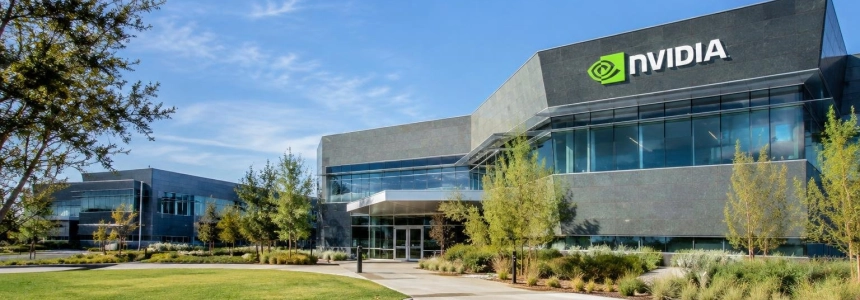
At Nvidia headquarters, Huang’s return was met with applause. Tom’s Hardware reported that videos posted on social media showed employees on several floors cheering the executive, who was wearing a fleece pullover instead of his usual leather jacket. The same outlet cited comments from unhappy employees, one of whom described the outcome as “the worst result”; internal reactions were therefore not unanimous.
The market and Huang’s value to Nvidia
The news triggered sharp market movements. The Verge reported that Nasdaq-100 futures rose as far as the volatility trading halt limit on Monday morning. Game Developer, meanwhile, reported that Nvidia shares were up 30% that day. The reinstatement also came after analysts had been tracking possible signs that Huang had assembled a group of allies to help prepare his return.
The board was facing fears that the founder’s departure could affect a company particularly reliant on his leadership. The Verge described Nvidia as one of the world’s most valuable companies and a central player in the artificial intelligence boom. Huang had helped secure hundreds of billions of dollars in financing for infrastructure from U.S. financial institutions, while demand for Nvidia chips exceeded supply.
Analysts at Yorkville Ives valued Nvidia at $300 per share with Huang and $225 without him. According to their note, an interim leadership team could not replicate his supply relationships with TSMC and other partners or his role in AI industry deals. They considered that the board had chosen continuity under the founder over a CEO search that could extend into the following year, and had paired the reversal with new corporate governance structures.
Lindsey Stewart, director of institutional research at Morningstar, said some investors might see Huang’s return as a good decision given his track record of creating value, although questions about oversight and corporate governance remain open. Jacob Bourne, an analyst at eMarketer, said it is difficult to measure how much protection Trump’s assurances will provide Nvidia. Heather West, head of geotechnology at Eurasia Group, said Trump’s recent meeting with Xi Jinping at the Asia-Pacific Economic Cooperation forum will give Democrats and China critics material to examine the government’s and big tech companies’ actions in 2027.
The board has returned Huang to the helm, but it has not closed the internal investigation or the public inquiries. The next firm date is his appearance before Congress, scheduled for December 1.
Sources: The Verge, Game Developer, Tom's Hardware