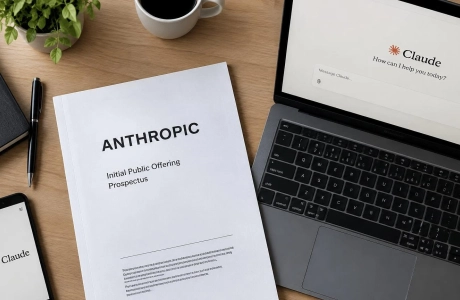
Orders to buy Anthropic shares in its IPO amount to six times the available supply, according to Bloomberg, as cited by The Decoder and CNA. The company behind Claude aims to raise up to $64.4 billion through the IPO and another $26 billion through a private placement, a deal that could become the largest public offering in history.
Interest does not guarantee that all investors will receive the shares they request. Underwriters have warned potential buyers that existing shareholders will have priority, so some allocations could be smaller than expected, CNA reported, citing Bloomberg. The IPO information itself states that there is no guarantee of receiving all—or even any—of the shares requested.
A valuation below earlier expectations
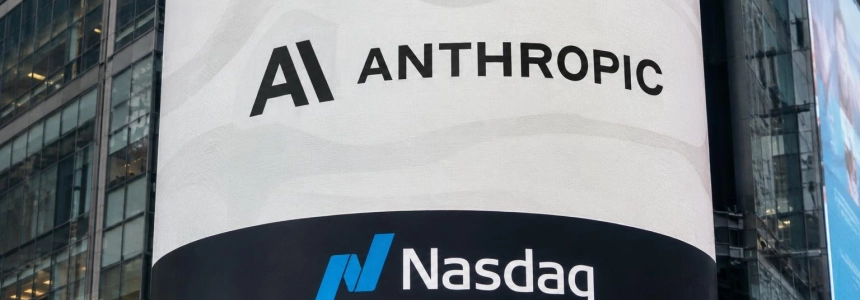
The price range announced in the United States is $70 to $78 per share, which would put Anthropic’s valuation between $1.26 trillion and $1.41 trillion, according to Xataka. CNA puts the company’s maximum value at $1.4 trillion. The company and its shareholders plan to offer 825 million shares, with trading on Nasdaq under the symbol ANT.
Anthropic expects to set the final price on November 18 and begin trading on the 19th, subject to regulatory approvals, according to the FAQ on its IPO page. Xataka also points to those dates. According to the company, the final price will depend on regulatory approval, investor demand, and market conditions.
The current figure is below the expectations that had circulated earlier. Xataka notes that a valuation of $2 trillion had been discussed months ago and that, a week earlier, the benchmark was $1.5 trillion. According to the outlet, major funds forced the cut after a session in which the Nasdaq lost $2.5 trillion in market value.
High demand, however, has raised the possibility of revising the price. Xataka reported that, a day after the range was set, underwriters were considering raising it. Orders had already covered the entire offering at every point in that range, according to sources cited by CNBC in Xataka’s report. The Decoder separately reports that the volume of orders is six times the number of available shares.
Revenue and the private placement
Anthropic is entering the market with $81 billion in annualized revenue at the end of October, up from $71 billion in September, according to The Decoder. The official IPO page presents a different metric: $17 billion in revenue in the third quarter of 2026 and year-over-year growth of more than 12 times. These figures cover different periods and use different definitions: the first is an annualized rate, while the second refers to the quarter.
The official materials also report more than 11,900 customers with at least $100,000 in revenue over the past twelve months, measured as of September 30, 2026. That group grew more than 12 times year over year. Anthropic reports an improvement of more than four times in compute efficiency since the first quarter of 2025, measured as revenue divided by compute and infrastructure expenses.
In the third quarter, the company recorded an adjusted operating margin of 15%, but an operating margin of -3% and a net loss of $23.3 billion. Anthropic attributes the latter figure to a non-cash charge of $21.9 billion related to changes in the fair value of convertible notes, derivative liabilities, and SAFE agreements.
The deal includes a $26 billion private placement, separate from the public offering. Xataka identifies AMD, Broadcom, Google, Micron, Microsoft, NVIDIA, and TSMC as participants; all are chip, manufacturing, or cloud service providers to Anthropic, according to the outlet. NVIDIA would contribute around $10 billion, a figure also reported by The Decoder.
Xataka adds that Anthropic had $131.8 billion in cash compared with $70.7 billion in commitments maturing over the next year. The outlet says the share prices of those suppliers reflect $901 billion in Anthropic spending commitments; by participating in the placement, it argues, they are also protecting themselves against that exposure.

Comparison with SpaceX and share allocation
The combined size of the IPO and private placement would reach $90.4 billion, exceeding SpaceX’s offering, according to The Decoder and Bloomberg Law. Bloomberg Law reported that the company and its co-founders were seeking to raise up to that amount across both offerings. The Decoder breaks down the target into up to $64.4 billion in the public offering and $26 billion in the private placement.
Institutional demand had already surpassed the level SpaceX saw at an equivalent point in its process, according to CNBC, as cited by Xataka. Bloomberg Law attributed the interest to large indications of interest from anchor investors. The six-times figure, by contrast, appears in Bloomberg’s report as covered by The Decoder and CNA.
Existing shareholders will have priority in the allocation, according to communications from the banks cited by CNA. This could reduce the number of shares other applicants receive, even with demand far exceeding supply. Anthropic explains that investors can request shares through a participating brokerage platform, provided they have an active account and submit an indication of interest.
The company does not promise that every request will be filled in full. Its FAQ asks those requesting shares to be prepared to buy all the shares they request. The broker or investment app will communicate eligibility when the request is submitted and the allocation on the first scheduled day of trading.
The European IPO page lists a maximum price of $120 per share in the prospectus, but clarifies that this is not the price currently expected to be paid. The estimated range for the U.S. offering is $70 to $78. The final price for European and Swiss retail investors will be the same as the price set for the U.S. offering; commissions, brokerage fees, and currency exchange costs are not included in that price.
An insider sale could add pressure on the first day
In the official offering, existing shareholders would sell very few shares, but there is an exception for employees and other insiders. Xataka notes that, with the exception of the founders, they could sell up to 10% of their shares on the first day. The outlet estimates that this could amount to up to $25 billion in shares going directly onto the market, without the banks deciding who buys them or at what price.
This potential selling volume creates a difference between the demand recorded during the IPO and the supply available once the shares begin trading. Xataka warns that the stock’s performance will depend on how much interest remains after employees are able to sell. The outlet recalls the case of SpaceX: its shares rose sharply on debut, fell below the offering price in the following weeks, and had barely moved back above it.
Xataka also reports that 20% of the shares will be reserved for small investors, twice the usual amount. Anthropic expects to set the final price on November 18 and communicate allocations on the first scheduled day of trading, November 19.
Restrictions on investors from China and Hong Kong
Several banks have rejected buy orders from investors in mainland China and Hong Kong, or consider it unlikely that they will be allocated shares, according to Bloomberg, as cited by The Decoder. Some people involved pointed to U.S. ITAR export control rules as the reason. Anthropic declined to comment on those restrictions.
Goldman Sachs and Morgan Stanley are leading the offering, with 20 other banks involved, according to The Decoder. The official page identifies Goldman Sachs and Morgan Stanley as the managers of the Nasdaq listing. The planned ticker is ANT; trading would begin after the price is set on November 18.
The exclusion of those investors comes amid tensions between Anthropic and Chinese companies. The company’s products are not officially available in China or Hong Kong. The Decoder reports that Anthropic has blocked Chinese-controlled companies from its AI services and is combating methods used by Chinese companies to access Claude Code.
The outlet also notes that Anthropic exposed large-scale distillation attacks attributed to DeepSeek, Moonshot, and MiniMax, involving around 16 million queries. Meanwhile, Xataka describes an adverse stock market environment for the sector: it mentions a drop of more than $1 trillion in NVIDIA’s market capitalization over the previous three weeks and a difficult week for AI.
The IPO process began with an investor presentation on November 10, according to Anthropic. The final price is scheduled for November 18 and the Nasdaq debut for November 19, both subject to regulatory approval. The immediate question is whether the price range will hold: the banks are already considering raising it, but the company still needs to set the price and communicate allocations.
Sources: The Decoder, The Decoder, Xataka, CNA, Bloomberg Law, Anthropic