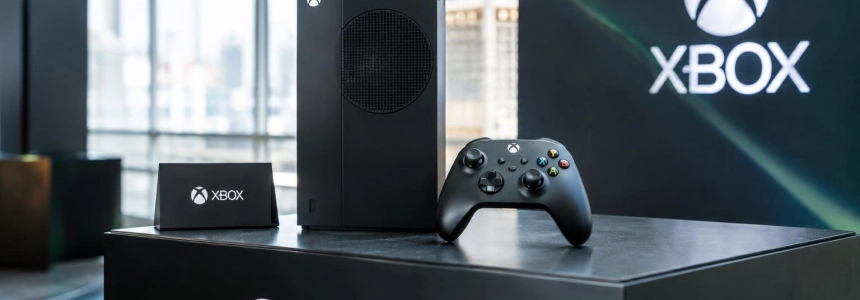
Project Helix will be able to run PC games, in addition to Xbox titles, Jason Ronald, Microsoft's vice president of Next Generation, confirmed. The company also wants to use neural rendering to improve image quality without relying solely on more computing power or memory, at a time when component costs are making the promise of a powerful, affordable console more difficult to deliver.
Ronald outlined Helix's ambitions in an interview featured in Xbox's digital 25th-anniversary magazine. The proposal combines two approaches: reducing the barriers between console and PC libraries, and using rendering techniques that, according to the executive, can generate images more efficiently.
“Helix is designed to be a console that is also capable of playing games from your PC. It is not a PC that can also play console games.”
— Jason Ronald, Xbox vice president of Next Generation
A console first, with access to PC games
Ronald described Helix as a console that will also run PC games, not a computer that can also play console titles. Microsoft wants accessing games to be simple, intuitive, and immediate, while also planning broader options for those who want to adjust configuration and performance settings.
The interview does not specify whether compatibility will include PC stores such as Steam. Wccftech notes that Ronald did not clarify this point; for now, the promise is limited to the ability to play PC titles and the intention to reduce the divisions between the two environments.
The plan also includes the Xbox library. Ronald said he wants games and progress from four generations of Xbox to be immediately available. In that interview, he did not explain how each aspect of compatibility would be implemented or which PC games would be accessible on Helix.
In March, Microsoft had already introduced Project Helix as its next-generation Xbox console and announced that it was working on it with AMD. The company described a custom system-on-chip and FSR Next, with planned advances in ray tracing, AI integrated into graphics and computing processes, efficiency, and visual ambition.
Neural rendering enters the cost strategy
The graphics push is tied to a specific problem: rising component costs, especially for memory, and pressure on manufacturing costs. Ronald acknowledged that this is a difficult time for those designing platforms, but argued that it also makes it necessary to seek out technology that can keep products affordable.
For the executive, neural rendering is a new way to generate a frame without requiring more computing power, additional memory, or similar resources. The idea is to achieve visual improvements without making every leap dependent on adding more expensive components.
Wccftech cautions that the term could encompass several AI-based tools, such as upscaling, frame generation, or ray reconstruction. That interpretation is not a confirmed list of Helix features: Ronald did not specify which techniques will be included in the console or how they will be applied.
In its March presentation, Microsoft had mentioned next-generation ray tracing, AI integrated into graphics and computing processes, and FSR Next. PCWorld reported at the time that the platform would also consider upscaling and multi-frame generation, as well as ray regeneration, path tracing, texture compression, and DirectStorage for streaming game data from storage.
There is a difference in naming between the March reports. Microsoft called the technology FSR Next in its announcement, while PCWorld reported that Jack Huynh, AMD's senior vice president of computing and graphics, called it FSR Diamond and said it would include machine-learning-based upscaling and frame generation. November's updates do not clarify what each feature will be called in the final product.
Libraries, settings, and a shared experience
Integrating PC games is part of a broader effort to reduce the barriers between console and computer. In the March announcement, Ronald argued that players should have a consistent experience across devices and be able to take their progress and game entitlements with them. Microsoft also linked this vision to Xbox Play Anywhere and cross-platform play.
The March announcement included other steps in that strategy. Xbox said the Play Anywhere catalog had surpassed 1,500 games and that 500 development teams already supported the feature. It also announced that Xbox Mode would arrive on Windows in select markets starting in April, offering a controller-optimized experience while retaining Windows' flexibility.
The company positioned Project Helix alongside its plans for backward compatibility. In March, it announced new ways to play titles from four generations of Xbox later that year. In the November interview, Ronald again mentioned those four generations as part of the library he wants to make accessible on Helix.
A timeline with no release date yet
Microsoft announced Project Helix during the GDC conference on March 11, 2026. At the time, it said alpha hardware would be sent to developers in 2027. That timeline does not indicate when the console will reach stores or set a commercial release date.
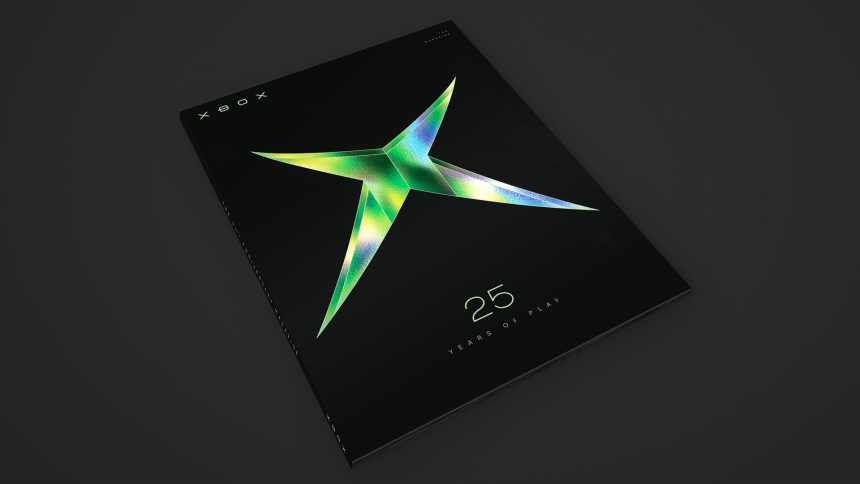
The Xbox 25th-anniversary magazine, which featured Ronald's interview, was published digitally on November 15. Microsoft explained that it had distributed print copies during Xbox FanFest in Seattle that same week and that the issue could also be read online. The publication brings together retrospectives on the brand and previews of upcoming games and hardware.
TecnoAndroid and Multiplayer.it suggest that neural rendering could help keep Helix affordable by improving graphics quality without necessarily relying on more hardware power.
Ronald believes innovation will accelerate over the coming years: he predicted more advances in the next three to five years than in the past decade. Wccftech mentions rumors of a possible delay until the 2028 holiday season, but does not present that as a date confirmed by Microsoft. For now, the next official milestone for Helix is the arrival of alpha hardware for developers in 2027.
Sources: TecnoAndroid, Wccftech, Multiplayer.it, XBOX Wire, XBOX Wire, Insider Gaming, PCWorld