The first version of Xbox Helix would have allowed players to play online without paying for a subscription and access PC stores such as Steam. Windows Central attributes that initial design to sources close to Microsoft’s plans, but warns that the change in Xbox leadership and rising component costs may have changed the project.
The information appeared on November 23 in a report by Jez Corden, a journalist at Windows Central, who spoke with Microsoft sources during events marking Xbox’s 25th anniversary. Vandal, Nintenderos, and Multiplayer.it later picked up the details of the plan and questions about whether it would continue. This is an initial vision, not confirmed specifications for the console that will reach the market.
A console that would work like a PC
The original concept went beyond running a few computer games on a console. According to the sources cited by Windows Central, Helix had been conceived as a gaming PC capable of running the Xbox catalog, including titles from previous Microsoft consoles. In practice, the system would have combined access to Xbox games with the Windows ecosystem.
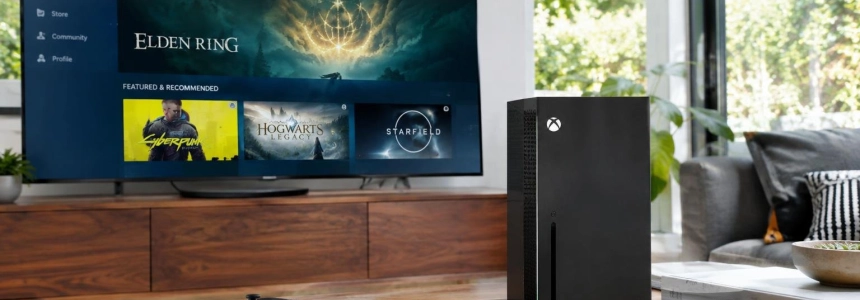
The gaming interface would have been designed for controller use and to fill the entire screen, with a presentation similar to Xbox. Users could exit that environment, open the Windows desktop, and install programs. The plan included third-party stores among those programs, in particular Steam, as well as other PC platforms.
Nintenderos describes a full-screen interface similar to that of the Xbox Ally handheld, from which users could switch to the Windows desktop. GamesRadar+ also draws that comparison and notes that the design would allow other programs to run, not just games. The key difference from a closed console was that users would be free to install software and use stores outside Microsoft’s ecosystem.
Jez Corden said the project had another codename until the previous summer, although the report does not identify it. He also describes it as a design closer to a PC than a conventional console. The proposal was not limited to expanding compatibility with PC games: it envisioned Helix offering direct access to the desktop and to applications installed by the user.
“Project Helix is a console that is also capable of playing games from your PC”
— Jason Ronald, vice president of Xbox’s devices and gaming ecosystem team, according to GamesRadar+
Jason Ronald’s quote reflects the latest public description cited by GamesRadar+: Helix would be a console capable of running PC games. But that description alone does not confirm that the system will offer the full Windows desktop or unrestricted access to stores such as Steam. Compatibility with PC games does not guarantee an open platform.
Multiplayer without a fee was part of the design
The original plan also included eliminating the additional fee for playing online. If Helix offered a PC environment, Windows Central’s sources argued, maintaining a subscription barrier for multiplayer would have been inconsistent with the usual PC gaming experience. The report says removing that requirement was included in the strategy’s calculations.
The measure would have affected the fee associated with Xbox Game Pass multiplayer, formerly Xbox Live Gold. Notebookcheck specifies that the change would mean removing the requirement for Xbox Game Pass Core to access the online features of games that currently require a subscription. The proposal linked opening up the system with free online play, not just adding Steam to the console.
That would not mean all Xbox online games would become free. Windows Central and other publications note that free-to-play titles such as Fortnite, Overwatch, and Roblox already allow players to play online without an additional subscription. The issue is the payment requirement for multiplayer in games that are subject to that barrier.
Removing it would come at a cost to Microsoft: the company would give up recurring revenue and have less room to subsidize the hardware price. Windows Central estimates that the current model could generate hundreds of millions of dollars a year, or even more, although it also acknowledges that Microsoft does not publish detailed subscription figures that would allow the amount to be calculated precisely. Notebookcheck attributes that estimate to the outlet itself.
Hardware pricing and Xbox’s strategy
The project’s economics would be more challenging if Helix had to be funded mainly through the sale price of each unit. The Windows Central report suggests that, with some revenue from subscriptions and purchases in its own stores disappearing, Microsoft would depend more on the upfront price of a machine with PC-level capabilities. It adds that the original proposal was drawn up before rising memory prices, driven by the AI boom, made costs worse.
Vandal also links rising component prices to potentially higher manufacturing costs and retail prices. It does not give a price for the console or confirm how much its costs have risen. The consequence identified by the outlets is more general: a more expensive system could make the economic balance required for an open machine with no multiplayer fee unworkable.
The change in leadership adds another unknown. The initial design was reportedly developed during Phil Spencer and Sarah Bond’s tenure at the helm of Xbox. After Spencer’s retirement and Bond’s departure, Asha Sharma took over leadership of the division. Windows Central also places Matt Booty in the games area, Matt Ball in strategy, and Chris Van Vilet in technology within Sharma’s leadership team.
According to reports, Xbox’s more recent statements describe Helix as a console first and foremost, albeit one capable of running PC games. That direction seems more conventional than the idea of a computer with a Windows desktop and the freedom to install third-party stores. Current leadership could retain PC games while rejecting full openness, but Microsoft has not announced a final decision.
Steam competes with Microsoft’s own store
Access to Steam also raises a commercial question for Microsoft. Windows Central says the company is looking to bring users back to the Xbox ecosystem and that its internal analysis shows many Xbox Ally owners choose Steam when given the option. The report does not publish a figure or detail the size of that group, but argues that the behavior could be repeated with Helix.
If players bought their games mainly on Steam, Microsoft would have less ability to draw them to its own services and stores. Multiplayer.it notes that compatible PC games could be limited to those available in the Microsoft Store, with a greater role for Xbox Play Anywhere, rather than opening the console to rival platforms. PC compatibility could end up limited to Microsoft’s catalog.
Windows Central also raises a middle-ground possibility: Helix could run some Steam games without offering the store’s full client. It is unclear how that alternative would work, and the outlet presents it as a question, not a confirmed plan. GamesRadar+ raises the same question as it wonders what Project Helix will ultimately look like.
The strategic context includes other changes mentioned by Windows Central: Xbox has reportedly returned to pursuing exclusives and has hinted that franchises such as Diablo, Fallout, and The Elder Scrolls could become exclusive to its consoles. The outlet also cites Forza Horizon 6 as a release with temporary exclusivity on Xbox that reportedly boosted console activity, especially among people who own multiple systems. A very open Helix could conflict with the effort to strengthen Xbox.
The options still on the table
The reports describe several possible approaches without claiming that Microsoft has chosen one. One would be to remove the multiplayer fee only on Helix while keeping it for Xbox One and Xbox Series X|S. That way, users of current consoles would keep the existing system, while the new generation would have a different policy.
Another option would be to sell different versions: a cheaper, more traditional model alongside a more expensive and open one, possibly without the online payment barrier. Windows Central also suggests that Microsoft could initially manufacture only a small number of units to reduce the financial impact of eliminating that revenue. The alternatives include separating openness by model or generation.
Game Pass could also help offset the loss of the multiplayer fee, according to the scenarios outlined by Windows Central and Nintenderos. The argument would be that subscriptions to the service could provide enough recurring revenue even without charging for online play. However, the reports offer no calculations showing that this would be enough to make up the difference.
The central question remains unanswered: Microsoft has not confirmed whether Helix will have full access to Steam, allow programs to be installed from the Windows desktop, or remove the multiplayer fee. For now, the public message cited by GamesRadar+ describes a console capable of playing PC titles, a description compatible with several possible designs. The actual scope of that compatibility remains to be defined.
Sources: Vandal, Nintenderos, Multiplayer.it, Windows Central, Notebookcheck, TechPowerUp, GamesRadar+