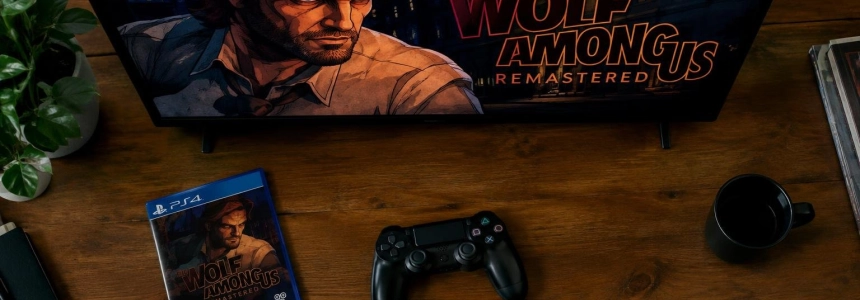
The Wolf Among Us Remastered reworks the graphics of Telltale's game and revisits Bigby Wolf's case in Fabletown. Critics agree that the visual leap is its main draw; the deleted scenes, on the other hand, arrive with flaws that some reviewers consider part of their charm and others see as a lack of polish.
- Developer: Telltale Games
- Platforms: PS5, Xbox Series X|S and PC
- Release date: October 29, 2026
- Price: $24.99
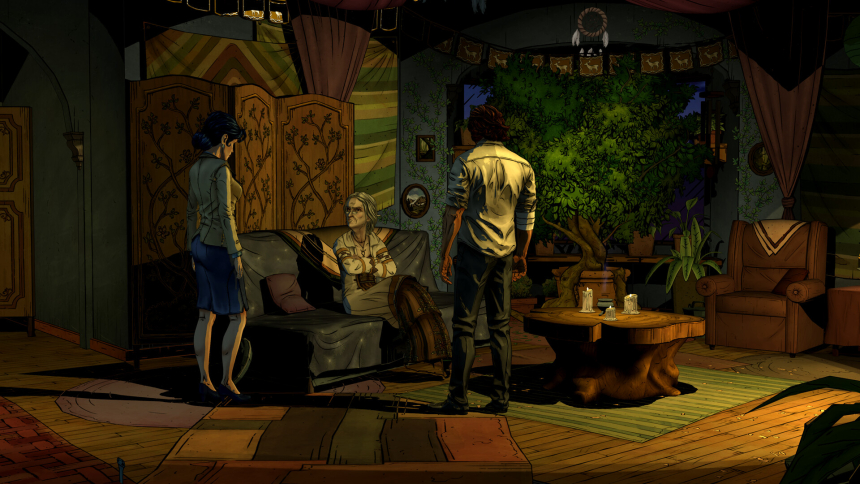
The same case, with a visual refresh
The story once again puts players in the shoes of Bigby Wolf, the Big Bad Wolf turned sheriff of Fabletown, a corner of New York inhabited by fairy-tale characters who conceal their magical appearances. A murder sets the investigation in motion. Choices affect relationships with other characters and some details along the way, although the case leads to the same conclusion.
The remaster does not change the structure or gameplay system: it combines dialogue with time-limited choices, quick-time events, and exploration of locations in search of clues. In its review for Multiplayer.it, the magazine notes that choices can change how characters view Bigby. GamingTrend also focuses on the small, reactive consequences, and appreciates that the game does not promise every choice will completely transform the story.
The main change is in the presentation. Multiplayer.it describes characters rebuilt from scratch, more detailed textures, more three-dimensional objects, and enriched environments. It also points to improvements in resolution, animations, music, and voice acting, as well as the removal of the stuttering and brief pauses that occurred when changing scenes. For the Italian publication, the graphical update alone is enough to justify returning to Fabletown.
PlayStation Universe praises the facial textures, lighting, and revamped animations, while Shacknews considers that the new level of detail makes the visual style stand out even more than in the original. GamingTrend also appreciates the work on textures, geometry, and lighting, though it warns that certain lighting effects can look strange and that the original game's stiff animations remain.
“the story still holds up”
— Ozzie Mejia, author of Shacknews
A story that still convinces
For Shacknews, the mystery and character work remain compelling. The publication notes that early encounters and decisions can have repercussions later on, and that choosing where to go also means allowing events to unfold elsewhere. This structure presents Fabletown as a place where things are happening, not just a series of scenes Bigby visits.
GamingTrend praises the narrative adventure and its ability to vary the context and relationships through small choices. In its review, it estimates that it completed all five episodes in about nine hours. PlayStation Universe, meanwhile, highlights the variety of each episode and how the investigation grows more complicated as Bigby gathers clues.
Not everything has aged equally well. Shacknews criticizes the quick-time events: they appear rapidly, are sometimes unintuitive, and can demand several actions in just a few seconds. The reviewer feels that, as retained in this edition, they are more jarring than the systems of this kind that have become commonplace. PlayStation Universe also finds the item search slow, though it believes Bigby's observations offer insight into how he thinks.
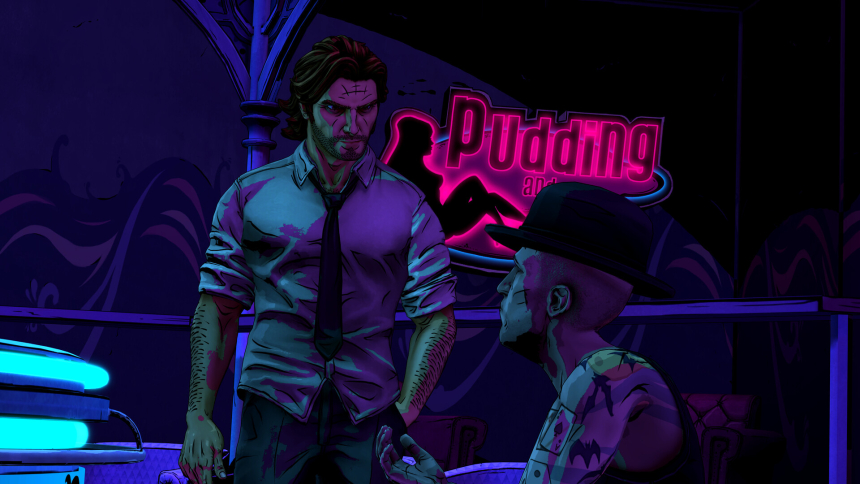
Extras with mixed results
The edition adds a Noir mode, an art gallery, and audiovisual material about development, along with five playable deleted scenes. Noir mode applies a black-and-white image. Multiplayer.it considers it a well-made extra, but not very appealing for an adventure whose impact depends on its colors. Shacknews agrees: it finds the black and white dull and distracting when searching for clues. GamingTrend adds a practical problem: some interface elements, such as dialogue timers, are harder to read. For PlayStation Universe, the option is unnecessary because it takes attention away from the visual improvements.
Opinions on the deleted scenes are less uniform. Shacknews points to incomplete animations and missing sound effects, and believes the quality does not justify presenting them as playable segments. Multiplayer.it also finds the scenes fragmentary, with partial animations, floating objects, and sections without voice acting. Even so, it considers them interesting for fans of the game.
GamingTrend takes a more indulgent approach: it finds them curious and amusing precisely because they are unfinished, though it acknowledges pacing issues and scenes that add little to the story. PlayStation Universe appreciates the selection, which includes variations on moments from the game, but reports graphical glitches when accessing them from the extras menu. It also values the development videos, though it regrets that the art gallery includes no written explanations. Multiplayer.it counts more than 60 minutes of behind-the-scenes material and notes that it lacks even English subtitles; PlayStation Universe mentions six videos.
Agreement on visuals; disagreement over added content
The reviews converge on two points: Bigby's story still works, and the graphical improvement is the clearest reason to return. They also share reservations about Noir mode, which sacrifices the use of color and can make some clues or prompts harder to read.
The divide is over the value of the extras. Shacknews and Multiplayer.it see the deleted scenes as appealing material, but insufficiently polished; GamingTrend finds interest and humor in their provisional state, while PlayStation Universe considers them a worthwhile addition despite occasional glitches. In addition, Multiplayer.it points out the absence of Italian subtitles, a limitation not mentioned in the other reviews. The remaster leaves the case intact and lets each player decide whether its extras justify a return to Fabletown.
Sources: Multiplayer.it, PlayStation Universe, Shacknews, GAMINGTREND