Meta’s net emissions increased 45% in 2025, reaching 11.8 million metric tons of carbon dioxide, according to the company. The jump coincides with the growth of its artificial intelligence infrastructure: electricity consumption rose 35% year over year, and the company is reviewing the timeline for its climate goals.
Meta’s 2026 sustainability report, published on Thursday, November 19, acknowledges that the company is reevaluating the timelines, sequence, and interim milestones of its commitments. These include the 2030 target for achieving net-zero emissions, as well as its short-term emissions-intensity targets.
The 2030 goal is under review
Meta had pledged to be carbon neutral and water positive by 2030. The first goal means offsetting as much carbon dioxide as the company generates; the second means returning more water to local watersheds than it uses. Meta says it is reevaluating the 2030 timeline for its net-zero emissions goal, as well as its short-term emissions-intensity targets.
In a statement emailed to CNET, a Meta spokesperson said: “We remain committed to net-zero emissions”, although the company is reviewing the 2030 deadline. The spokesperson added that it will continue investing in emissions reductions. The wording leaves the date open while explicitly maintaining the overall goal.
“demand for AI infrastructure has grown faster than almost anyone projected.”
— Meta
The report uses this statement to explain the pace of AI infrastructure expansion. CNET notes that Meta is one of the major operators driving the construction of large-scale data centers in the United States and other countries, and questions whether the company could have foreseen this growth in demand.
The trend is not limited to Meta. CNET reports that Microsoft, Amazon, and Google have also pulled back on their climate goals amid the accelerated construction of data centers. In 2023, Microsoft President Brad Smith said the company’s net-zero goal had been set “before the explosion of artificial intelligence.”
More electricity for new data centers
Meta attributes the increase in electricity consumption to the launch of additional data centers. In its report, the company puts the increase at 35% compared with the previous year. The figure helps explain the context for the review: environmental commitments remain in place in general terms, but the energy demand from AI expansion is growing rapidly.
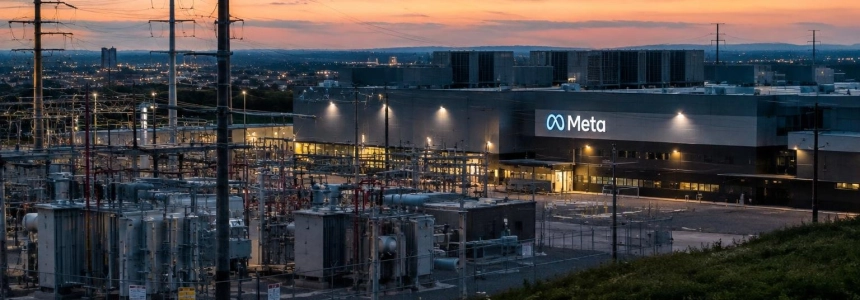
The most visible example is Hyperion, Meta’s data center in Louisiana. Mark Zuckerberg announced the project in 2025 and described it as a facility roughly the size of Manhattan. When it comes online in 2030, it is expected to provide two gigawatts of AI capacity, with the possibility of further expansion.
That scale also requires an equally large demand on the state’s power grid, according to CNET. Hyperion is scheduled to come online in 2030 with an initial capacity of two gigawatts, with the possibility of further expansion.
Meta does not present data center growth as the only focus of its environmental policy. Its report lists measures to reduce impacts related to energy, water, and construction, as well as initiatives involving suppliers, biodiversity, and communities. But the 2025 results show that these actions coincided with higher electricity consumption and greater net emissions.

Environmental measures highlighted by Meta
The company says it matched 100% of its annual electricity consumption with clean, renewable energy for the sixth consecutive year. In 2025, it contracted more than 10 gigawatts of capacity, bringing its cumulative total to more than 30 gigawatts across seven countries and 28 U.S. states.
For water use, Meta reports a data center water usage effectiveness of 0.14, a 26% improvement over the previous year. It also says it has replenished more than 2.9 billion gallons of water in regions with high or medium water stress since 2017. These are company figures on its measures and results; the report presents them alongside the energy pressures associated with infrastructure growth.
Meta also reports progress in its supply chain. Sixty-two percent of its suppliers, measured by their contribution to emissions, had set science-aligned reduction targets, up from 48% the previous year. The company nearly doubled the number of suppliers it works with on this effort, to 343.
For data center design, Meta estimates that it reduced embodied carbon by approximately 77% compared with its original specifications. It also diverted 90% of construction waste from its own data centers away from landfills. The company says it preserved, restored, or planned to restore more than half the area of its own data center campuses to support native biodiversity.
Investing in the communities where it operates
The report includes the launch of the Future Is for Everyone Fund, a $1 billion commitment to provide direct support to all U.S. communities where Meta operates data centers. The initiative adds to more than $11.8 million in community grants awarded during 2025.
Meta adds that it has supported more than 46,000 skilled trades jobs since 2011. The announcement expands the scope of its report beyond energy and emissions: it also covers labor and environmental practices across its value chain and support for the communities where it builds infrastructure.
The central unanswered question is how the timelines and interim milestones will change following the announced review. Meta says it will continue investing in emissions reductions, but it has not specified a new timeline to replace the 2030 target. Meanwhile, its report records a 45% increase in net emissions and a 35% rise in electricity consumption during 2025.
Hyperion remains scheduled for 2030 and is designed to provide two gigawatts of AI capacity, with room to scale.
Sources: CNET, Meta Sustainability