

Call of Duty: Modern Warfare 4 gives reviewers plenty to agree on in its campaign—and plenty to argue about once they reach DMZ and multiplayer. The game launched on October 23, 2026. PC Gamer lists its price as $70/£60, while TechRadar lists PC, PS5, Xbox Series X and Series S, and Nintendo Switch 2 among its platforms. GamesRadar+ lists Switch 3 instead, so its platform listing conflicts with TechRadar’s.
Infinity Ward’s new entry follows a South Korean recruit, Private Park, during a North Korean invasion, while also returning to Captain Price’s story. Its package includes a single-player campaign, competitive multiplayer and DMZ, an extraction-shooter mode set in the fictional Hajin City. 3DJuegos estimates the campaign at around eight hours.
A campaign that brings the action
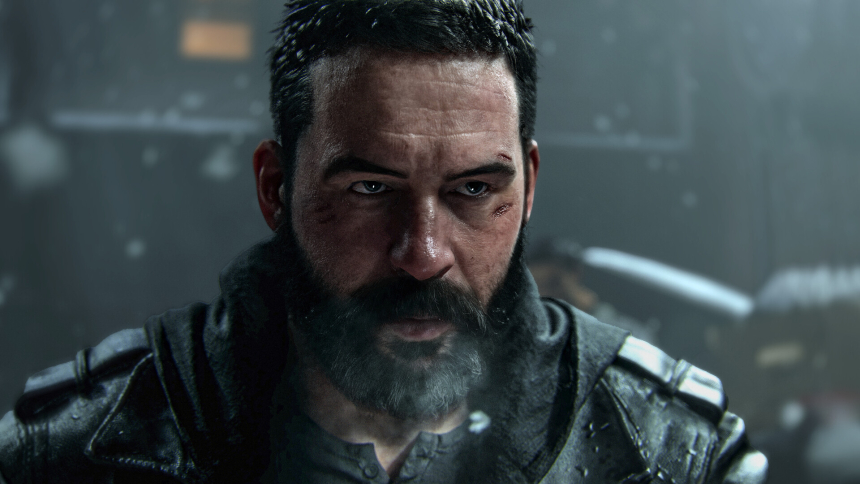
The strongest agreement is on the campaign’s set pieces, pace and presentation. 3DJuegos’ Bruno Ouviña calls it one of the most enjoyable campaigns in the series, praising its varied missions: the action moves from a South Korean invasion to a Paris car chase, stealth sequences and a large, open-ended mission. He describes the campaign as a collection of the franchise’s greatest hits, but says its variety makes the familiar ideas work.
TechRadar is similarly enthusiastic, calling the story “the best campaign in a decade.” Its review highlights the opening invasion, the squad’s new characters and the contrast between Park’s wartime experience and Price’s pursuit of revenge. GamesRadar+ also praises the cinematic action and performances, while pointing to Stranded—a mission that starts the player with little equipment and lets them explore and build an arsenal—as a particular success.
There are reservations beneath that praise. 3DJuegos says the North Korean storyline becomes cartoonish in its portrayal of the country, and notes that some narrative threads feel like attempts to repair earlier games’ loose ends. GamesRadar+ finds Price’s storyline weaker and says the campaign too often pulls players back onto a tightly scripted route after offering freedom in Stranded. It also objects to the instant failure that follows if players stray too far from their squad leader during one sequence.
TechRadar’s review is more positive about the story’s conclusion and its new antagonist, while GamesRadar+ sees moral complexity in Price’s choices. Both praise the campaign’s big moments, but they differ on how satisfying its character work and structure are.
DMZ: generous progression or a thin extraction loop?
DMZ is where the reviews diverge most sharply. TechRadar and GamesRadar+ find a mode with enough variety and tension to stand on its own. TechRadar describes missions, free-roam runs and multi-stage Dynamic Ops across a large map. It praises story missions in particular, including a hospital rescue that turns into a firefight at an extraction point. Player encounters can become combat—or, if both sides agree, cooperation.
GamesRadar+ also enjoys DMZ’s scripted objectives and the possibility of unpredictable encounters. Its reviewer calls the mode’s extraction loop “a revelation,” and says playing with friends makes it especially engaging. TechRadar describes a home base with storage, crafting, a vendor and intelligence about threats in the zone.
PC Gamer’s review likewise likes DMZ’s steady rewards and structured activities. Its reviewer says money earned through missions is banked, so it cannot be lost on a failed run, and that an operator’s death does not wipe out permanent traits. Those systems, the reviewer argues, make DMZ more forgiving than many extraction shooters without removing all the tension of carrying valuable loot through Hajin City.
3DJuegos is far less convinced. Ouviña finds the PvE too easy outside certain boss encounters, and says the PvP can feel arbitrary because players may not realise another human is nearby before shots begin. He also criticises the extraction points, loot and progression, arguing that the mode does not make its rewards feel valuable enough to justify repeated runs. In his view, the shooting is DMZ’s best feature—but other Call of Duty modes let players enjoy it without the extraction mode’s drawbacks.
The difference is partly a matter of what each reviewer values: TechRadar, GamesRadar+ and PC Gamer praise DMZ’s missions and progression, while 3DJuegos wants more demanding PvE, fairer-feeling encounters and stronger reasons to keep playing.
Strong gunplay, familiar multiplayer arguments
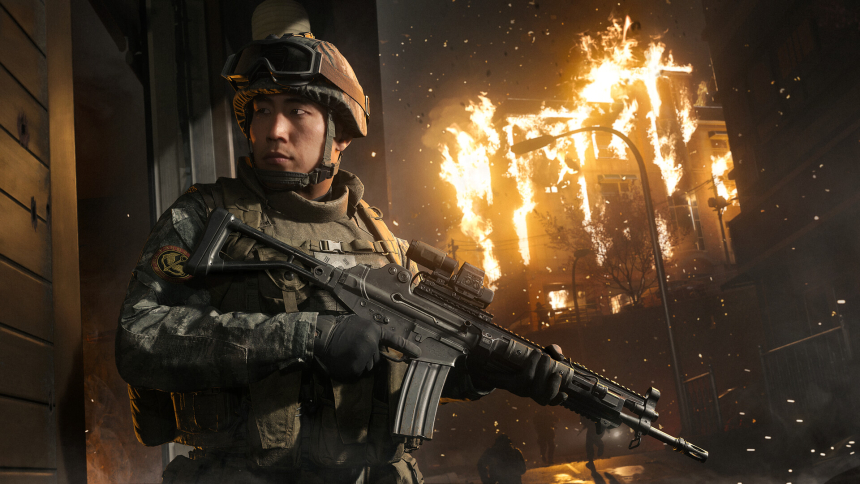
Across the reviews, the guns and movement earn consistent praise. TechRadar calls the weapons satisfying and the combat well paced, while GamesRadar+ says movement feels responsive and firefights deliver clear feedback. PC Gamer is especially taken with the weapon detail and attachment choices, but argues that the core 6v6 format still leans on familiar conventions. It criticises small, three-lane maps, killstreaks that can swing a match further toward a leading player, and the risk of being shot soon after spawning.
3DJuegos also sees solid foundations but says the multiplayer does not yet make enough of them. It praises the movement, weapons and range of modes, but finds the maps too small and repetitive as a set. Its review also criticises attachments that narrow the number of useful builds, camouflage challenges that encourage awkward play, and skill-based matchmaking. The reviewer says the system can pair strong players with cheaters more often and make a good run feel like it is punished with tougher opponents.
PC Gamer singles out Frontline, a Team Deathmatch variant with fixed team spawns, as a welcome change that makes enemy positions easier to anticipate. GamesRadar+ reaches the opposite conclusion about the mode, describing its fixed respawns as repetitive. That split captures the broader disagreement: PC Gamer wants more changes to Call of Duty’s established multiplayer formula, while TechRadar is happy with a polished, familiar arena shooter. GamesRadar+ praises the overall combat but criticises killstreaks and some new modes.
So the consensus is clearest on the campaign’s spectacle and the quality of the shooting. The argument is over the package around them: DMZ is a generous, replayable attraction for some reviewers and an undercooked side mode for another; multiplayer is either a confident return or a strong but overly familiar foundation. No single mode wins over every critic.
Sources: 3DJuegos, PC Gamer, TechRadar, GamesRadar+


