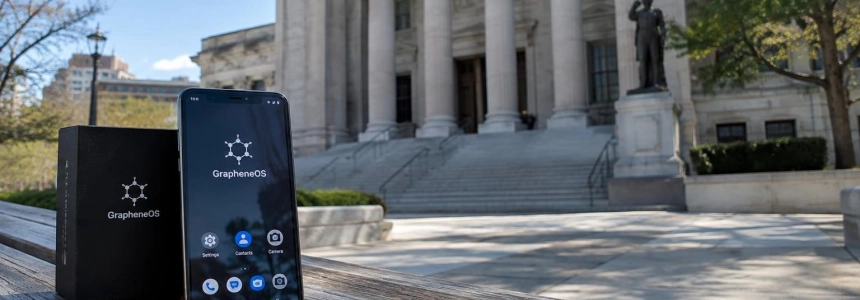
GrapheneOS accuses Google of pressuring mobile phone manufacturers to prevent them from offering compatibility with the alternative operating system and of reserving more and more features and updates for Pixel phones. The project also fears Google may lock the bootloader on future models, which would close an important route for installing it on their phones.
The accusations appeared in posts by the team on Mastodon and X. GrapheneOS distinguishes between Google's engineers, with whom it says it collaborates, and the company's commercial decisions, which it considers harmful to alternative Android systems. The dispute comes as the project prepares to expand beyond Pixel phones through a partnership with Motorola.
The dispute centers on licenses and the bootloader
According to GrapheneOS, Google has repeatedly contacted original equipment manufacturers—OEMs—to ask whether they work with the project. The team says Google then warns them about the licensing terms for Google Mobile Services (GMS), Google's package of services for Android. In its view, those terms discourage manufacturers from allowing GrapheneOS to be installed.
The accusation has a specific commercial consequence, as the project describes it: manufacturers that choose to offer GrapheneOS could lose their license to include Google services. Punto Informatico reports this interpretation and notes that the team considers some GMS clauses illegal. GrapheneOS says several court decisions have challenged these terms; however, it does not cite a new ruling that determines the outcome of this specific dispute.
The project also accuses Google of reserving more features for Pixel phones, while trying to convince other manufacturers not to support GrapheneOS or bootloader unlocking. On X, according to TechRadar, the team described Google's commercial division as the problem, not its engineers. The post attributed to GrapheneOS the accusation that the company is seeking to directly harm the system.
“At the same time, Google is trying to convince OEM partners not to support GrapheneOS or even bootloader unlocking.”
— GrapheneOS, post on X cited by TechRadar
The bootloader is involved in the phone's initial startup stages and determines which software images it can load. Manufacturers usually ship it locked. On models that allow it to be unlocked, this option can make it possible to install another operating system; on some phones, it is also possible to lock it again afterward, provided the device can cryptographically verify the installed software.
This is the process GrapheneOS describes for Pixel phones. Google's official installation documentation asks users to restore the lock when finished, to keep Android Verified Boot protection active. Therefore, unlocking it during installation does not necessarily mean leaving the phone in that state: verification can continue working once the bootloader is locked again.
Fears that upcoming Pixel phones may close this route
GrapheneOS expects Google could start locking the bootloader on future Pixel phones. If that happens, the team would lose the main channel it currently uses to install the system on those devices. But Google has not announced this change: for now, it is a forecast made by the developers, not a decision announced by the company.
Pixel's current role as the primary platform also has technical limits. GrapheneOS requires specific hardware features, including verified boot, reliable firmware updates, dedicated security components, and compatibility with mitigations against memory attacks. So a phone's ability to unlock its bootloader is not enough for the system to be adapted to it.
The collaboration with Motorola aims to expand compatibility. Motorola announced its long-term partnership with GrapheneOS at Mobile World Congress in March 2026; it later confirmed the Motorola Signature 27 as the first model with official support. TecnoAndroid points to 2027 as the target for the first compatible devices and says the Signature 27 will have a GrapheneOS variant. Punto Informatico, by contrast, says there is still no launch date.
A relationship with a manufacturer could also make it easier to access firmware, drivers, and HAL, the hardware abstraction layer that connects Android to components such as the modem, cameras, and sensors. The project intends to add more phones to the list, but its expansion will depend on devices meeting its requirements and their manufacturers cooperating.
Play Integrity excludes some apps
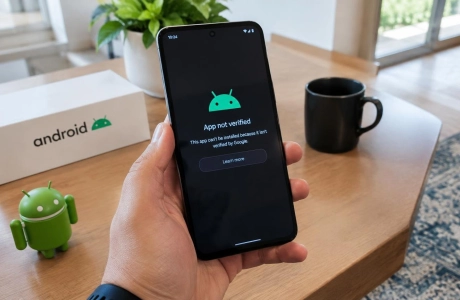
The other dispute revolves around Play Integrity API, Google's mechanism for providing apps with information about the environment in which they run. GrapheneOS argues that the system can keep the bootloader locked, use valid cryptographic signatures, and receive security patches on time, yet still fail to get the verdict required by certain apps.
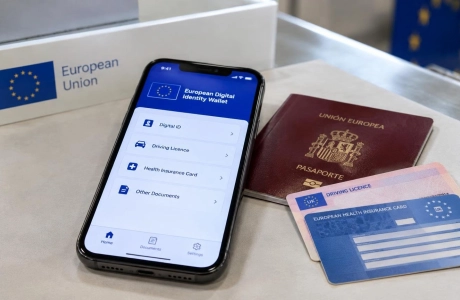
The effects are already being felt by specific services. TecnoAndroid notes that some IO and IT Wallet features are unavailable on GrapheneOS because the environment does not receive the required verdict; Punto Informatico and Notebookcheck also mention banking apps that depend on Play Integrity. Not all apps are affected equally: compatibility varies depending on the checks each service uses.
The team proposes Android hardware attestation as an alternative, based on cryptographic keys and verifiable information about the phone's state. According to its proposal, this would allow services to evaluate different operating systems without relying on the same certification criteria. Notebookcheck adds that GrapheneOS says it has spoken with the European Commission about Play Integrity, but those discussions did not lead to a solution.
A request to the Department of Justice
GrapheneOS wants to present its accusations to the United States Department of Justice. TechRadar reports that the team also mentioned Attorney General Todd Blanche while calling for a response. According to Punto Informatico, the request draws on previous antitrust litigation related to Android and the €4.1 billion fine imposed on Google in Europe.
Notebookcheck notes that the European Union's highest court upheld that penalty in July and that the case concerned restrictions imposed on phone manufacturers. GrapheneOS argues that the fines have not changed Google's conduct. These are the project's arguments; they do not amount to a court ruling on the new accusations of pressure against OEMs or on the possibility of Pixel phones being locked.
The criticism does not mean a complete break with Google's technical teams. GrapheneOS says its engineers have collaborated with the project; examples cited include support for using FIDO2 and passkeys in Vanadium, the GrapheneOS browser, through Play Services. The complaint concerns commercial strategy and licensing terms, not this technical cooperation.
TechRadar said it had asked Google for comment on the accusations and would update its coverage if it received a response. Meanwhile, GrapheneOS is preparing to move to Motorola devices: the first announced model is the Signature 27, although its launch date has not yet been set.
Sources: TecnoAndroid, Punto Informatico, Notebookcheck, TechRadar