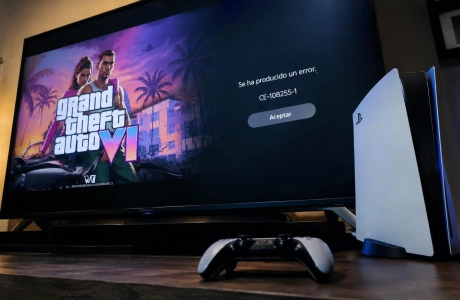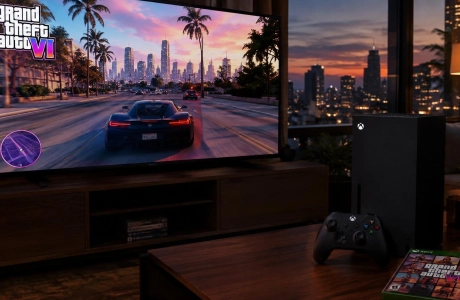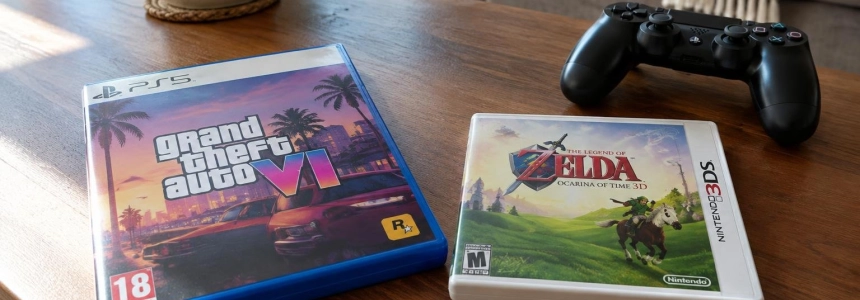
Ocarina of Time’s user score fell from 9.6 to 8.6 on Metacritic after zero scores appeared in connection with the dispute over GTA 6. The retaliation is aimed at the Nintendo Switch 2 remake, although there is no clear evidence that its players started the wave against Rockstar’s game.
The conflict links two very different games through a coincidence that is hard to ignore: both reached a Metascore of 99 on Metacritic, according to Dexerto. GTA 6 thus matched the critics’ score for the original 1998 Ocarina of Time. But the dispute is not just about professional scores: it has spread to user ratings, where cross-attacks are distorting the picture of both releases.
Two scores that tell different stories
In figures recorded on November 22, GGRecon put GTA 6 at 5.6 out of 10 among users, with 79,218 ratings; Eurogamer reported the same score and more than 54,000 reviews in its article the previous day. Dexerto had earlier observed a drop to 5.0 on PlayStation 5. These are snapshots from different moments, not one stable figure: the number of votes and the score were changing rapidly.
There are also differences between the figures published for Zelda. GGRecon recorded an 8.6 based on 38,369 ratings, with 13% negative scores. Hobby Consolas reported a drop from 9.6 to 8.6, while Notebookcheck published an 8.7. The figures show the same trend, although they do not match exactly because they were checked at different times.
The gap between critics and users does not, by itself, prove that any particular score is false. Eurogamer notes that some negative GTA 6 reviews raise specific complaints: the 30-frames-per-second cap on consoles, the emphasis on the relationship between Jason and Lucia, or technical problems. Others attack the game over its supposed “woke” or “DEI” agendas. Not all negative criticism is part of the campaign, and lumping it all together erases that distinction.
The same caution is needed when attributing the campaign to one side. Dexerto says that some profiles that gave GTA 6 a zero had barely rated any other games, and that Ocarina was the only other title on their accounts, with a score of ten. But that does not identify who organized the votes. GGRecon also notes that there is no clear evidence about who started it; accusations between fans of the two games are not enough to settle the question.
From zero scores to retaliation
The response against Zelda is apparent in the text of some ratings themselves. One, quoted by Hobby Consolas, said: “Taste your own medicine”. Others mention GTA 6 directly or accuse Zelda fans of attacking first. The wording turns the score into a show of allegiance: it no longer necessarily describes the experience of playing the remake, but instead aims to hit back at a perceived slight.
Taste your own medicine
— Metacritic user review
Criticism aimed at GTA 6 also ranges from gameplay objections to insults directed at people who enjoy Lucia and Jason’s story, according to Notebookcheck. Zelda reviews include comparisons with Rockstar’s game and put-downs of its fans. The target is no longer just the product: scores are being used to take part in a rivalry between communities, even though the games offer different experiences.
The timing fuels the competitive interpretation. The Ocarina of Time remake came out for Switch 2 on November 5 and, by November 8, had a user score of 9.6, according to Dexerto. GTA 6 arrived on PS5 and Xbox Series X/S on the Thursday before Eurogamer’s article was published. Hobby Consolas notes that the two games launched very close to each other and that November was also marked by the nominations for The Game Awards 2026. The proximity of the releases does not prove coordination, but it helps explain why their fans compare scores and blame one another for the drops.
The mechanics that make the campaign possible
The difference between platforms offers a concrete clue about the role of the scoring system. Metacritic does not require proof of purchase to submit a score, according to Dexerto and GGRecon. Dexerto contrasts this with the PlayStation Store, where only people who own the game can rate it: there, GTA 6 had a score of 4.84 out of 5 when Dexerto checked. The comparison does not make one platform a perfect measure, but it does show that their scores are built under different access rules.
Under this model, creating an account and posting a rating may be enough to affect the average, even if the person has not played the game. Notebookcheck reports that all it takes is registering an email address, and contrasts this ease of access with Steam and PlayStation Store. The result is a lower barrier to participation: a campaign can add votes without drawing solely on buyers or players, and an aggregate score is no longer a reliable approximation of the experience of those who actually tried the game.
That does not mean every new account, every zero, or every disagreement is manipulation. The available data cannot precisely distinguish genuine reviews from organized ones. The clearest signal is the content of some messages—zero scores accompanied by references to the other game, or insults—but collective authorship has not been established. Mutual accusations may be part of the conflict, not proof of who started it.
What this means for studios and platforms
For studios, the immediate consequence is reputational: a very low public score can circulate alongside the critics’ score and become the first figure people see when they look up a game. GTA 6 retains a Metascore of 99, while its user score is around 5.6 in the latest figures cited by Eurogamer and GGRecon. A single figure no longer sums up the consensus; it is necessary to look at who is rating, when they are doing it, and what reasons they give.
The case also makes legitimate criticism harder to interpret. GTA 6 players have pointed to the 30-fps cap, performance drops, bugs, or narrative decisions; Eurogamer and Dexerto report several of these complaints. When they coexist with retaliatory zero scores, political messages, and personal attacks, the volume of votes can drown out specific objections that do describe problems with the game. For development teams, the aggregate score is less useful if it is not accompanied by comments that can be tied to specific aspects.
For platforms, the challenge is to keep participation open without presenting a score vulnerable to votes from people who have not played the game as though it were equivalent to a rating from buyers. Dexerto’s comparison with PlayStation Store shows an alternative based on ownership, although the sources do not assess its costs or propose a single solution. Access requirements change what a score means: this is not a neutral technical detail when users and companies read it as an indicator of reception.
For now, the most visible effect is Zelda’s falling score and the persistence of a huge gap between professional and user ratings for GTA 6. Retaliation does not clarify who started it; it does leave both games caught up in a dispute where rating them also means taking sides.
Sources: Hobby Consolas, Eurogamer.net, Dexerto, GGRecon, Notebookcheck