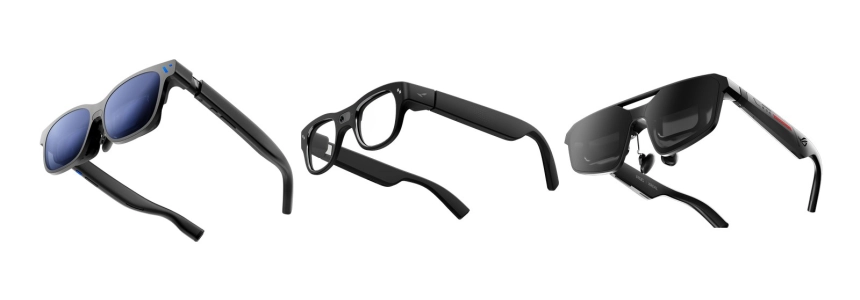
XR glasses are no longer a toy for early adopters. You can buy them on Amazon, plug them into a laptop or a console with a single USB-C cable and get a virtual screen of more than 150 inches in front of your eyes. But very different devices share the same label, from $299 to more than $2,000, and they are not all made for the same job.
We went through the official spec sheets and the reviews from Tom’s Guide, Tom’s Hardware, Android Central, Android Authority, Engadget and UploadVR to pick the best ones for work and for play. Prices and availability were checked on 28 November 2026, in the middle of Black Friday week, so many deals will change within days.
Three kinds of glasses under one label
Display glasses. Most XR glasses are this type. They have no computer of their own: they connect over USB-C to a laptop, a phone or a Steam Deck (to a console, through an adapter) and show whatever comes down that cable as if it were a giant screen. They are the best choice for gaming and streaming, and for working on a laptop on a train or a plane. This is where VITURE, XREAL, ROG and RayNeo Air play.
Spatial glasses. These carry their own computer, either in the frame or in a wired puck, plus cameras that track your hands. Apps float around the room and stay put when you turn your head. It is the bet Google makes with Android XR on the XREAL Aura, Snap with its Specs and RayNeo with the X3 Pro. They are expensive and still short on apps.
Heads-up display glasses. They look like regular glasses and have a small display in the lens for messages, translation, directions or a teleprompter. They are no good for films, but they let you work without pulling out your phone: Meta Ray-Ban Display, Even Realities G2 and Rokid Glasses.
Glasses with a camera and speakers but no display, such as the third-generation Ray-Ban Meta or the first Android XR glasses from Google and Samsung, which go on sale on 10 December in the US and South Korea, are left out: no display, no XR.
The best at a glance
| Glasses | Best for | Field of view | US price | UK / Europe |
|---|---|---|---|---|
| VITURE Beast | Gaming and films | 58° | $549 | €519 (Amazon Spain) |
| XREAL 1 Pro+ | Working on a laptop | 57° | $599 | €649 |
| XREAL 1S | Value | 52° | $449 | €355 (Amazon Spain, sale) |
| ROG XREAL R1 | 240 Hz gaming | 57° | $849 | €849 (ASUS) |
| VITURE Pro 2 | Budget, with myopia dials | 50° | $299 | €299 (Amazon Spain) |
| RayNeo Air 4 Pro | Cheap HDR films | 47° | $299 | €269 (Amazon Spain and Italy) |
| XREAL Aura | Android XR | 70° | $1,279 | Not sold |
| Snap Specs | Untethered AR | 51° | $2,195 | £1,995; €2,295 (France) |
| RayNeo X3 Pro | Untethered AR | 30° | $1,299 | £1,299; €1,399 |
| Meta Ray-Ban Display | HUD with gesture band | 20° | $799 | £749; €899 (Italy, France, Germany) |
| Even Realities G2 | Discreet HUD for work | 27.5° | $599 | £599; €699 |
| Rokid Glasses | HUD with camera and AI | 23-30° | $699 | €699 (€549 on sale) |
Best for gaming and films: VITURE Beast
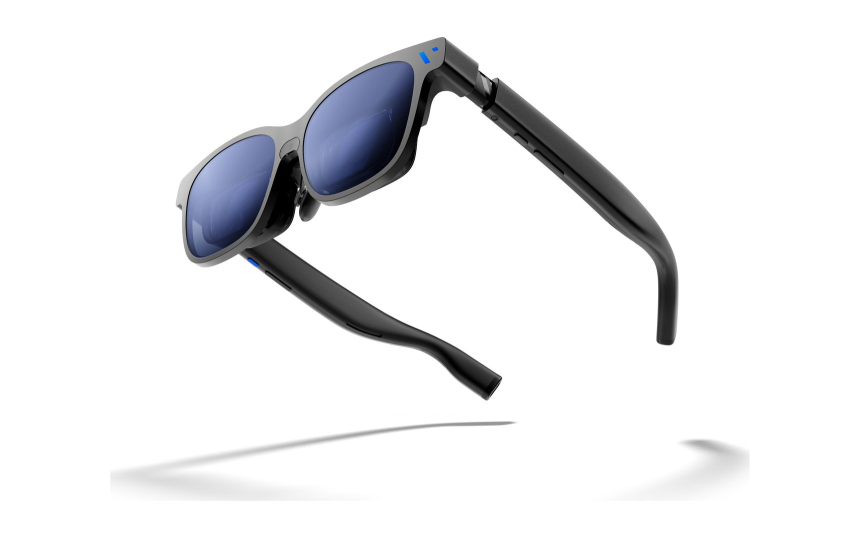
The Beast is the most complete pair of display glasses right now. It uses Sony micro-OLED panels with 1920 × 1200 pixels per eye, up to 120 Hz and a 58-degree field of view, the widest in its class: VITURE turns that into a 174-inch screen. It weighs 88 grams, the lenses dim in nine steps and 3DoF tracking runs on the glasses themselves, so the picture stays fixed in space without installing any app.
Tom’s Guide calls it the “best AR glasses that money can buy right now”. The downsides: some chromatic aberration at the edges and small text that is less sharp than on XREAL glasses, according to Android Authority, which also warns that the Beast ships at 1080p and 60 Hz and you have to switch on 1200p at 120 Hz yourself. VITURE lists 6DoF as “in future plans”.
For gaming, it plugs straight into a Steam Deck, a ROG Ally, laptops and the iPhone 15 or later (except the 16e, 17e and Air). The Switch and Switch 2 need a VITURE dock or adapter; the PS5 and Xbox need the Pro Mobile Dock ($129) or VITURE’s HDMI cable. Price: $549, or $489 in VITURE’s current sale; €519 on Amazon Spain.
Best for work: XREAL 1 Pro+
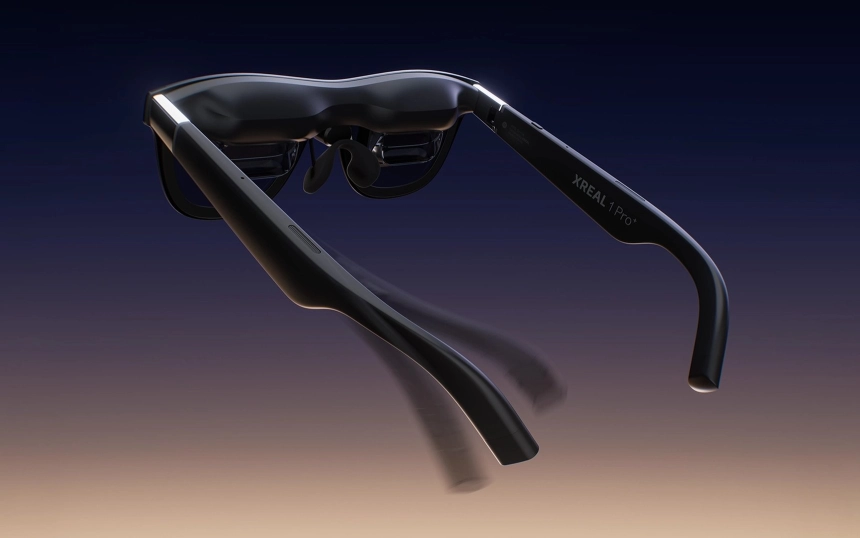
In October XREAL replaced the One Pro with the 1 Pro+, at the same price. It keeps what made the One Pro the favourite for work: Sony micro-OLED at 1920 × 1080 per eye, 57 degrees, 120 Hz and the X1 chip, which anchors the screen in space (3DoF) without apps and with 3 milliseconds of latency. What is new is brightness, up from 700 to 1,200 nits, along with an AI HDR mode and 2D-to-3D conversion at 60 frames per second.
For long hours of writing and reading, sharp text matters more than screen size, and XREAL comes out ahead of the Beast in Android Authority’s comparison. Add the XREAL Eye camera ($99, sold separately) and you get 6DoF: you can lean in towards the virtual screen as you would with a real monitor.
Price: $599; €649 in Europe, according to the Italian press. The One Pro is still on sale at a discount: $499 at XREAL’s US store for Black Friday.
Best value: XREAL 1S
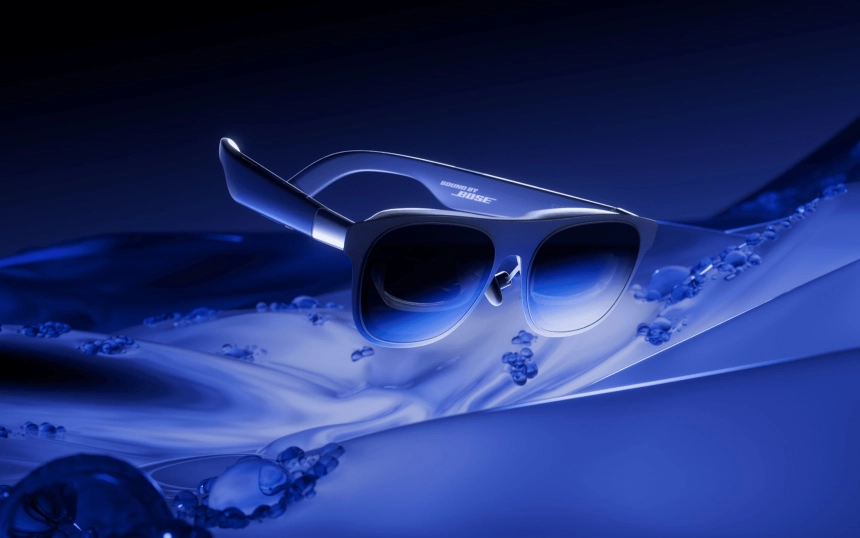
The 1S is the simpler member of the family, yet it has a higher resolution than the 1 Pro+: 1920 × 1200 per eye in a 16:10 format that suits documents. The field of view drops to 52 degrees and brightness stays at 700 nits; it keeps the X1 chip with 3DoF, weighs 82 grams and converts videos and games from 2D to 3D on the glasses. Tom’s Guide says it “takes the throne” as the best AR glasses you can buy; its one real flaw is that it gets hot under pressure.
Price: $449 ($379 in the Black Friday sale). If you own a Switch, note that the XREAL Neo, the accessory meant to connect it, was put “on hold indefinitely” before launch.
For competitive gaming: ROG XREAL R1
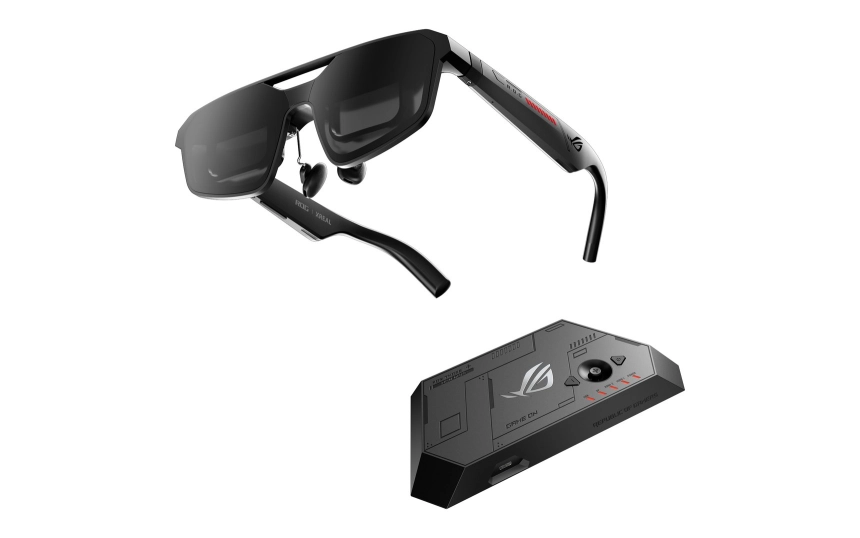
ASUS and XREAL built these glasses for high frame rates: 1920 × 1080 micro-OLED per eye, 57 degrees, 120 Hz as standard and 240 Hz with Frame Rate Boost. They come with the ROG Control Dock, with two HDMI 2.0 ports and one DisplayPort 1.4, so a PC, PS5 or Xbox connects without adapters (the Switch goes through its own dock). 700 nits of brightness, three-step dimming, Bose sound and around 90 grams.
The catch is in the 240 Hz mode: XREAL admits it is reached by scaling the image, and according to Tom’s Guide vertical resolution is halved, with some screen tearing. Android Central calls them “easily the best wearable monitor I’ve ever used”, but every review agrees they are expensive. Price: $849 ($749 at Best Buy this week); €849 at the ASUS store in Spain.
Cheap, with myopia dials: VITURE Pro 2
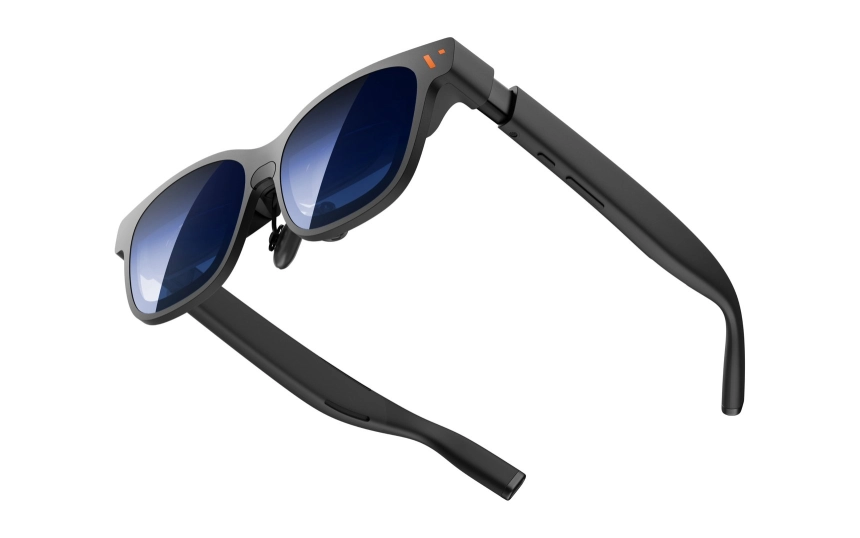
For $299, the Pro 2 is the lightest pair on this list at 63 grams, and on paper the brightest, at 1,600 nits. You get 1920 × 1080 micro-OLED, 50 degrees, 120 Hz and, above all, a myopia dial for each eye from 0 to −5 dioptres: if you wear glasses, you can skip prescription inserts. There is no 3DoF on the glasses (the SpaceWalker app handles it) and no electronic dimming: a clip-on shade comes in the box.
Tom’s Guide recommends it for its price and comfort, though not for long hours of reading or work; Gizmodo criticises the app and the paid adapter the iPhone needs to unlock every feature. If your myopia is stronger, the Rokid Max 2 has dials from 0 to −6 dioptres, although it dates from 2025 and tops out at 600 nits.
HDR films on a budget: RayNeo Air 4 Pro
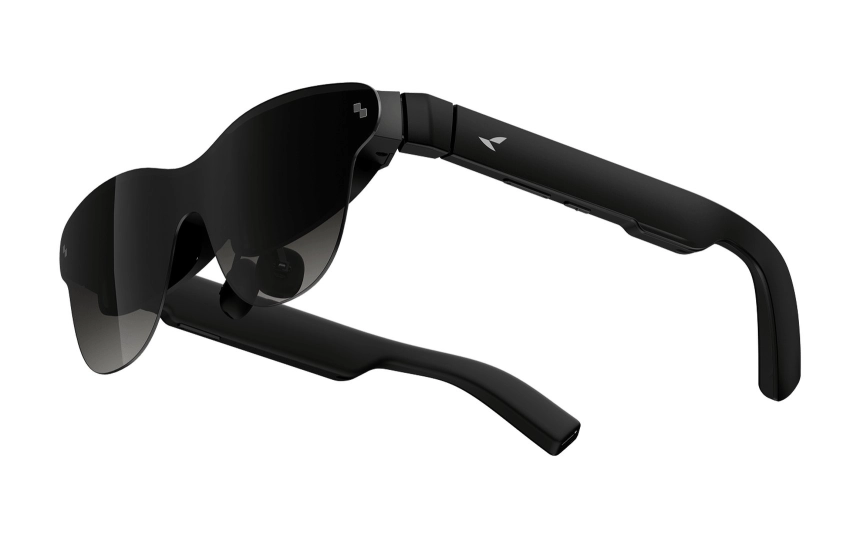
RayNeo launched these as the first lightweight glasses with HDR10, and they are still the cheapest way to watch films with good contrast: 1,200 nits, 120 Hz, 1920 × 1080 per eye, 76 grams and four speakers tuned with Bang & Olufsen. In exchange, the field of view stops at 47 degrees, the edges are slightly blurry, there is no electronic dimming (a shade is included) and Notebookcheck misses a mode to anchor the screen.
Price: $299; €269 on Amazon Spain and Italy. RayNeo already sells a step-up model, the GT Max, with 59 degrees and on-glasses 3DoF for $429.
The future, if you live in the US: XREAL Aura
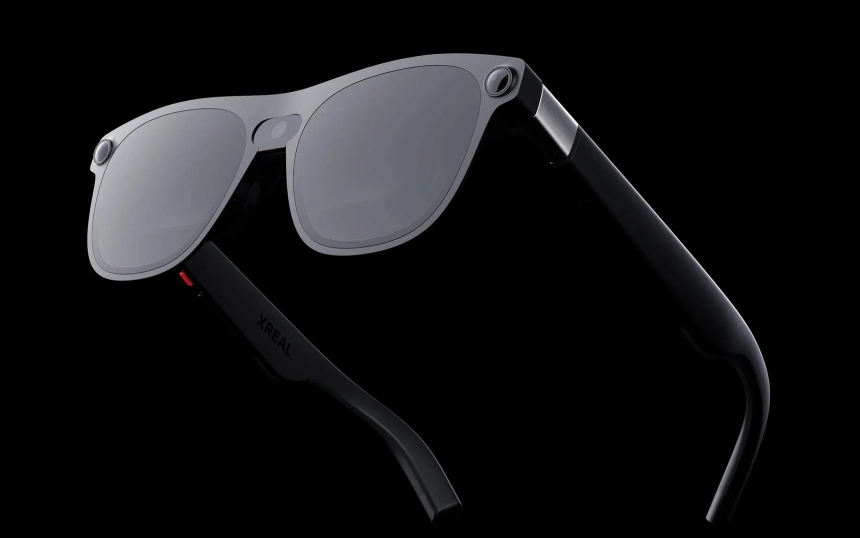
The Aura is the first pair of glasses running Android XR, Google’s mixed reality platform. The glasses weigh 95 grams and pack 1920 × 1200 micro-OLED per eye, a 70-degree field of view, hand-tracking cameras and the X1S chip. The processor, a Snapdragon Reality Elite, and the battery sit in a 265-gram wired puck that doubles as a touchpad. It runs Google Play apps in floating windows, includes Gemini and, over USB-C, mirrors the desktop of a Mac or a PC.
The reviews, published in mid-November, are cautious. Tom’s Hardware speaks of “a true next-gen spatial computing experience”; Engadget calls it “proof of life for Android XR, and nothing more”: few native apps, no Netflix or Disney+, a hot puck and around three hours of battery. We covered it in more detail in our news story on the Aura.
Price: $1,279, or $1,099 until the end of the year. It is only sold in the US, Canada, Japan and South Korea; the rest of the world will have to wait for 2027.
Untethered AR: Snap Specs and RayNeo X3 Pro
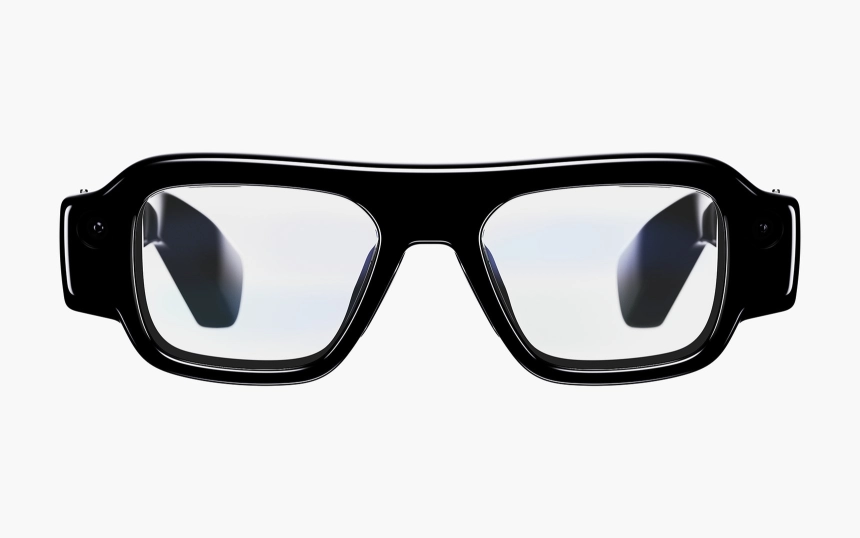
Snap Specs are the only full augmented reality glasses that need nothing else: two Snapdragon processors in the frame, a 51-degree field of view, hand tracking and dimming lenses. The price for that is around 135 grams, up to 4 hours of battery (the case recharges them four times) and $2,195, £1,995 in the UK or €2,295 in France. They are sold only in the US, UK and France: the first pre-orders are shipping and new orders will arrive in early 2027. What has been published so far are press hands-ons, not reviews of retail units.
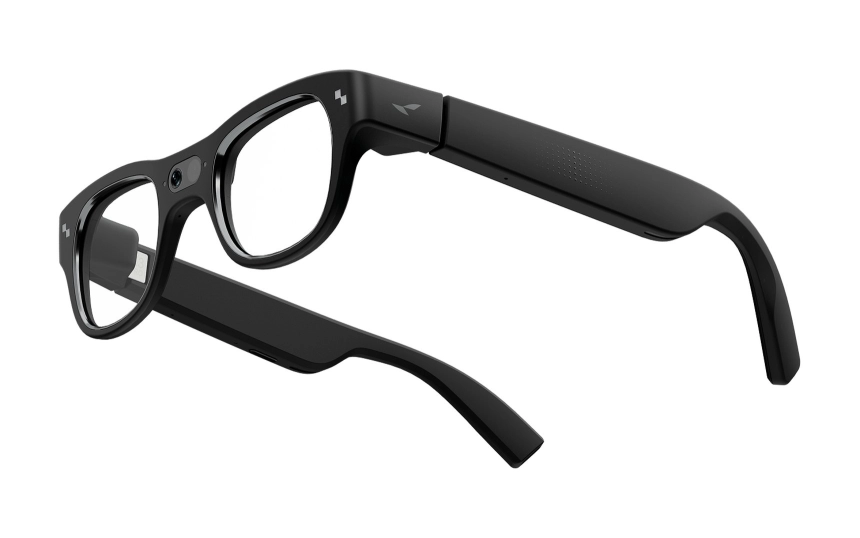
RayNeo X3 Pro is easier to buy in Europe: €1,399 on RayNeo’s EU store (€1,119 on sale) and £1,299 in the UK. It weighs 76 grams and has full-colour microLED displays reaching 6,000 nits, a 12-megapixel camera and Gemini. But its field of view is 30 degrees and the battery is its big problem: Tom’s Hardware never got more than an hour out of it, and Android Central half an hour.
Work without reaching for your phone: HUD glasses
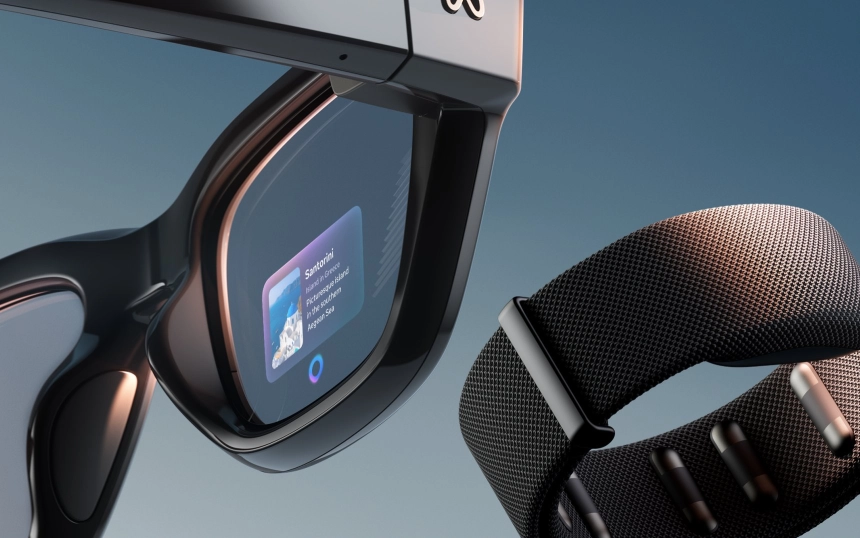
Meta Ray-Ban Display has a full-colour display in the right lens, about 20 degrees diagonally and up to 5,000 nits, and is controlled with the Meta Neural Band, a wristband that reads finger gestures. Messages, live captions, translation, directions and the Ray-Ban Meta camera, in 69 grams. UploadVR praises the band but warns that a single-eye display strains your eyes, and almost every review asks for more apps.
Price: $799 with the band. It costs £749 in the UK and, since 13 October, €899 in Italy, France and Germany; other European countries, such as Spain, are not on the list yet.
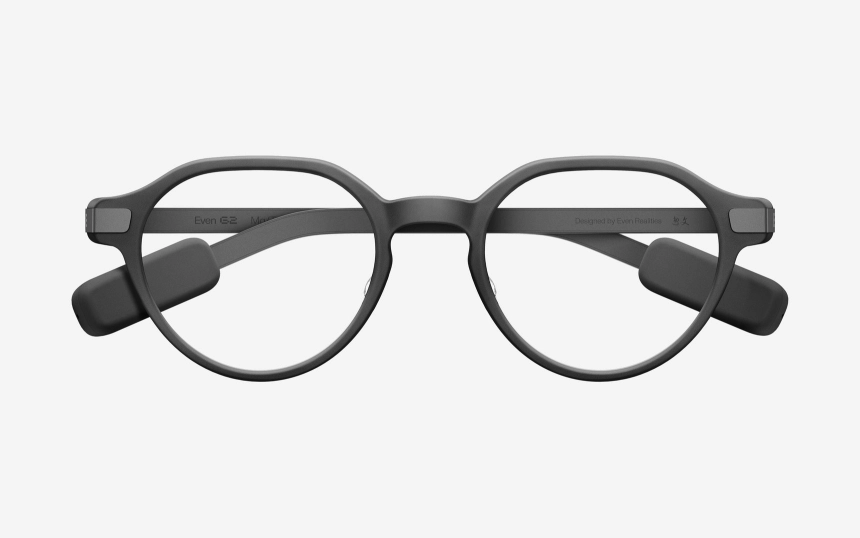
Even Realities G2 looks the most like a regular pair of glasses: 36 grams, no camera or speaker, with a green microLED display in both lenses that only you can see. It shines at work: a teleprompter for presentations, meeting transcription and an AI assistant, with battery for two days. Tom’s Guide gives it 4 out of 5; 9to5Google criticises the low resolution and some notification bugs.
Price: $599, £599 or €699, plus €169 for prescription lenses; the R1 ring controller is sold separately.
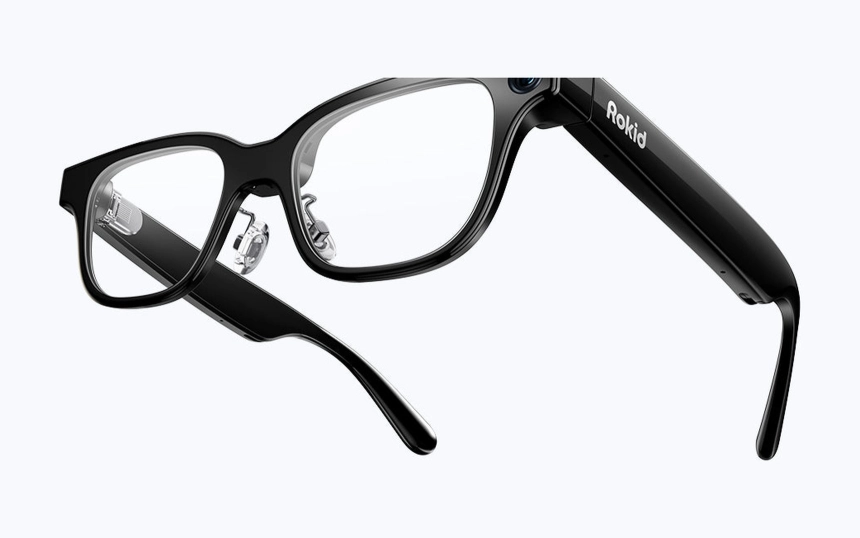
Rokid Glasses combine both ideas: a green microLED display in both eyes, a 12-megapixel camera and AI, in 49 grams. Tom’s Guide gives them 4 out of 5 for how light and bright they are, although the camera struggles in low light and prescription lenses are pricey. Price: $699; €699 on Rokid’s EU store (€549 on sale).
Five things to check before you buy
- Check the port. Display glasses need a USB-C port with video output (DisplayPort Alt Mode). Almost every recent laptop has one, as do the Steam Deck, the ROG Ally and iPhones from the 15 onwards. The Switch 2 does not support a direct connection: you need a compatible dock. The PS5 and Xbox go through HDMI, again with a dock.
- For reading, sharpness beats inches. A wider field of view does not mean clearer text: small type blurs at the edges of the biggest screens.
- If you wear glasses, the VITURE Pro 2 (down to −5) and Rokid Max 2 (down to −6) have dioptre dials; the rest need prescription inserts. With astigmatism, always get inserts.
- On-glasses 3DoF (Beast, XREAL 1S and 1 Pro+, ROG R1) means the screen stays still when you turn your head, without installing anything. That is what makes working with them comfortable.
- Electrochromic dimming: press a button and the lenses go dark for a film or clear so you can see around you. The Beast has nine levels, XREAL and ROG three; the Pro 2 and Air 4 Pro make do with a shade.
Our picks
For gaming and films, the VITURE Beast. For working on a laptop, the XREAL 1 Pro+, or the 1S if you want to spend less. The ROG XREAL R1 only pays off if you play at high frame rates on a PC or a ROG Ally. On a tight budget, the VITURE Pro 2, especially if you are short-sighted.
If you want a heads-up display for everyday use, the Even Realities G2 is the most discreet, and the Meta Ray-Ban Display the most complete where it is sold. Spatial glasses are promising, but outside the US you still have to wait or pay a lot.
Sources
- Official spec sheets: VITURE Beast, VITURE Pro 2, XREAL 1 Pro+, XREAL 1S, XREAL Aura, ROG XREAL R1, Snap Specs, Meta Ray-Ban Display, Even Realities G2.
- Reviews: Tom’s Guide (VITURE Beast, XREAL 1S, ROG XREAL R1, Even G2, Rokid Glasses), Android Authority, Android Central, Tom’s Hardware, Engadget, UploadVR, Notebookcheck and 9to5Google.