Instagram is beginning to offer eligible creators Content Protection, a tool for detecting copies of their videos and deciding what happens with each match. The system lets them keep the video visible, hide it on Instagram and Facebook, add a credit link, or release the claim; Meta is also preparing tests to identify versions that retain the original audio but replace the images with AI-generated content.
A tool for deciding what to do with each copy
The feature was already available on Facebook and is now expanding to Instagram. Once a creator signs up, their new original videos are automatically protected. They can also manually select and protect eligible videos they posted earlier. Instagram scans its services and Facebook for matches using the visual recognition technology Meta employs in Rights Manager.
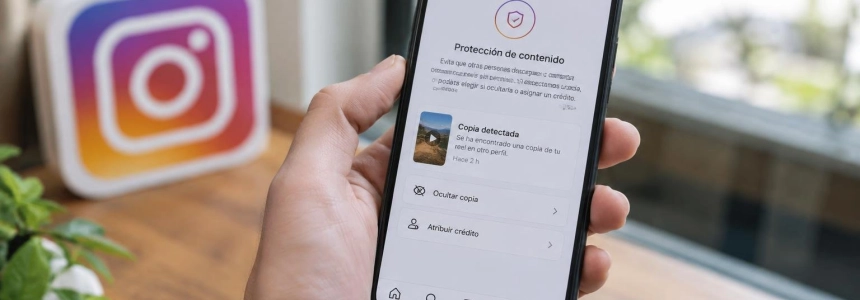
When it finds a match with a protected Reel, the platform sends an alert. The notification includes the matching video's views and the number of followers of the profile that posted it, data that helps the creator assess the case. The system does more than identify a copy for removal: it leaves the decision in the content creator's hands.
The default option is “Track”: the video remains visible, and the creator can monitor its performance. “Hide from everyone” makes it inaccessible on both Instagram and Facebook, but does not directly penalize the account that posted it.
The other two options let creators assign credit or close the case. “Add credit link” adds an “original by” label to matches found on Instagram, linking to the original video or profile. “Release the match” withdraws the claim and leaves the video published. These four options allow the response to vary for each match.
Access subject to eligibility criteria
The tool is not enabled for all accounts. Instagram bases eligibility primarily on its originality and integrity criteria. Selected creators receive a notification in their activity feed and can check their access through the professional tools. Those who have not yet received a notification can request access.
The location specified for checking availability is the professional tools section, under “Tools” in the home tab. Digital Camera World describes the path from the home tab menu to “Tools” and “Your professional tools”. The terminology may appear in English, depending on the names used by the platform.
For now, Content Protection covers videos, not photos, according to Digital Camera World. The publication says the tool looks for visual matches and that access is limited to creators who meet criteria designed to favor original content. The option to add authorized accounts prevents every detected use from being treated as an infringement.
If a creator has given another profile permission to reuse their work, they can add it to an allowlist. Examples include a second personal account, a collaborator, or a brand. Videos posted by profiles on that list should not be flagged as matches.
There is also a way to resolve ownership disputes. If another account protects a video belonging to the legitimate creator first, they can file a dispute through the tool or submit a copyright claim through Instagram's Intellectual Property Reporting Center.
The AI test looks for copies that change the images
The newest expansion is still in the testing phase. Instagram will start showing some creators videos that reuse the words spoken in the original while changing the images. The test targets videos in which someone keeps a creator's audio and combines it with AI-generated images, a format that the visual matching system might not recognize on its own.
TechCrunch reports that testing will begin with a small group of creators in the coming weeks. Instagram plans to expand the feature to people who sign up for Content Protection on both Instagram and Facebook. The audio copy-detection tool should not be confused with the options currently available for visual matches: the former is still being tested.
Meta is also exploring ways to limit the reach of accounts and posts that repeatedly use this kind of AI-generated copy. TechCrunch attributes this line of work to Instagram; Digital Camera World says the exploration focuses on content and profiles that repeatedly use AI tools to publish this kind of material. No timeline has been specified for when potential measures would take effect or how they would be applied.
“To be clear, I am very worried about this trend,”
— Adam Mosseri, head of Instagram, on Threads
The concern goes beyond the launch of this tool. Net Influencer reports that Adam Mosseri expressed concern about AI-generated copies in a Threads reply to an artist who said their posts were being copied. Mosseri argued that existing copyright claims are not enough to address the problem, partly because many creators, such as comedians and dancers, have not registered their work.
In the same reply, Mosseri also warned of the risk of bad actors filing false claims. The challenge Instagram faces is twofold: helping people whose work is reused without permission and preventing the protection mechanism from being used to claim someone else's content.
From Facebook protection to expansion on Instagram
Meta introduced Content Protection for Facebook in November 2025. The initial version scanned for matches on both Facebook and Instagram, but protected Reels posted on Facebook, including those shared from Instagram using “Share to Facebook”. People who posted only on Instagram could not sign up for that tool.
The Facebook version lets creators protect older Reels by selecting them manually and review matches from the Professional Dashboard. Meta described options for tracking, blocking, and releasing matches; it also said certain matches on Facebook could receive attribution links. The expansion to Instagram brings sign-up and decisions about copies directly to creators on that platform.
The move coincides with other Meta measures aimed at reducing the circulation of non-original material. In April, Instagram stopped recommending aggregator accounts that mainly post other people's photos and carousels, extending to those formats rules that already applied to Reels, according to Net Influencer. Content Protection now adds the ability to act on each matching video individually.
In March, Meta said it was testing improvements to the Facebook tool to detect possible impersonation and make it easier for creators to report it. The company said it removed more than 20 million accounts impersonating major creators during 2025; that figure refers to removed impersonation accounts, not video copies detected by Content Protection.
Meta links protection to prioritizing original content
Meta has also presented its originality policies on Facebook as part of a strategy to reduce the reach of duplicated posts or posts with minor changes. The company said views and watch time for original Reels on Facebook roughly doubled in the second half of 2025 compared with the same period in 2024. Those figures describe Facebook, not the impact of Instagram's new tool.
The company considers content original when it is filmed or produced directly by the creator or owner of a page or profile. By contrast, it describes reposts and low-value edits, such as adding borders, inserting captions, or changing the speed, as non-original. Facebook's rules also distinguish between reusing someone else's material without substantial contributions and transforming it with meaningful information, analysis, or improvements.
Instagram presents Content Protection as a way to give creators more control, while testing detection that can recognize reused audio under new images. For now, creators can check whether they meet the access criteria and manage visual matches reported by the platform; the test focused on AI-modified videos will begin with a small group.
Sources: TecnoAndroid, TechCrunch, Net Influencer, Digital Camera World, About Meta, Meta Newsroom