Google began rolling out its November core update on November 10, 2026, but several SEO professionals place the most visible changes on their sites starting Friday the 13th and continuing through the weekend. Volatility reports from tracking tools appear quieter than usual, while some site owners describe traffic drops, irregular impressions, and changes in conversions.
A rollout lasting up to two weeks
Google described the update as a periodic change intended to show relevant and satisfying content in search results from all kinds of sites. The company warned that the process could take up to two weeks. Therefore, data collected during these first few days reflects a rollout that is still underway, not a final result.
The official Google Search Status Dashboard lists the incident as “November 2026 core update,” with a start date of November 10. At the time covered by these reports, the dashboard does not show a final duration; it does note that the May 2026 core update lasted 11 days and 21 hours, and that the March update lasted 12 days and 4 hours.
| Core update | Start | Recorded duration |
|---|---|---|
| November 2026 | November 10, 2026 | In progress |
| May 2026 | May 21, 2026 | 11 days and 21 hours |
| March 2026 | March 27, 2026 | 12 days and 4 hours |
Rank Math describes the November update as the third core update of 2026 and notes that it came almost six months after the May update. Google's dashboard history also includes the March update, which began on the 27th, and the May update, which began on the 21st. The November date matches the one Google published for the start of the rollout.
Changes became more visible over the weekend
Search Engine Roundtable gathered complaints about ranking and traffic changes, as well as variations in conversions. The outlet described the initial discussion as quieter than during other core updates, but said it picked up on Saturday the 14th and over the weekend. It also observed greater aggregated volatility in the tools that Saturday than on other days.
This pattern does not mean all sites experienced the same movement. Some participants on WebmasterWorld, Black Hat World, X, LinkedIn, and in the comments on Search Engine Roundtable reported improvements; others reported losses or traffic without conversions. One user described an increase in clicks and impressions on pages that normally receive hardly any visits, with the CTR and volume multiplied by five. Another said traffic was increasing and rankings were improving, but conversions still weren't coming in.
There were also signs pointing in the opposite direction. One participant said their e-commerce site had received virtually no traffic from Google on Saturday, although its overall performance remained good. Another said they had recorded a 5% traffic drop three weeks earlier, recovered on Thursday, followed by a 10% increase over the weekend. These are individual experiences, not an aggregated measure of the update's impact.
Among the more serious reports, one user claimed their conversions had disappeared that day and that their site had been struggling since September. Another estimated a drop of more than 20% compared with the previous week. Someone else said their site's category pages were sometimes replaced in search results by articles, filters, and products from the same domain, at positions two to four places lower.
Tool noise complicates the picture
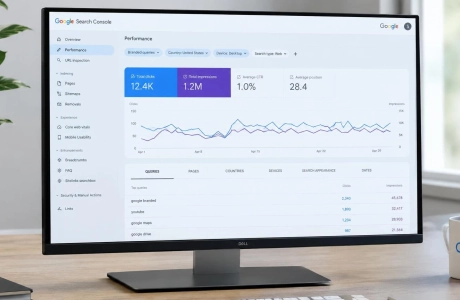
Barry Schwartz of Search Engine Roundtable suggested that the apparent calm might be partly due to measurement problems with external tools. The outlet itself mentioned difficulties tracking changes with monitoring services and noted that Google Search Console performance reports were delayed. This can mean that automated signals and site data do not line up at the same time.
Rank Math also reported possible inconsistencies in tracking platforms. According to its account of Glenn Gabe's explanation, Google may be introducing altered data into search results to make it harder for third-party AI tools to scrape pages; SEO services, which rely on crawlers and similar data, could be affected. This is an explanation reported by Rank Math, not a cause confirmed by Google.
Glenn Gabe wrote on November 17 that there was already enough data in Search Console to distinguish some movements. In his view, November 13 appears to mark the start of the impact on certain sites: he pointed to increases and drops that began that day and explained that some earlier spikes related to automated-agent clicks could distort reports. He also cautioned that those earlier spikes did not predict which sites would benefit.
“I would check GSC today and see if you were impacted.”
— Glenn Gabe
Gabe's observation helps reconcile two dates that describe different moments: Google announced and began the rollout on the 10th, while some changes in data for specific sites became visible starting on the 13th. Search Engine Roundtable also placed the increase in comments around Saturday the 14th. Not all reports agree, and delays in Search Console and questions about tracking systems make it difficult to pinpoint a single moment of impact for everyone.
Mixed results across industries and page types
Some comments questioned the composition of search results. A user who said they work with YMYL categories—topics related to money or matters that can affect people—claimed that informational rather than commercial content dominated the first twenty results they observed. They also complained that pages they considered higher quality had lost rankings to older posts with AI-generated text. This is one participant's impression, not a general conclusion about the algorithm.
Others described rapid changes in search results pages: one user said Reddit appeared in the top position and disappeared when the page was refreshed. Another claimed to see hacked sites and AI-generated content taking the place of pages they considered good. These posts express their authors' experiences and opinions; on their own, they do not prove that the update is rewarding a particular type of content.
On the improvement side, several participants reported traffic recovery or better rankings. One said Discover had become active again on Saturday, although the overall result remained almost flat. The range of accounts—from marked increases to lost conversions—is consistent with Search Engine Roundtable's caution: the signals are mixed and the discussion has not yet reached its usual volume.
What may become clearer when the process ends
Google allows up to two weeks to complete the rollout, so the update could continue to affect rankings during that period. Search Engine Roundtable said it expected to add details in the days ahead and asked readers to share what they were seeing. Glenn Gabe also said he would publish more information as the process progressed.
In the meantime, the most concrete signal available to site managers is to review their own Search Console data and distinguish recent movements from earlier fluctuations. Gabe recommended checking whether there had been an impact, but also noted that clicks from automated agents recorded before the update could contaminate some comparisons. Google's dashboard still lists the November update as in progress; its final duration will depend on when the rollout ends.
Sources: Search Engine Roundtable, Google Search, Rank Math