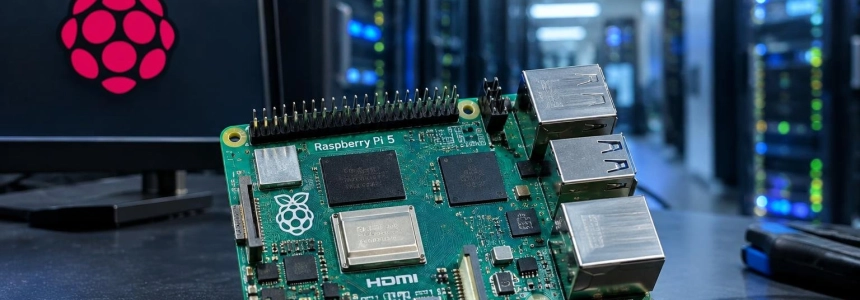
The 16 GB RAM Raspberry Pi 5 now costs $385, following an $80 price increase announced by Raspberry Pi. The company attributes the increase to a lack of alternative supplies of 16 GB DRAM memory and other component shortages. The new price took effect on November 2.
The adjustment also affects the 16 GB Compute Module 5, whose price is rising by $40. By contrast, Raspberry Pi will keep the price of the Raspberry Pi 500+ unchanged. This desktop computer built into a mechanical keyboard also comes with 16 GB of memory.
High-density memory at the center of the increase
Raspberry Pi explained that over the past two years it has applied selective increases to products most exposed to rising memory costs. The company says it has tried to limit the impact, including by qualifying alternative components to give itself more purchasing options. For 16 GB DRAM modules, however, it says there are few alternative sources, compounded by supply problems with other components.
HardZone dates the increase that brought the 16 GB Pi 5 to $305 to April 2026. Notebookcheck reports that the latest $80 increase brings the price to $385. CNX Software notes that the model launched at $120, a price now far below its current $385. HardZone lists a series of increases dating back to January 2025, with changes in December, February, and April before the one announced in November.
The price increase is not limited to the board. The 16 GB Compute Module 5 is also going up by $40. CNX Software notes that the Lite model, without wireless connectivity, now starts at $375, and that some variants cost the same with 32 or 64 GB of eMMC storage. Tom’s Hardware puts the current price of the 16 GB CM5 variant at $425.
The exception is the Raspberry Pi 500+, a compact computer built into a mechanical keyboard. Raspberry Pi says it will keep its price unchanged; CNX Software reports that it starts at $410, while Tom’s Hardware lists $485 for the 16 GB model. The figures published by those outlets differ, so no specific price for this product is attributed to the company here.
Raspberry Pi recommends reviewing how much RAM each project needs
The company acknowledges that the increase will be unpopular and advises against paying for more memory than necessary. The options it suggests include choosing variants with less RAM, incorporating older Raspberry Pi models into projects, or reducing applications’ memory usage. For business customers, it offers to discuss memory optimization measures; individual buyers are directed to the official magazine and Raspberry Pi forums.
It also warns about sellers taking advantage of the situation to inflate prices or advertise products that are not what they appear to be. It recommends buying through its network of authorized resellers and checking its verified supplier finder if in doubt.
Raspberry Pi maintains that the current memory market situation is temporary and says it expects to roll back the increases when memory costs fall. The timeline, however, remains uncertain: CNX Software reports differing forecasts from Micron and SK Hynix, which put a possible return to normal between 2028 and 2030.
“As we’ve said from the beginning, the current memory landscape is difficult but ultimately temporary, and we look forward to rolling back our price increases when memory costs fall once again.”
— Raspberry Pi
Sources: CNX Software - Embedded Systems News, HardZone, Raspberry Pi, Tom's Hardware, Notebookcheck